For sponsors: the data center supply chain
The same five checks across the data center contractors, engineers and equipment makers you back.
Five checks per company: ChatGPT and Gemini answers for data center work, the homepage title and heading, a way to reach it from the homepage, what a client's security team can see from outside, and load time on a phone. One line per company.
The checks sit under each company's web and marketing firms, not instead of them.
Send the domainsWhat each company's five checks look like
Example rows, each from a site read on 31 October and 1 November 2026, names left out.
What failing looks like
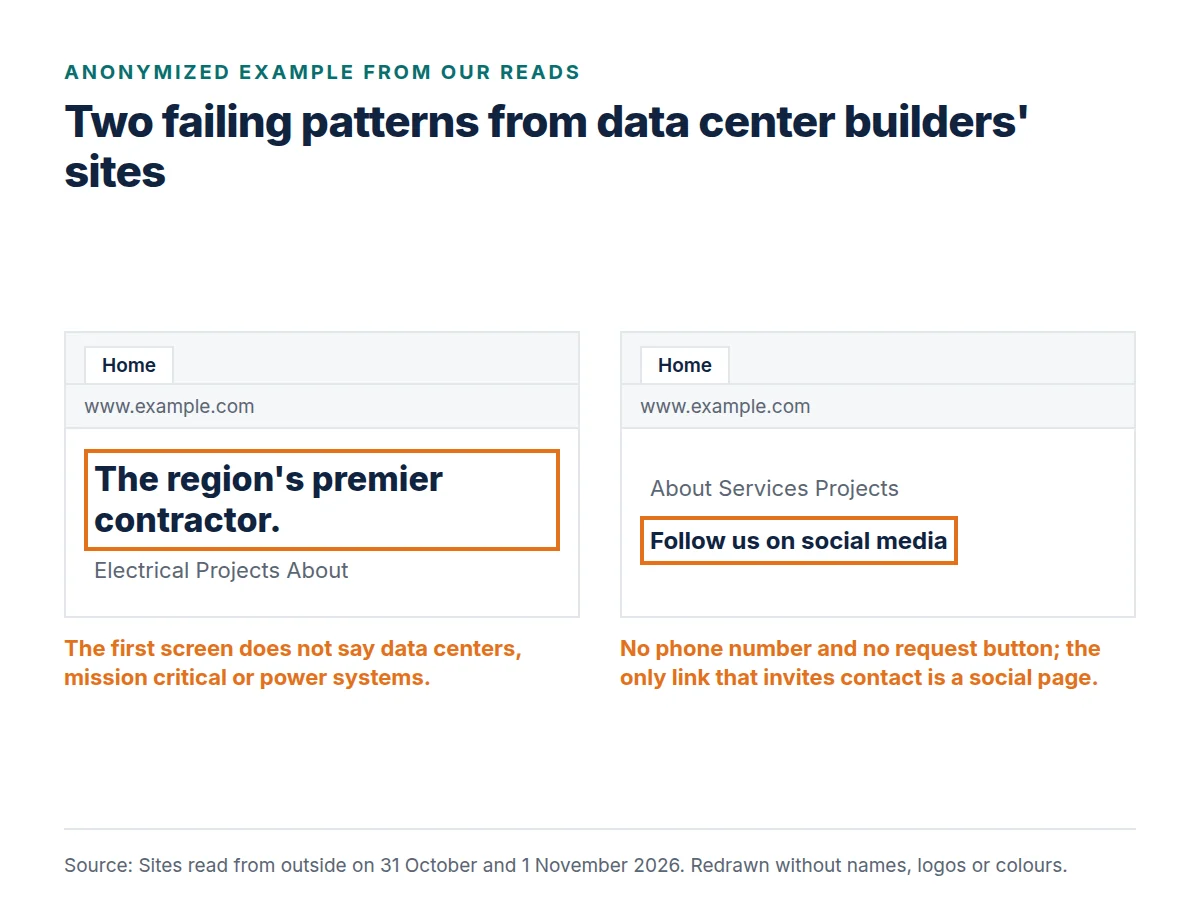
Two patterns from the sites we read, redrawn without names: a first screen that does not say data centers, and a homepage with no number and no request button.
The five checks
Each check reads a company's site from outside, the way a developer, an operator or a general contractor meets it. Under each is what failing looked like on a site read on 31 October and 1 November 2026, with the company's name left out.
1. Named in ChatGPT and Gemini answers for data center work
What passesAsked who designs, builds, powers or cools data centers in your markets, ChatGPT and Gemini name you.
What failing looked likeAn MEP engineering firm of about 700 people. We asked ChatGPT twice which MEP firms design data centers and aviation facilities across the US. Both answers named the same rival and neither named the firm. Gemini named it both times.
2. A homepage title and heading that name data centers
What passesThe page title and main heading say data centers, mission critical or the trade you bring to them.
What failing looked likeAn electrical contractor of about 200 people. Its title starts with Home and its main heading names its city and the word premier, so the first screen does not say data centers or power systems.
3. A way to reach you from the homepage
What passesA phone number to tap and a request button on the homepage and on each project page.
What failing looked likeAn industrial electrical contractor of about 550 people. The homepage has no phone number and no request button, and the only link that invites contact goes to Facebook.
4. What a client's security team can see from outside
What passesA DMARC record that asks inboxes to refuse forged mail, login names off public view, and software on supported releases.
What failing looked likeAn electrical contractor of about 350 people has no DMARC record and lists its WordPress login names at a public address.
5. Pages that load on a phone
What passesProject and specification pages show their main content within Google's 2.5-second line on a phone.
What failing looked likeThe MEP firm in the first check takes 3.4 seconds to show its main content on a phone.
What the checks found on 5 data center contractors and engineers
Engineering firms and electrical contractors in data center work in the US, 200 to 3,100 people each, read from outside on 31 October and 1 November 2026.
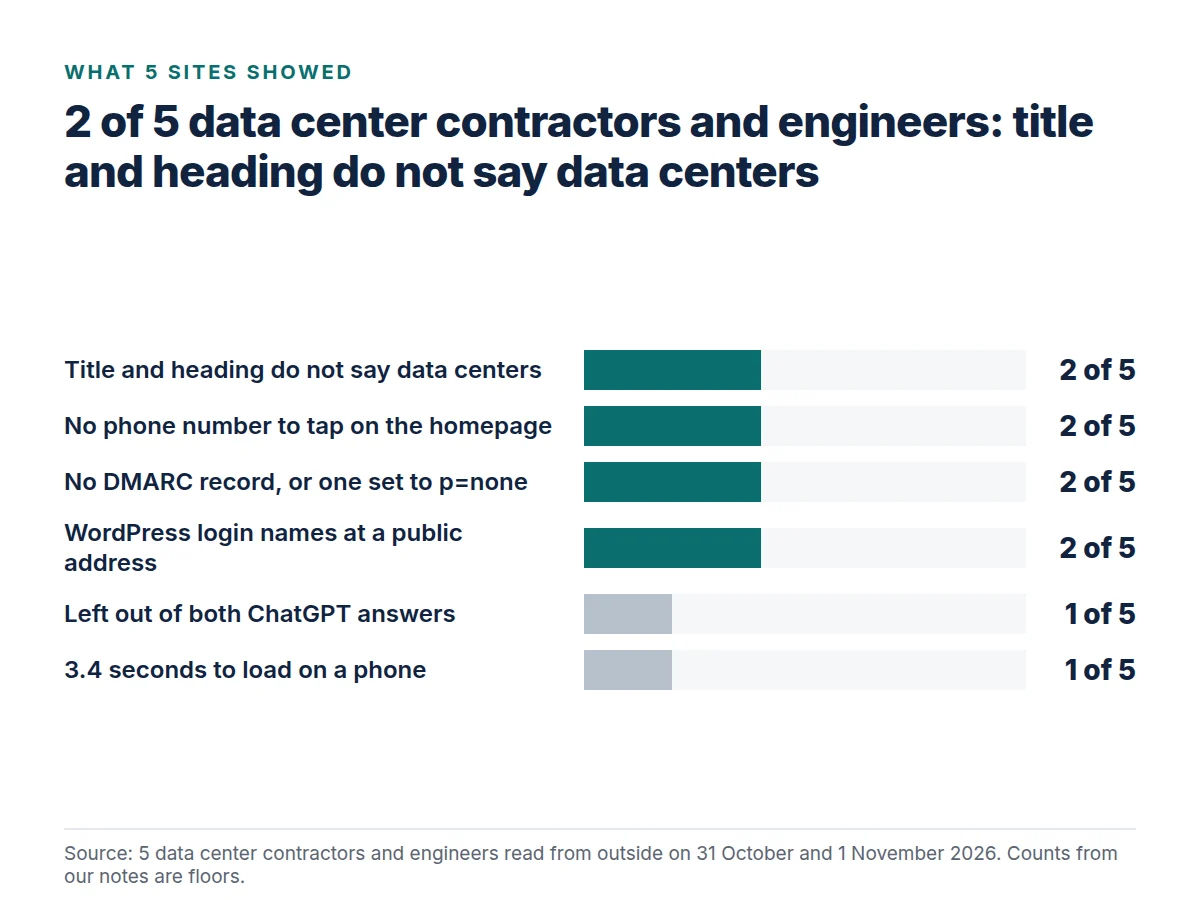
- 2 have a title and main heading that do not say data centers.
- 2 have no phone number to tap on the homepage, and one has no request button either.
- 2 have no DMARC record, or one set to p=none.
- 2 publish their WordPress login names at a public address.
- 1 was left out of both ChatGPT answers to its buyers' question, though Gemini named it both times.
- 1 takes 3.4 seconds to show its main content on a phone.
Counted from our notes on each site, which keep the two or three strongest findings, so the true counts can be higher. Sites change, and some of these may have been corrected since.
Case studies
We have no data center client we can name yet. This is the work we can show, from other industries.
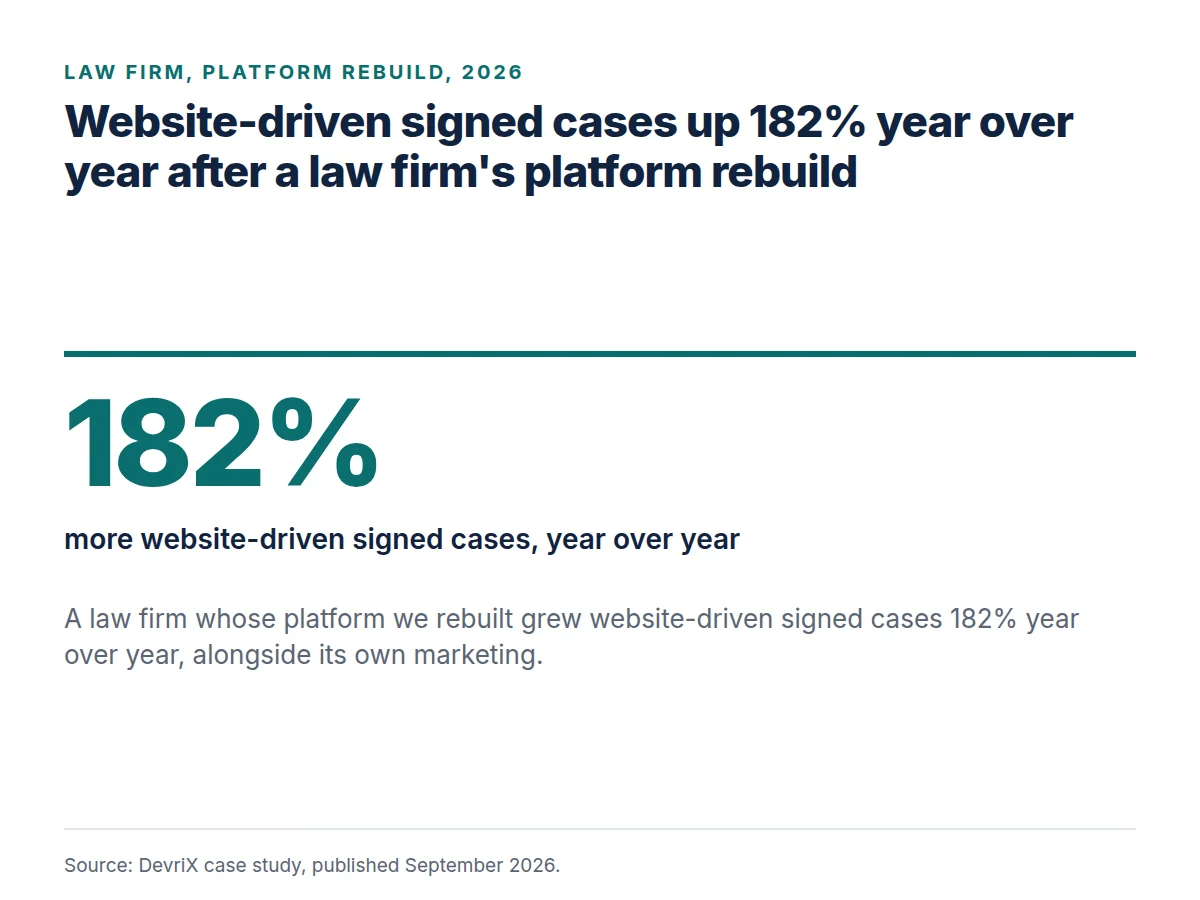
Law firm, platform rebuild, 2026
A law firm whose platform we rebuilt grew website-driven signed cases 182% year over year, alongside its own marketing.
DevriX case study, published September 2026.
Brand van Egmond, lighting maker
Brand van Egmond, the lighting maker, is one published case of ours. We rebuilt how enquiries reach Brand van Egmond's sales team, so each quote request arrives with consistent context.
DevriX case study, published September 2026.
Before DevriX, our site would go down, and no one would know why. With DevriX, our site rarely ever goes down.
Head of Product and Revenue, an internet media company (Clutch review)
How it works
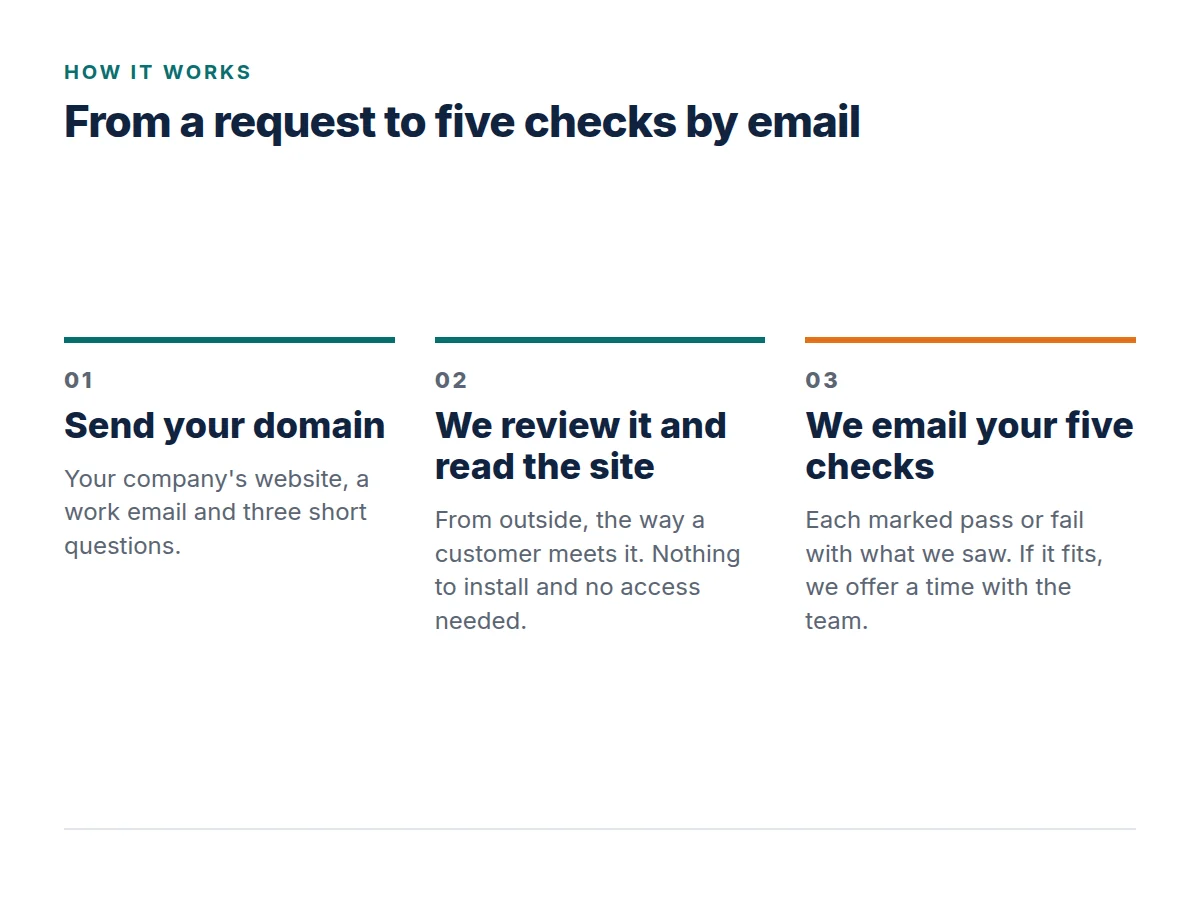
The portfolio companies' websites, a work email and three short questions.
The way a customer meets each site. Nothing to install and no access needed at any company.
Each company, each check, pass or fail, with what was seen. If it fits, a time with the team is offered.
Who does the work
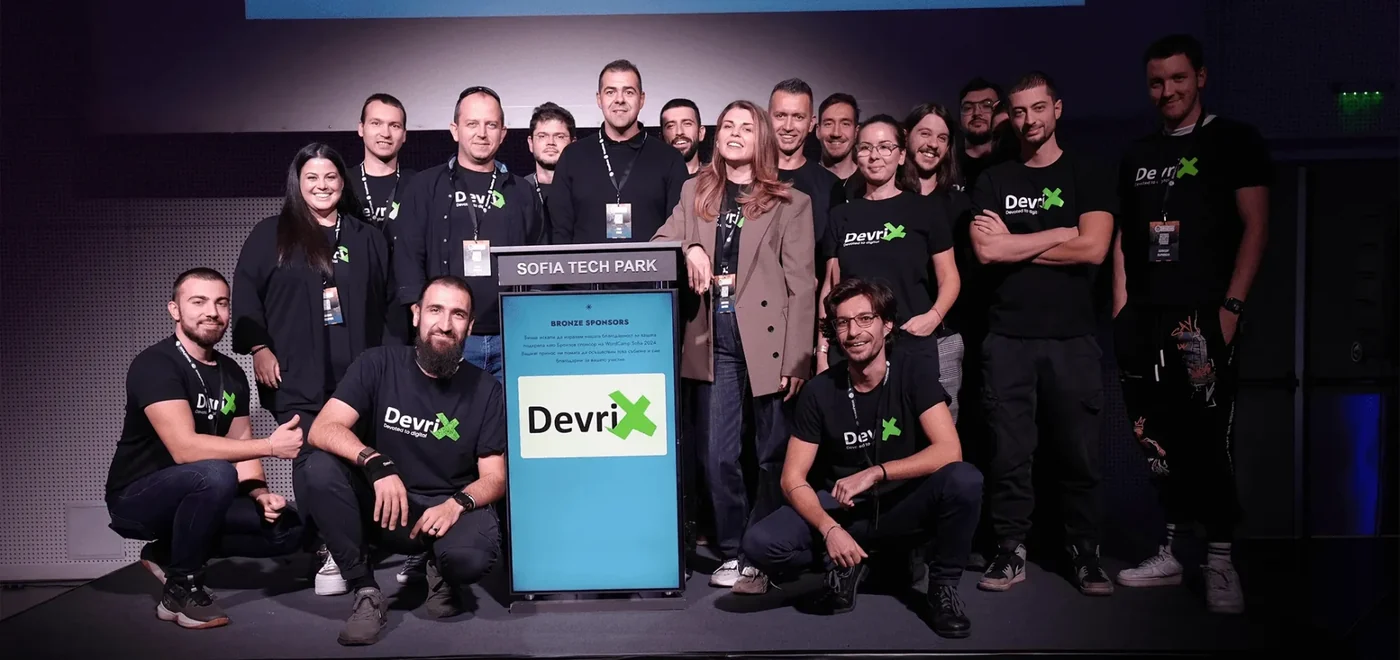
Growth Shuttle advises, and DevriX runs the checks and the work behind them.
- DevriX has operated since 2010
Questions
What does the work cost?
Work at a portfolio company starts at $10,000 a month, and its scope comes from what the checks find.
What is needed from the fund?
The companies' websites and a work email. Each site is read from outside, so no logins, access or data are needed at any company.
What do the five checks cover?
Named in ChatGPT and Gemini answers for data center work, a homepage title and heading that name data centers, a way to reach you from the homepage, what a client's security team can see from outside, pages that load on a phone, each marked pass or fail for each company.
Who is this for?
Funds backing contractors, engineers and equipment makers in the data center supply chain.
What happens after the domains are sent?
Each request is reviewed. If it fits, the checks come by email with an offer of a time with the team.
Does this replace the companies' web or marketing firms?
No. The checks sit under each company's web and marketing firms.
Send the domains and get five checks for each company.
Each request is reviewed. If it fits, the checks come by email with an offer of a time with the team.
Thank you. The checks will come by email.
Growth Shuttle advises, and DevriX runs the checks and the work behind them.