For sponsors: energy and infrastructure
Five checks across the energy and infrastructure companies you own.
Five checks per company: ChatGPT and Gemini answers in its region, the homepage title and heading, current claims and dates, DMARC set to reject forged lease letters, and software that still gets security updates. One line per company.
The checks sit under each company's web and marketing firms, not instead of them.
Send the domainsWhat each company's five checks look like
Example rows, each from a site read on 31 October and 1 November 2026, names left out.
What failing looks like
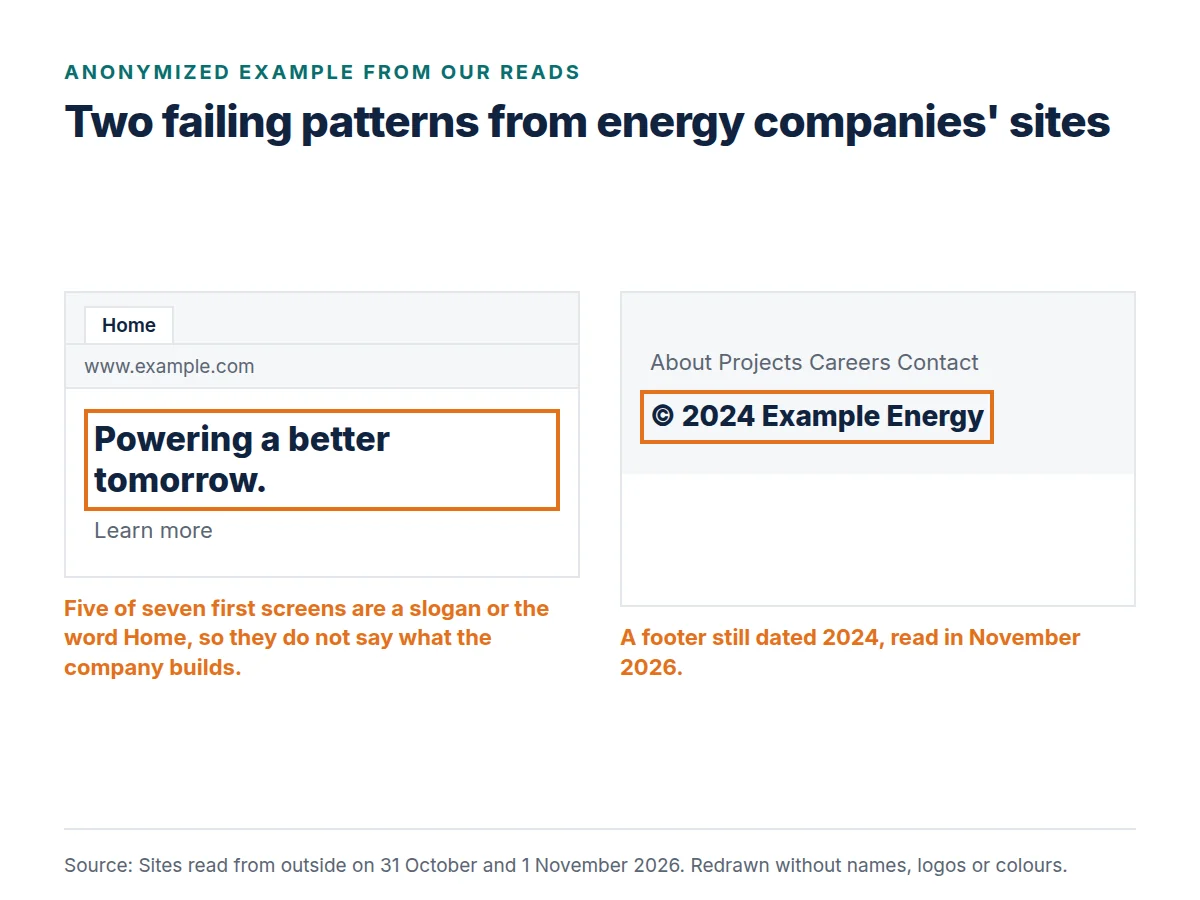
Two patterns from the sites we read, redrawn without names: a first screen that reads Home and a slogan, and a footer still dated 2024.
The five checks
Each check reads a company's site from outside, the way a utility buyer, a landowner or an official meets it. Under each is what failing looked like on a site read on 31 October and 1 November 2026, with the company's name left out.
1. Named in ChatGPT and Gemini answers in your region
What passesAsked for a company like yours where you work, ChatGPT and Gemini name you.
What failing looked likeAn electrical contractor in energy and data center work, about 5,000 people. We asked ChatGPT twice which electrical contractors in its state handle commercial and industrial power systems. Neither answer named it, and one named a rival.
2. A homepage title and heading that name what you do
What passesThe page title and main heading say what you build, run or supply, and where.
What failing looked likeA high-voltage EPC firm for utilities and renewables. Its title starts with Home and its main heading reads Home, so nothing on the first screen says substations, high voltage or EPC.
3. Current claims and dates
What passesSavings figures, capacity, certifications and dates on the site are current, and carbon claims show how they are backed.
What failing looked likeA combined heat and power company. Its footer still says 2024, and its title and heading do not say combined heat and power or microgrids.
4. DMARC set to reject forged letters
What passesYour DMARC record asks inboxes to refuse mail forged in your name: landowner letters, lease offers, invoices.
What failing looked likeA utility-scale solar developer set its DMARC record to p=none, so a landowner letter or a lease offer forged in its name can still be delivered.
5. Software that still gets security updates
What passesThe site and its server run releases that still get security updates.
What failing looked likeAn energy trading firm runs WordPress 5.9.2, twelve releases behind the current 7.1.4, on PHP 7.4, which stopped getting security updates in November 2022. In October 2026 a PHP flaw let anyone run code on unpatched servers, and on 7.4 only some hosts ship their own patch.
What the checks found on 7 energy companies
Developers, EPCs, engineers, contractors, energy services firms and a trader in the US, read from outside on 31 October and 1 November 2026.
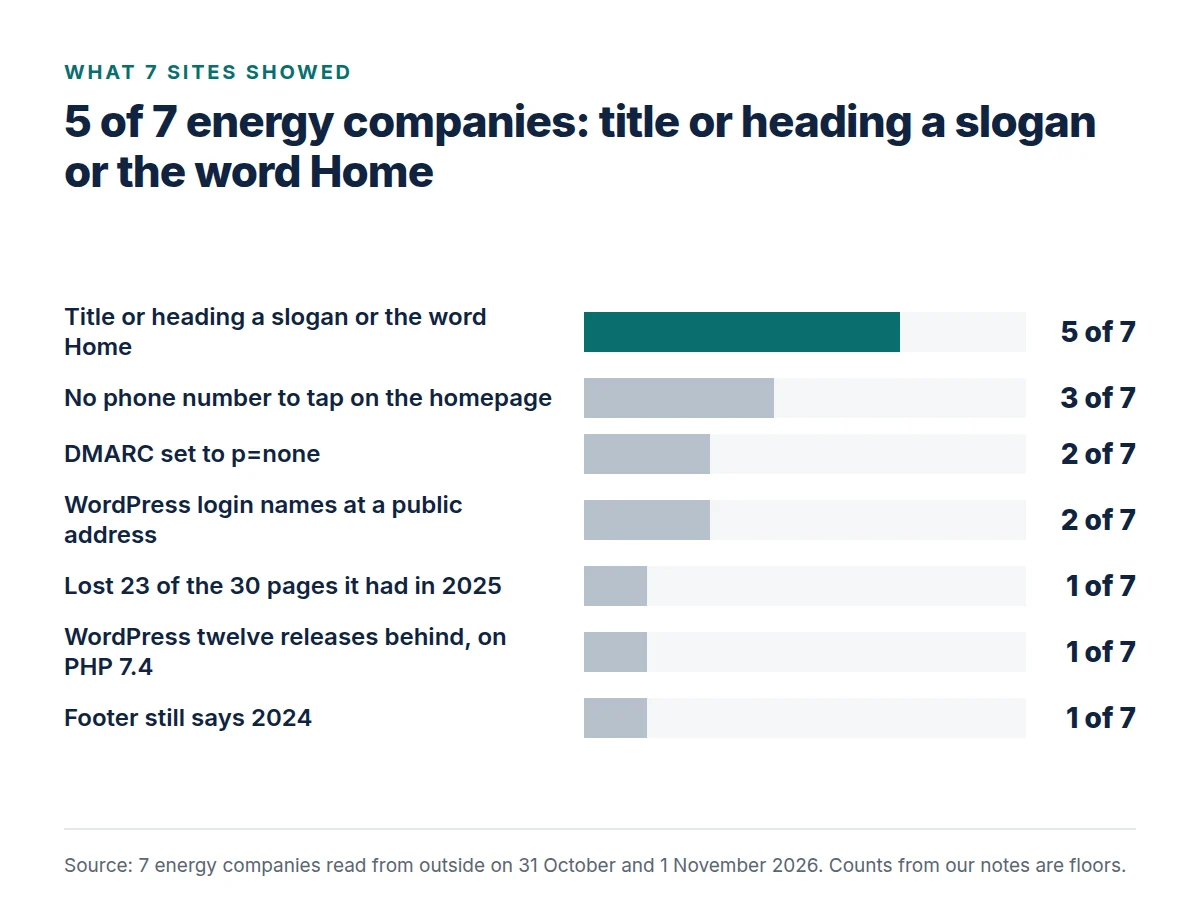
- 5 have a homepage title or main heading that is a slogan or the word Home, so the first screen does not say what they do.
- 3 have no phone number to tap on the homepage.
- 2 set their DMARC record to p=none, so mail forged in their name can still be delivered.
- 2 publish their WordPress login names at a public address.
- 1 lost 23 of the 30 pages it had live in 2025.
- 1 runs WordPress twelve releases behind, on PHP 7.4.
- 1 has a footer that still says 2024.
- 1 was left out of both ChatGPT answers to its buyers' question.
Counted from our notes on each site, which keep the two or three strongest findings, so the true counts can be higher. Sites change, and some of these may have been corrected since.
Case studies
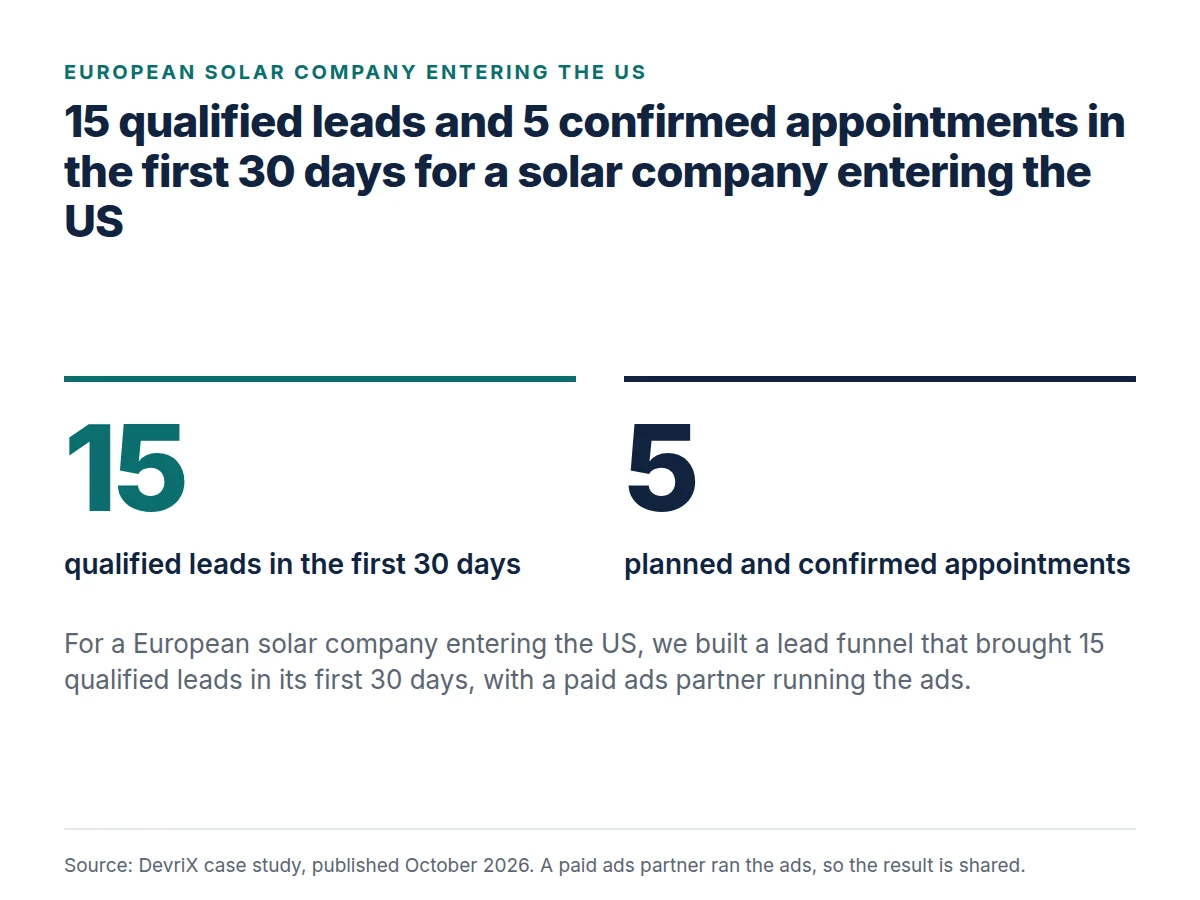
European solar company entering the US
For a European solar company entering the US, we built a lead funnel that brought 15 qualified leads in its first 30 days, with a paid ads partner running the ads.
DevriX case study, published October 2026. A paid ads partner ran the ads, so the result is shared.
Before DevriX, our site would go down, and no one would know why. With DevriX, our site rarely ever goes down.
Head of Product and Revenue, an internet media company (Clutch review)
How it works
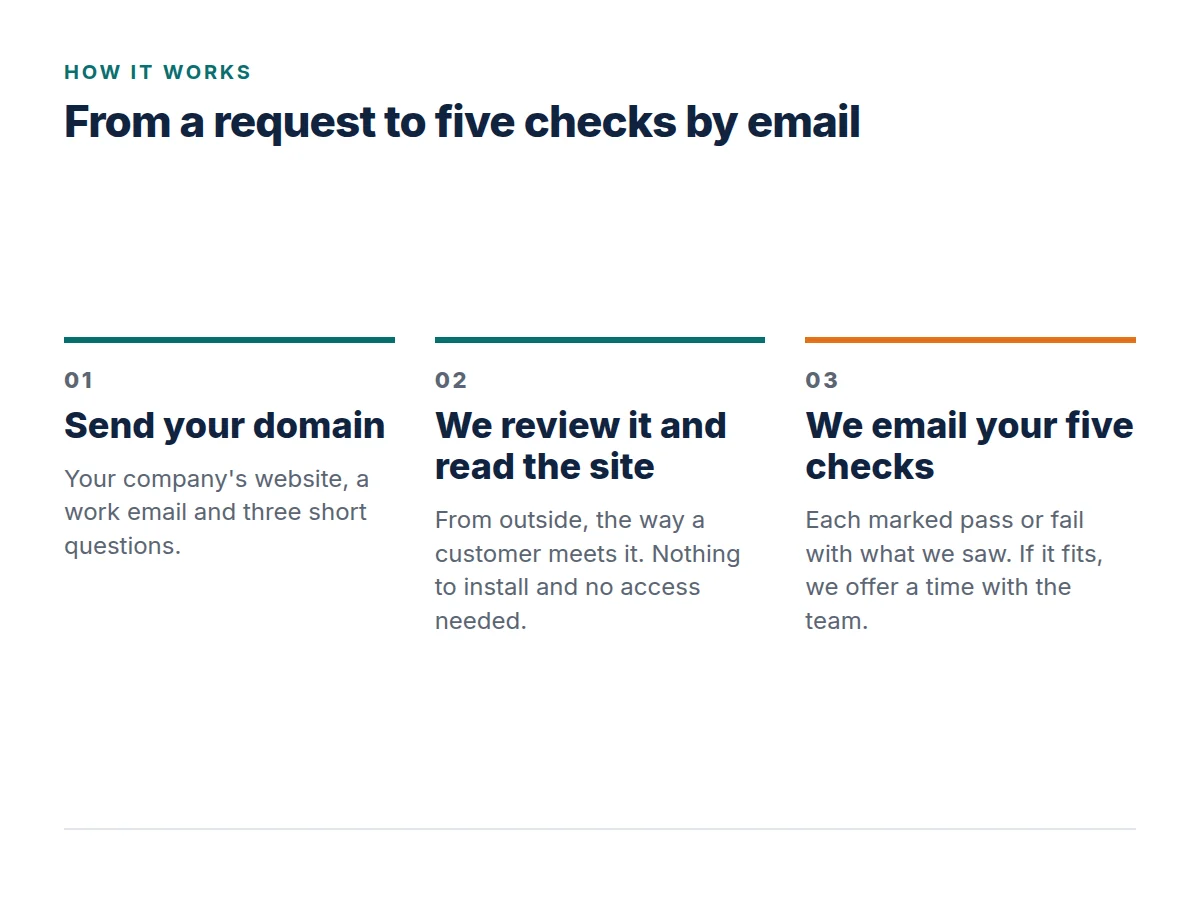
The portfolio companies' websites, a work email and three short questions.
The way a customer meets each site. Nothing to install and no access needed at any company.
Each company, each check, pass or fail, with what was seen. If it fits, a time with the team is offered.
Who does the work
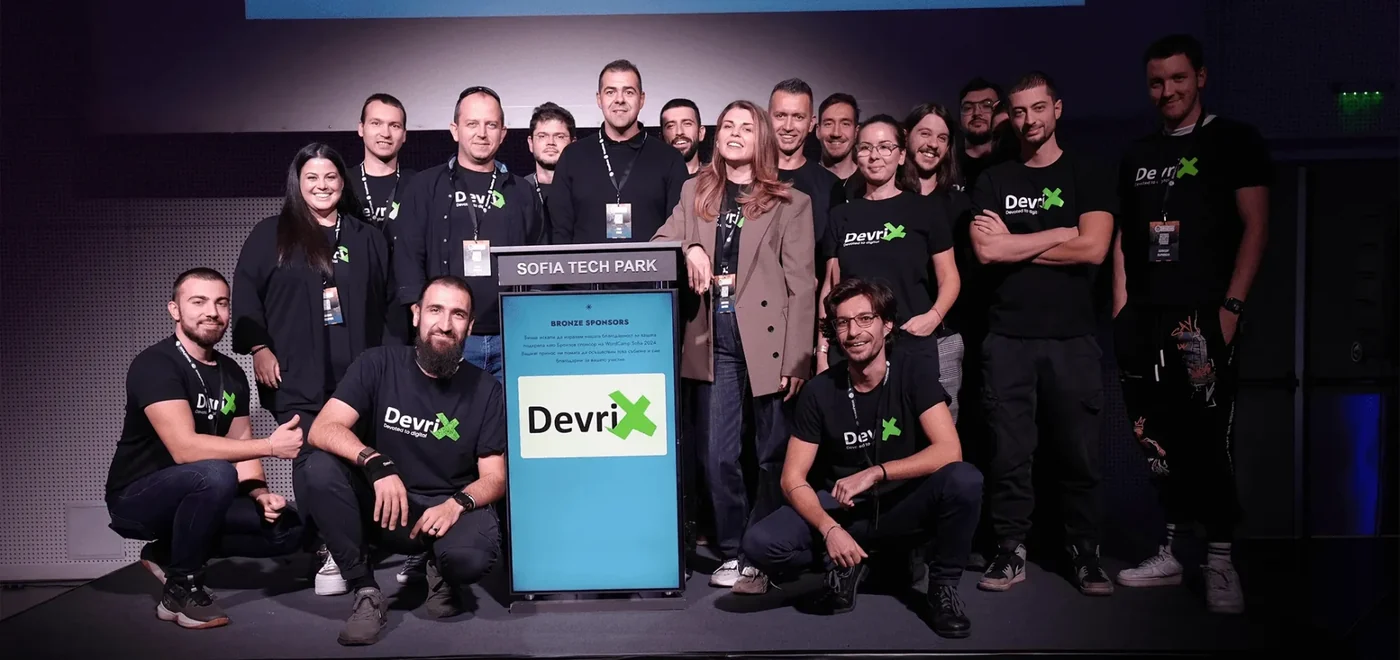
Growth Shuttle advises, and DevriX runs the checks and the work behind them.
- DevriX has operated since 2010
Questions
What does the work cost?
Work at a portfolio company starts at $10,000 a month, and its scope comes from what the checks find.
What is needed from the fund?
The companies' websites and a work email. Each site is read from outside, so no logins, access or data are needed at any company.
What do the five checks cover?
Named in ChatGPT and Gemini answers in your region, a homepage title and heading that name what you do, current claims and dates, DMARC set to reject forged letters, software that still gets security updates, each marked pass or fail for each company.
Who is this for?
Sponsors with energy and infrastructure companies in the portfolio.
What happens after the domains are sent?
Each request is reviewed. If it fits, the checks come by email with an offer of a time with the team.
Does this replace the companies' web or marketing firms?
No. The checks sit under each company's web and marketing firms.
Send the domains and get five checks for each company.
Each request is reviewed. If it fits, the checks come by email with an offer of a time with the team.
Thank you. The checks will come by email.
Growth Shuttle advises, and DevriX runs the checks and the work behind them.