Customer intelligence platforms in 2025 are transforming how small and medium-sized businesses (SMEs) understand and engage with their customers. These platforms leverage AI, machine learning, and real-time data integration to provide actionable insights into customer behavior, preferences, and trends - without requiring advanced technical skills or large budgets. Here’s what you need to know:
- AI-driven analytics: Automates data analysis, predicts customer actions, and refines insights over time.
- Real-time integration: Combines data from CRM, email, social media, and e-commerce for a unified customer view.
- Customer segmentation: Groups customers dynamically based on behavior, demographics, or purchase history.
- Sentiment analysis: Flags dissatisfaction early by analyzing customer communications.
- Data security: Ensures compliance with regulations like GDPR and CCPA.
- Intuitive dashboards: Simplifies insights for non-technical users with customizable reporting.
- Scalability: Supports growing businesses with flexible pricing and cloud-based solutions.
Key Platforms:
- Growth Shuttle: Advisory-focused, offering tailored plans for SMEs (starting at $600/month).
- SAS Customer Intelligence 360: Advanced analytics and real-time customer journey management.
- Brandwatch: Social media insights with sentiment analysis and audience profiling.
- Introhive: Relationship intelligence for sales and customer success teams.
- Suzy: AI-powered consumer research for quick, affordable insights.
- Clarabridge (XM Discover): Customer feedback analysis across multiple channels.
- Signal: Limited details available; further research recommended.
These tools empower SMEs to anticipate customer needs, improve retention, and optimize marketing strategies. Whether you’re prioritizing data integration, predictive analytics, or customer segmentation, there’s a platform designed to meet your business goals.
Advanced Level Decisioning Capability of SAS Customer Intelligence 360 Unlocks Marketing Potential
Key Features to Look For in Customer Intelligence Platforms
When choosing a customer intelligence platform for your growing business, it's important to focus on features that go beyond simple data collection. These tools should help your team turn raw data into meaningful insights that drive smarter decisions and improve customer strategies. Here’s a closer look at the key capabilities to prioritize.
AI-driven analytics are at the heart of most customer intelligence platforms. Using machine learning, these systems analyze large volumes of data from various sources to uncover patterns in customer behavior. They can create predictive models to anticipate future actions, saving your team from spending hours on manual analysis. For teams of 15 to 40 people, this feature is invaluable, as the AI continuously learns and refines its predictions, offering sharper insights into customer preferences and buying habits over time.
Real-time data integration ensures your team always has access to the latest information. Top platforms pull data from systems like CRM, email, social media, and e-commerce, creating a single, up-to-date view of each customer. For example, your sales team can instantly see recent support tickets, while your marketing team can track engagement with the latest campaigns - all within the same system.
Customer segmentation allows you to group customers based on factors like behavior, demographics, purchase history, or engagement levels. AI-powered segmentation updates dynamically, adjusting as customer behaviors change. This is particularly helpful for mid-sized teams, as it removes the need for manual updates while ensuring campaigns target the right audiences. For instance, you could create a segment of customers who bought something in the last 30 days but haven’t interacted with recent emails.
Sentiment analysis adds a layer of understanding by evaluating communications across channels - emails, social media posts, reviews, and support tickets - to gauge customer satisfaction. This feature acts as an early warning system, flagging potential issues before they escalate. For growing businesses, it’s a proactive way to address dissatisfaction and reduce the risk of customer churn.
Robust data security is non-negotiable. As your business grows and handles more sensitive information, you need a platform that ensures compliance with regulations like CCPA and GDPR. Look for features like encryption (both in transit and at rest), role-based access controls, and audit trails that log who accessed what data. Regular security audits are also a must to maintain trust and compliance.
Intuitive dashboards and reporting make it easy for your team to act on insights. Customizable dashboards should highlight the metrics that matter most to specific roles. For instance, sales managers might focus on lead conversion rates, while marketing teams track campaign performance. The platform should also allow non-technical users to create custom reports, enabling everyone on the team to find answers to their unique questions.
Integration capabilities go beyond connecting data sources - they should also streamline workflows. Choose a platform that integrates seamlessly with your existing tools and automates tasks like CRM updates or email campaigns. Bi-directional data syncing ensures that insights flow smoothly across systems, reducing manual work for teams of 15 to 40 people and ensuring no critical follow-ups slip through the cracks.
Finally, scalability is crucial for businesses planning to grow. Cloud-based platforms are generally better equipped to handle increasing data volumes and user demands without slowing down. Look for solutions with tiered pricing that let you expand features and capacity as needed, so you can scale your operations without overpaying or compromising performance.
1. Growth Shuttle
Growth Shuttle specializes in offering strategic advisory services rooted in customer intelligence. Unlike a typical platform, they provide hands-on consulting aimed at helping mid-sized businesses turn their customer data into practical growth strategies. Their services cater specifically to CEOs leading teams of 15 to 40 people, focusing on streamlining operations and fine-tuning go-to-market strategies. This personalized approach ensures actionable strategies tailored to each business's unique needs across all areas of customer intelligence.
Support for SMEs (15–40 Person Teams)
Growth Shuttle has developed three advisory plans designed for mid-sized companies that have moved beyond the startup phase:
- Direction Plan ($600/month): Includes monthly strategic calls focused on delivering actionable solutions.
- Strategy Plan ($1,800/month): Offers implementation support using proprietary tools, brand representation, and continuous communication via email and Slack.
- Growth Plan ($7,500/month): Provides intensive growth support with weekly calls, collaboration across departments, and direct involvement in PR, partnerships, and negotiations.
These plans reflect Growth Shuttle's focus on providing scalable and practical advisory support for growing businesses.
Data-Driven Analytics and Insights
Under the leadership of Mario Peshev, Growth Shuttle empowers businesses to transform customer data into meaningful strategies. Their advisory process includes competitor research, crafting digital strategies, and fostering strong business relationships. They ensure companies use analytics tools that align with their specific customer base and business model, staying ahead in the fast-evolving world of AI-driven customer intelligence.
Integration with Existing Business Tools
Growth Shuttle enhances the efficiency of your existing technology stack by creating workflows that connect departments and eliminate data silos. Their consulting services focus on seamlessly integrating new customer intelligence tools with your current CRM, marketing automation, and sales systems, ensuring a smooth digital transformation process.
Customer Segmentation and Personalization
The advisory team at Growth Shuttle works closely with marketing teams to harness customer intelligence data for delivering personalized experiences on a large scale. They develop customer segmentation strategies that directly contribute to revenue growth and boost customer retention. By aligning these strategies with actionable insights, Growth Shuttle ensures businesses are well-equipped to meet the advanced customer intelligence standards of 2025.
2. SAS Customer Intelligence 360
SAS Customer Intelligence 360 is a platform that blends advanced analytics with real-time customer journey management. Built on SAS's expertise in analytics, it helps businesses uncover actionable insights about customer behavior and predict future actions. This makes it a strong option for small and medium-sized enterprises (SMEs) looking for reliable, real-time customer intelligence.
AI-Powered Analytics and Insights
The platform uses machine learning to spot trends and shifts in customer behavior across various touchpoints. It can predict metrics like customer lifetime value, churn risk, and recommend next-best actions, enabling businesses to make smarter marketing decisions.
Seamless Integration with Business Tools
SAS Customer Intelligence 360 connects effortlessly with popular tools like CRM systems, marketing automation platforms, and e-commerce solutions. Its API-driven design and pre-built connectors ensure data flows smoothly between systems, aligning well with existing business processes.
Real-Time Segmentation and Personalization
With dynamic segmentation, customer groups are updated in real time, ensuring marketing messages stay relevant. Additionally, its personalization engine offers tailored content recommendations across different channels, enhancing customer engagement.
Scalable Support for SMEs
Tailored for growing businesses, SAS Customer Intelligence 360 provides flexible setup options and extensive training resources, making it accessible even for teams without deep technical knowledge. Its intuitive dashboard and step-by-step workflows make it easy for SMEs to adopt and scale while maintaining precise customer insights as they grow.
3. Brandwatch
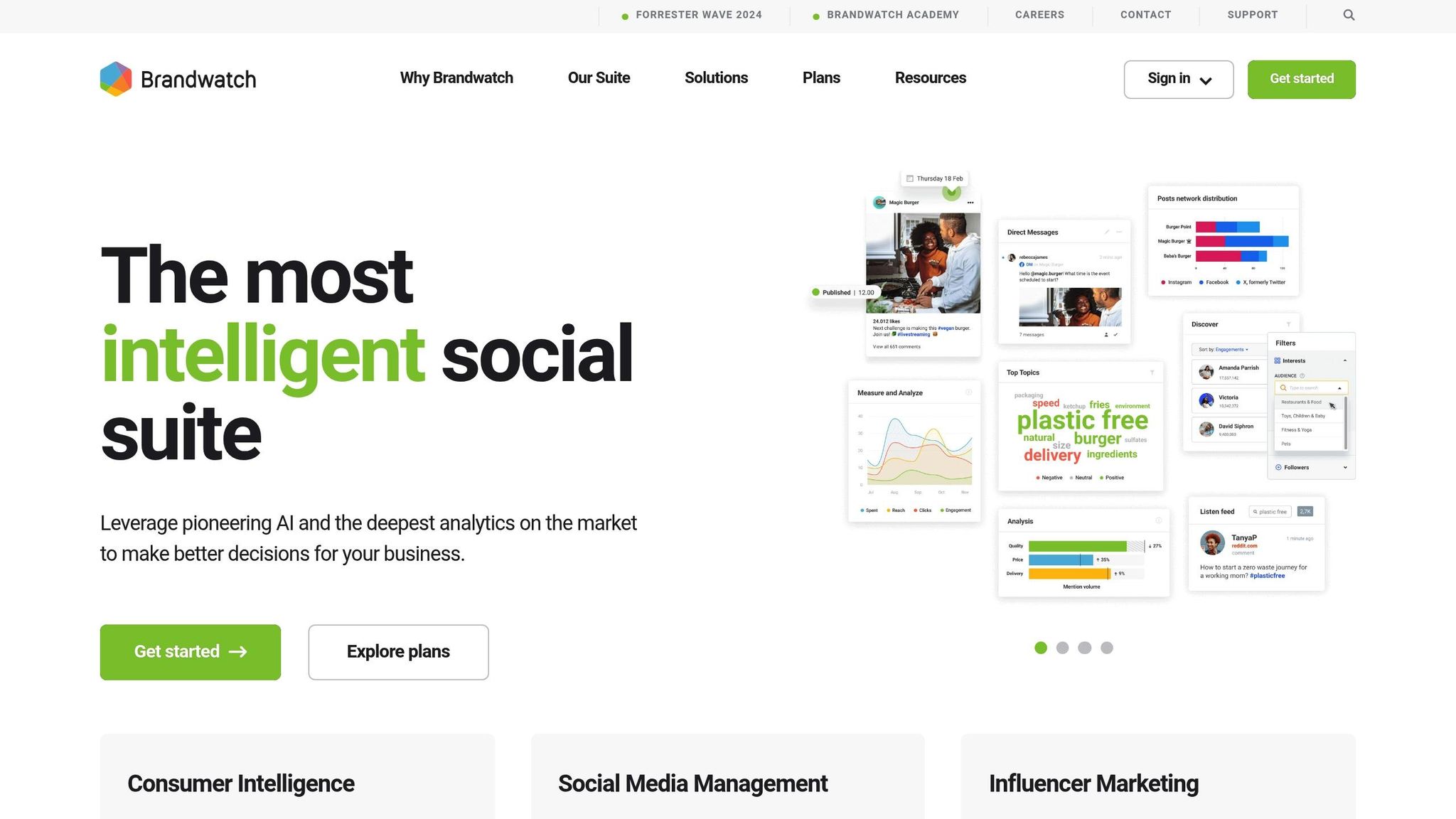
Brandwatch is a platform designed to turn social media conversations into meaningful insights. By analyzing millions of online interactions daily, it helps businesses uncover what customers think about their brand, products, and the latest industry trends.
AI-Powered Analytics
Brandwatch uses advanced AI to analyze social media data, identifying sentiment, trends, and potential issues. Its Iris technology leverages natural language processing to sort and categorize conversations, eliminating the need for tedious manual analysis. With predictive analytics, the platform can even anticipate changes in brand reputation and flag potential PR crises before they become major problems.
Additionally, Brandwatch's image recognition tools go beyond text by analyzing visual content. This means it can track logos and brand mentions in photos and videos, offering a more comprehensive view of a brand's online presence. These insights can seamlessly integrate into existing workflows, making them actionable and efficient.
Easy Integration with Business Tools
Brandwatch works effortlessly with popular tools like Salesforce, HubSpot, Slack, and Tableau. This ensures that social insights are not isolated but become a part of broader business operations. For teams needing custom solutions, the platform offers API access, making it easy to integrate with existing marketing systems and workflows.
Such integrations make it easier to segment audiences and fine-tune marketing strategies, ensuring businesses can act on insights quickly and effectively.
Advanced Customer Segmentation
One of Brandwatch's standout features is its ability to segment customers based on behavior, interests, and demographics. It tracks how different groups respond to campaigns, products, or messages on social platforms, allowing businesses to tailor their strategies accordingly.
Through audience profiling, businesses can refine their marketing efforts even further. This helps identify potential brand ambassadors and create highly targeted campaigns. For small and medium-sized enterprises (SMEs), this level of segmentation provides a way to execute focused marketing strategies without requiring significant resources.
Tailored Support for SMEs
Brandwatch is designed to be user-friendly, with a dashboard that allows marketing teams to generate insights without needing technical expertise. The platform also offers training and dedicated support to help teams make the most of its features.
For mid-sized businesses, Brandwatch provides flexible pricing options that align with team size and data needs. Its reporting tools are especially useful for smaller teams, enabling them to stay on top of brand monitoring without requiring full-time resources for social listening. This makes it an excellent choice for teams of 15-40 people who want to maximize their marketing impact.
4. Introhive
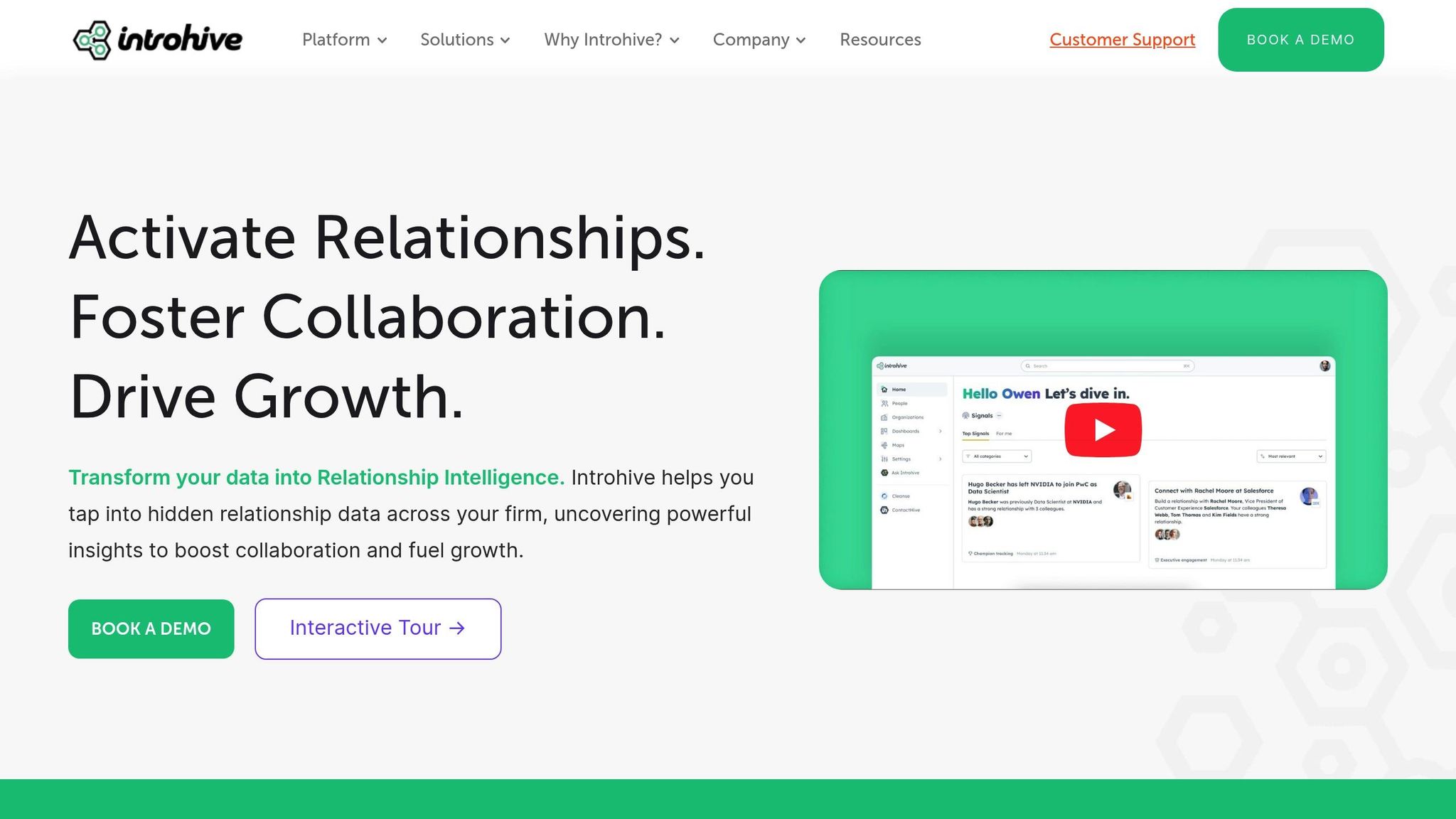
Introhive focuses on relationship intelligence, helping businesses uncover and utilize their professional networks to boost sales and customer success. By combining customer insights with a deeper understanding of relationships, the platform offers a unique way to manage and grow professional connections. It gathers data from emails, calendars, and other communication tools to create a detailed map of business relationships that might otherwise go unnoticed.
Using AI-powered analytics, Introhive turns raw communication data into actionable insights, helping teams make smarter, more targeted decisions.
AI-Driven Analytics and Insights
At the heart of Introhive is its relationship scoring algorithm, which uses machine learning to evaluate communication patterns and measure the strength of relationships between team members and their prospects or customers. By analyzing factors like email frequency, meeting participation, and response times, the platform generates relationship health scores. These scores help sales teams prioritize outreach to the most promising connections.
The platform's predictive analytics takes this a step further by identifying accounts at risk of churn. For example, if a key contact becomes less responsive or disengages, Introhive flags this as a potential issue, giving customer success teams a chance to step in before it's too late. Automated monitoring ensures that these risks are detected and addressed quickly.
Another standout feature is Introhive's network analysis, which uncovers hidden connections within organizations. It can pinpoint mutual contacts who could provide warm introductions to new prospects, offering a more effective alternative to cold outreach.
Integration with Existing Business Tools
Introhive integrates seamlessly with popular CRM platforms like Salesforce, HubSpot, and Microsoft Dynamics, syncing relationship data automatically. This eliminates the need for manual data entry, saving sales teams hours of effort each week.
The platform also connects with marketing tools like Marketo and Pardot, enabling campaigns that are more targeted and based on relationship strength and engagement history. These integrations enhance segmentation, making it easier for marketing teams to deliver personalized messaging.
Customer Segmentation and Personalization
Introhive takes customer segmentation to the next level by analyzing relationship strength to identify decision-makers and influencers. By studying communication patterns and meeting activity, sales teams can pinpoint who holds the real purchasing power and tailor their outreach strategies accordingly.
The platform's account mapping feature provides a clear visualization of all relationships within a target account. It shows which team members have the strongest connections to key stakeholders, helping sales teams plan more strategically. This approach ensures that relationship-building efforts are distributed across the team, rather than relying on a single point of contact.
Support for SMEs (15-40 Person Teams)
Introhive is especially beneficial for mid-sized sales teams looking to make the most of their relationship networks without dedicating excessive time to data management. Its automated data capture ensures that even smaller teams can maintain detailed and up-to-date relationship records.
The platform includes role-based dashboards tailored to different team roles. Sales reps can view their personal relationship networks and identify warm introduction opportunities, while managers gain a bird’s-eye view of relationship coverage across key accounts. This flexibility makes Introhive a great fit for growing teams that need to balance personal connections with scalable processes.
For companies transitioning from founder-led sales to a more structured approach, Introhive helps systematize relationship knowledge, making it accessible to the entire team and ensuring no valuable connections are overlooked.
sbb-itb-c53a83b
5. Suzy
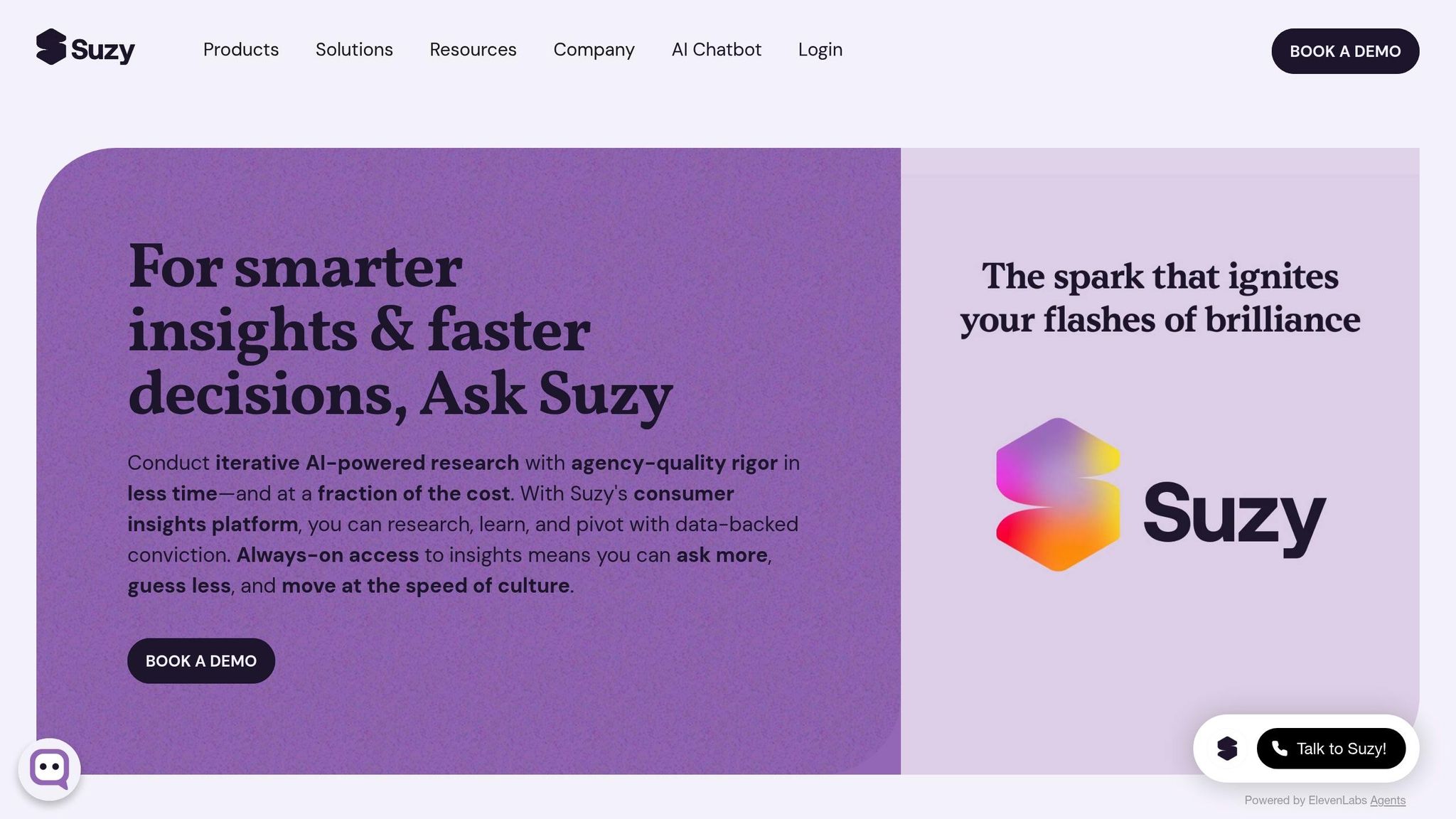
Suzy makes market research more accessible by offering AI-powered insights with the quality you'd expect from an agency, but at a much lower cost. Unlike many platforms, Suzy zeroes in on consumer behavior, using advanced AI to transform complex data into easy-to-understand insights. This approach allows businesses to conduct high-quality research quickly and affordably, making it a great fit for mid-sized teams working with tight budgets and limited resources.
AI-Driven Analytics and Insights
One of Suzy's standout features is Suzy Speaks, an AI-powered conversational research tool. This tool goes beyond traditional surveys by using conversational AI to gather genuine, detailed responses on a large scale. It’s designed to be user-friendly, so whether you're new to market research or a seasoned pro, you can dive into advanced studies without needing a massive budget or specialized skills.
Tailored for Small and Mid-Sized Teams
Suzy is particularly valuable for smaller teams, especially those with 15 to 40 members, who need to make smart decisions without the luxury of big spending. The platform delivers iterative insights, helping these teams stay competitive with larger organizations that typically depend on pricey research agencies. By leveling the playing field, Suzy ensures that even lean teams can access the tools they need to make data-driven choices.
6. Clarabridge (XM Discover)
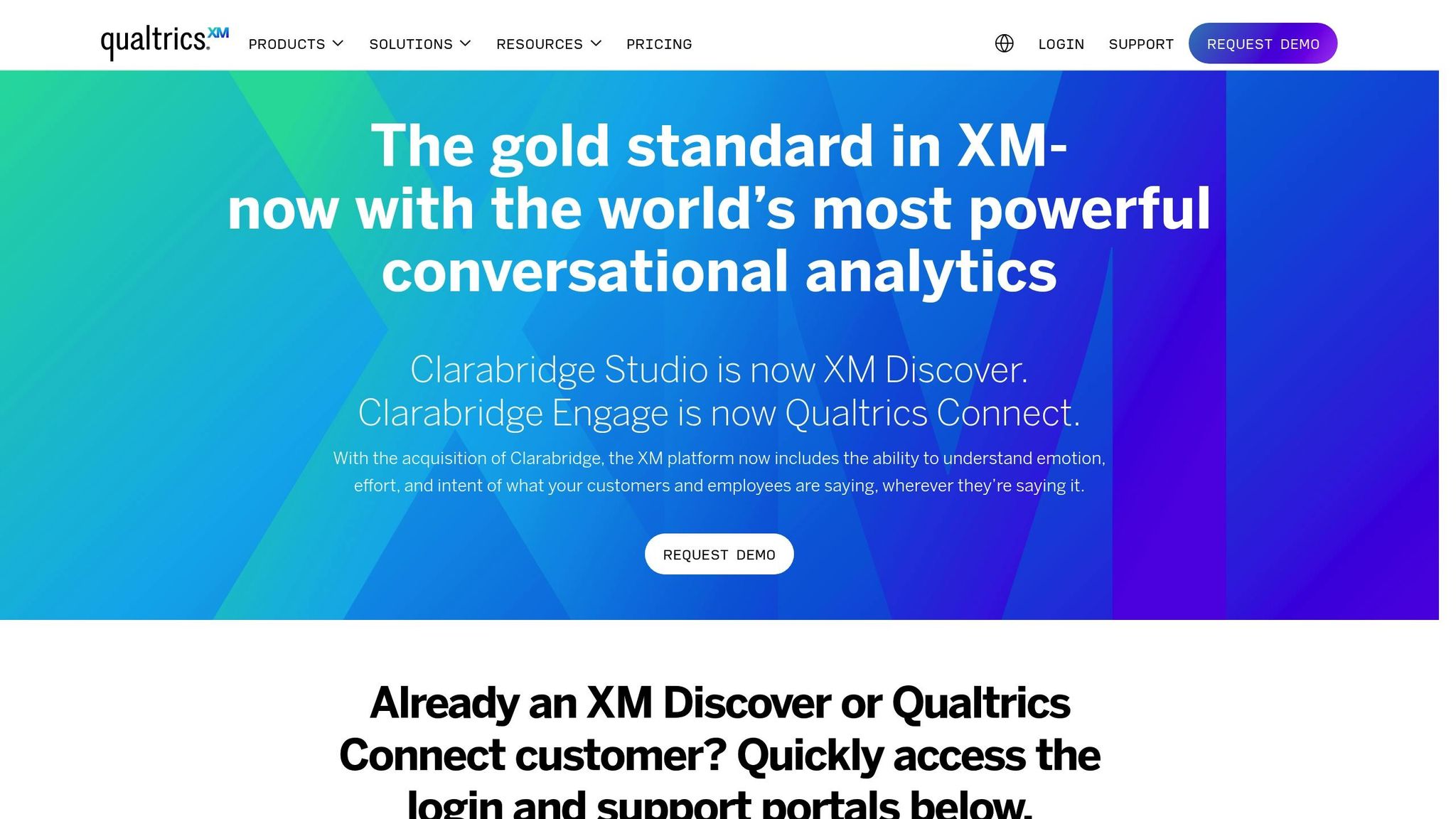
Clarabridge, now rebranded as XM Discover under Qualtrics, brings together customer feedback from a variety of channels, helping businesses gather and analyze input from multiple touchpoints in one place.
Integration with Existing Business Tools
XM Discover connects effortlessly with a wide range of software and communication platforms. Its import/export capabilities allow businesses to pull data from CRMs and feedback systems, creating a unified view of customer and employee interactions. This streamlined approach helps identify issues faster and enables automated responses when needed.
Support for Small Businesses
The platform’s smooth integration promotes quick decision-making across different areas of business. Small businesses, in particular, appreciate XM Discover for its ability to improve customer experience management. Its user-friendly design ensures teams can easily access feedback and act on insights backed by data.
7. Signal
There isn’t much publicly available information about Signal’s features as a customer intelligence platform. Details on whether it offers real-time data processing, AI-powered analytics, advanced segmentation, or customized support for small and medium-sized enterprises are not documented in the sources.
For a clearer picture, it’s best to check Signal’s official resources or reach out to their team directly.
Even with limited details, Signal’s presence highlights the dynamic nature of customer intelligence platforms, as reflected in this comparison.
Platform Comparison Table
Selecting the right customer intelligence platform involves weighing features, integration options, and pricing to find the best fit for your needs. Below is a comparison of some key platforms, showcasing their standout features, integration capabilities, and value for small and mid-sized enterprises (SMEs).
| Platform | Core Features | Integration Capabilities | Key Benefits for SMEs | Pricing |
|---|---|---|---|---|
| Growth Shuttle | Business advisory and digital transformation consulting | Implementation services via DevriX | Tailored support for 15–40 person teams, improved operational efficiency, go-to-market strategy guidance | Direction: $600/month, Strategy: $1,800/month, Growth: $7,500/month |
| SAS Customer Intelligence 360 | Machine learning, predictive analytics, real-time decision-making | API connections, cloud/on-premise deployment | Customer journey mapping, automated campaign optimization | Custom enterprise pricing |
| Brandwatch | Sentiment analysis, trend detection, natural language processing | Social media, CRM systems, marketing tools | Real-time brand monitoring, consumer insights, competitive analysis | Tiered pricing starting at enterprise level |
| Introhive | Relationship intelligence, engagement scoring, contact discovery | CRM platforms, email systems, calendars | Automated relationship mapping, improved sales pipelines, networking insights | Custom pricing based on team size |
| Suzy | AI-powered consumer research, survey analysis, predictive modeling | Marketing platforms, analytics tools, research databases | Quick consumer insights, cost-effective research, agile decision-making | Project-based and subscription options |
| Clarabridge (XM Discover) | Text analytics, emotion detection, automated categorization | Feedback channels, social platforms, survey tools | Voice of customer analysis, sentiment tracking, experience optimization | Enterprise-level custom pricing |
| Signal | Limited public information available | Integration details not disclosed | SME benefits unclear | Pricing not available |
This table highlights the unique strengths of each platform, with a particular focus on how they cater to SMEs. Growth Shuttle stands out with its clear, SME-friendly pricing and tailored advisory services, making it an excellent choice for mid-sized teams seeking operational improvements and strategic growth.
Pricing structures vary significantly across platforms. Growth Shuttle offers straightforward plans that scale with business needs, while others, like SAS Customer Intelligence 360 and Brandwatch, rely on custom enterprise pricing. Integration options also play a critical role, with platforms like Growth Shuttle easing technical challenges for SMEs that may lack dedicated IT resources.
Each solution emphasizes different priorities. For instance, platforms like SAS Customer Intelligence 360 and Brandwatch excel in data analytics and predictive modeling, while Growth Shuttle focuses on delivering actionable business intelligence and hands-on advisory support. This makes Growth Shuttle particularly appealing to mid-sized teams looking for strategic growth solutions tailored to their scale and goals.
Conclusion
By 2025, AI-powered customer intelligence platforms are set to become game-changers for small and medium-sized enterprises (SMEs), enabling them to better understand their customers and fuel business growth. These tools have progressed far beyond basic analytics, now offering insights that were once the exclusive domain of large corporations with hefty budgets.
The key to success lies in selecting a platform that fits your business's unique needs. Take Growth Shuttle's tiered plans as an example - they illustrate how matching platform features to team size and operational maturity can make digital transformation more manageable. However, it’s worth noting that some platforms, while offering advanced analytics, may demand technical expertise that many SMEs may struggle to provide.
Your digital transformation goals should steer your choice of platform. Businesses prioritizing operational efficiency should look for tools that integrate smoothly with existing workflows and deliver actionable insights without requiring extensive training. On the other hand, companies with ambitious market expansion plans will need platforms equipped with robust predictive analytics and real-time decision-making features.
Finally, seamless integration and clear pricing structures can significantly enhance ROI while minimizing operational headaches. Platforms that work effortlessly with your current CRM systems, marketing tools, and communication channels not only reduce the hassle of implementation but also speed up the time it takes to see real results - making the difference between a tool that drives growth and one that becomes a drain on resources.
FAQs
What should small and medium-sized businesses consider when selecting a customer intelligence platform to support their growth?
When selecting a customer intelligence platform, small and medium-sized businesses should prioritize affordability, simple integration, and room for growth. The platform should deliver quick benefits without complicated setup and align with your goals - whether that's boosting customer engagement or uncovering useful insights.
Take a close look at the platform's analytics tools, data protection measures, and the quality of customer support. These elements ensure the solution addresses your immediate needs while also supporting your business as it expands and evolves.
What are the benefits of using AI-powered analytics and real-time data in customer intelligence platforms for small and medium businesses?
AI-powered analytics give small and medium-sized businesses (SMEs) a deeper understanding of their customers by enabling personalized marketing, dynamic pricing, and tailored experiences. These insights help businesses connect more effectively with their audience, build loyalty, and fuel growth.
By integrating real-time data, businesses can make decisions more quickly, operate more efficiently, and respond to changes with greater agility. Access to up-to-date insights reduces mistakes, simplifies processes, and ensures customer needs are met more accurately.
These tools allow SMEs to stay competitive by delivering customized experiences, streamlining operations, and improving overall performance.
How do customer intelligence platforms protect data and comply with privacy regulations like GDPR and CCPA?
Customer intelligence platforms prioritize the protection of sensitive information and compliance with privacy regulations like GDPR and CCPA. They achieve this through strong security measures such as encryption, strict access controls, and automated processes for removing data. These tools ensure that businesses can safeguard data while adhering to legal requirements.
Many platforms also incorporate AI-driven threat detection to spot and address risks before they become issues. By offering features like handling data access and deletion requests, these platforms simplify compliance, helping businesses maintain customer trust and steer clear of legal troubles.


