Feedback loops are essential for turning digital transformation efforts into measurable success. They provide real-time insights, enabling businesses to make smarter decisions, improve processes, and align with customer needs. Here's the core idea:
- What they are: Systems that collect, analyze, and act on feedback to drive improvements.
- Why they matter: Companies using feedback loops see higher profits, better efficiency, and stronger customer loyalty.
- How they work: Feedback is gathered (from customers, operations, or markets), analyzed for insights, and used to refine strategies and workflows.
Key benefits include boosting customer retention by over 10%, improving efficiency by up to 20%, and fostering better decision-making. However, challenges like data delays, employee resistance, and outdated systems can hinder progress.
Examples like Siemens, IKEA, and Walmart show how feedback loops can transform industries. For smaller businesses, starting with clear goals, affordable tools, and quick action on feedback can yield measurable results. The takeaway? Feedback loops are not just a tool - they’re a necessity for staying competitive in today’s digital landscape.
Developing Feedback Loops in Agile Programs and Digital Transformation - Episode 35
What Are Feedback Loops and How Do They Work
Feedback loops are systems designed to collect, analyze, and apply digital feedback to fuel ongoing improvement. They involve several steps: gathering feedback, analyzing it, generating insights, planning actions, implementing changes, communicating results, and continuously monitoring progress.
What makes feedback loops so effective in digital transformation is their ability to maintain a constant flow of information, enabling organizations to make data-driven decisions. These loops operate in real time, allowing businesses to adapt swiftly to shifting conditions.
Consider this: companies that use customer analytics are 23 times more effective at acquiring new customers than their competitors. A Bain and Company study even found that a 5% boost in customer retention can drive profits up by more than 25%. Yet, despite these advantages, many organizations fail to implement systematic feedback collection, missing out on significant opportunities.
The following sections break down the types of feedback loops, the tools used to collect feedback, and how to embed these systems into digital workflows.
3 Main Types of Feedback Loops
Internal operational feedback focuses on improving the performance of systems, processes, and teams. This could include tracking metrics like employee productivity, workflow efficiency, or system performance. For example, if your customer service team notices certain inquiries take longer to resolve, this feedback can prompt process improvements or additional training.
Customer feedback captures insights directly from users across digital touchpoints. This includes app reviews, website behavior, support tickets, and social media mentions. A great example is Netflix. CEO Reed Hastings used customer feedback about frustrations like late fees to innovate their online viewing platform by 2007, revolutionizing how people consume entertainment.
Market feedback involves keeping an eye on broader industry trends, competitor strategies, and economic indicators. This type of feedback helps businesses anticipate changes and position themselves strategically in the market.
Each type plays a unique role in driving growth. Internal feedback enhances efficiency, customer feedback ensures alignment with user needs, and market feedback helps maintain a competitive edge. The most successful organizations integrate all three to gain a complete understanding of their digital transformation efforts.
Tools and Technologies for Collecting Feedback
Organizations rely on a variety of tools to capture and analyze feedback effectively:
- Real-time dashboards: These tools consolidate data from multiple sources, providing live updates on key performance indicators. They’re excellent for spotting trends and anomalies as they occur, enabling quick action.
- User analytics platforms: These platforms dive into customer interactions with digital products, revealing how users navigate systems, where they face challenges, and what influences their decisions. When combined with other feedback sources, they provide a comprehensive view of the user experience.
- Digital surveys and feedback forms: These tools offer a direct way to gather structured input from customers and employees. Modern versions can trigger surveys based on user actions, ensuring feedback is collected at the most relevant moments. However, it’s important to remember that for every customer who complains, 26 others remain silent. This underscores the need for multiple feedback channels.
The key to selecting feedback tools is aligning them with your organization’s goals. For instance, a mobile banking app might prioritize user analytics to study navigation patterns while also using feedback forms to gather input on new features. The aim is to create diverse channels that capture a wide range of perspectives.
How to Build Feedback into Digital Workflows
To ensure feedback drives meaningful change, it must be seamlessly integrated into digital workflows. Here’s how:
- Product development workflows: Feedback should be embedded at every stage - user testing during design, performance monitoring during development, and usage data collection post-launch. This turns feedback into a continuous input that shapes the product’s evolution.
- Customer engagement processes: Use automatic feedback triggers based on customer interactions. For example, a retail company can gather insights on preferences like payment methods or delivery options and use this data to enhance customer satisfaction and loyalty.
- Internal operations: Feedback loops can track process efficiency and employee experiences. This might involve monitoring task completion times, identifying workflow bottlenecks, or evaluating new digital tools. The insights help refine operations and ensure digital transformation efforts genuinely improve processes.
For feedback loops to work effectively, they need to be integrated into the tools and workflows people already use. This reduces the burden on users and increases both the quantity and quality of feedback collected.
Ultimately, the success of feedback loops depends on an organization’s willingness to act on the insights they generate. Without follow-through, even the most advanced feedback systems risk becoming mere data collection exercises that fail to deliver real change.
Case Studies: Companies Using Feedback Loops for Digital Transformation
Examples from various industries highlight how feedback loops play a key role in driving digital transformation. These companies have adopted unique methods to gather, analyze, and act on feedback, achieving measurable improvements along the way.
Siemens: Real-Time Insights Through IoT and Digital Twins
Siemens has embraced digital twin technology to create continuous feedback loops that enhance operations. Using three interconnected digital twins, Siemens collects and analyzes live operational data throughout the entire product lifecycle. This approach, known as a closed-loop digital twin system, enables real-time adjustments based on data insights. At the heart of this strategy is MindSphere, an open IoT operating system that bridges the gap between the physical and digital worlds, processing real-time data from sensors, machines, and production lines.
For example, Siemens Real Estate uses its Infrastructure Digital Twin technologies to save €20 million annually. In the automotive industry, companies like Mercedes-Benz, BMW, and Volkswagen have adopted Siemens' digital twin solutions to enhance production efficiency and reduce energy use. Industry-wide, digital twin implementations have led to impressive outcomes, such as a 10–20% increase in output, 7–20% improvement in employee productivity, and 10–15% better capacity utilization, according to Deloitte's 2025 Smart Manufacturing Survey.
These achievements demonstrate how feedback loops powered by digital twins can transform industrial processes, setting a benchmark for other sectors to follow.
IKEA: Turning Customer Feedback Into Actionable Insights
IKEA taps into millions of customer comments each month to refine its digital and physical operations. By analyzing over 3 million pieces of feedback in more than 40 languages, IKEA generates actionable insights that are shared with 16,000 employees worldwide. Using AI-driven text analytics, the company categorizes feedback and uncovers underlying patterns. For instance, in a market with low food satisfaction scores, IKEA identified specific concerns such as long checkout times, perceived value, cleanliness, staff friendliness, and coffee quality.
Armed with these insights, IKEA introduced measures like updated payment systems to reduce wait times, stable pricing to improve value perception, enhanced cleanliness protocols, better staff training, and upgraded coffee offerings. These changes led to a 10% boost in food satisfaction scores.
"Caplena's AI and machine learning allow us to understand and respond to customer feedback in real-time, putting the customer first in every market, regardless of language. It's no longer just about gathering data but truly meeting customer needs in ways we couldn't before." – Tim Stierman, Digital Product Leader @ IKEA
IKEA has also applied feedback loops to its e-commerce platform. AI-powered product recommendations and data analysis have increased average order values globally by 2%. Personalization improvements have resulted in a 400% increase in relevant product suggestions per page and a 30% rise in click-through rates.
Walmart: Using Data to Streamline Operations
Walmart relies on data-driven feedback loops to optimize everything from customer interactions to supply chain management. During peak shopping periods like Black Friday, Walmart uses predictive analytics and real-time data to adjust operations, resulting in a 20% boost in Black Friday sales. By analyzing historical sales data, seasonal trends, and external factors, Walmart has reduced stockouts by 30%, ensuring shelves remain stocked when demand is high.
This data-driven approach has also strengthened Walmart's relationships with business partners. The company’s data venture client base has grown by 173%, with small- to medium-sized businesses seeing a year-to-date increase of over 100%. Former Walmart CEO Mike Duke highlighted the company’s commitment to efficiency:
"No one controls costs better than Walmart because we do it for the right reason. It's for our customer."
Internally, Walmart uses employee feedback systems - such as surveys, card sorting, and tree testing - to refine tools and processes. These efforts have contributed to a 20% improvement in operational efficiency.
Together, these examples illustrate how feedback loops can drive meaningful progress. Whether it’s Siemens’ digital twin technology, IKEA’s multilingual customer feedback analysis, or Walmart’s predictive supply chain strategies, each company has successfully built systems that align with their digital transformation goals.
sbb-itb-c53a83b
Benefits and Challenges of Feedback Loops in Digital Transformation
Feedback loops play a critical role in shaping digital transformation strategies, offering both opportunities and hurdles. By understanding their advantages and challenges, organizations can make smarter decisions about how to allocate resources and implement these systems effectively.
The benefits of feedback loops go well beyond just gathering data - they create a framework for ongoing improvement. Businesses that regularly evaluate their strategies build a culture where refining processes becomes second nature. This not only fuels innovation but also helps companies adapt swiftly to shifting market dynamics. For example, in healthcare, AI tools analyzing patient data can improve diagnostic accuracy. In manufacturing, feedback from sensors helps optimize workflows, leading to noticeable efficiency gains.
Another major advantage is strengthening the connection with customers. Retailers, for instance, use feedback loops to gain insights into customer preferences, enabling them to tailor their strategies and boost satisfaction and loyalty. By spotting patterns in customer behavior, companies can make smarter decisions about product development, pricing, and marketing efforts.
However, implementing feedback loops isn’t without its challenges. Technical issues often come first - delays in processing feedback can make insights outdated by the time they’re actionable. Handling data from multiple channels and ensuring its accuracy also requires robust validation processes. As the volume of feedback grows, scalability becomes a concern, pushing organizations to adopt cloud-based solutions and distributed computing systems.
Resistance from employees can also slow down adoption. When workflows change, it’s not uncommon for staff to push back, which can hurt efficiency. Studies show that organizations focusing on people and culture during transformations are five times more likely to achieve standout results.
Outdated infrastructure poses another barrier. Legacy systems often struggle to integrate with modern feedback tools, requiring costly upgrades or replacements. Limited budgets and difficulty measuring immediate returns on investment can further restrict the scope of these initiatives.
Security and privacy concerns add yet another layer of complexity. With 94% of executives acknowledging that technology adoption often outpaces their ability to manage risks, safeguarding data becomes a top priority. Measures like encryption and multi-factor authentication are essential but can drive up costs.
Benefits vs. Challenges Comparison
| Benefits | Challenges |
|---|---|
| Real-time decision making – Quick insights allow businesses to respond proactively to market changes | Feedback delays – Insights can lose relevance if not processed quickly |
| Better customer alignment – Improved understanding of customer needs enhances satisfaction and loyalty | Employee resistance – Hesitancy to adapt to new workflows can slow progress |
| Operational efficiency – Identifying and fixing inefficiencies improves productivity | Data quality issues – Ensuring accuracy requires rigorous validation |
| Culture of improvement – Continuous refinement becomes a routine part of operations | Integration challenges – Legacy systems may not work well with new tools |
| Competitive edge – Faster responses to customer demands and market trends | Resource limitations – Budget and workforce constraints can hinder implementation |
| Process optimization – AI-driven systems refine themselves over time | Scalability issues – Managing growing data volumes requires significant investment |
The impact of feedback loops on digital transformation is undeniable, but their success depends on careful planning and execution. Research shows that organizations aligning transformation efforts with clear business goals are nearly twice as likely to succeed. Additionally, those with dedicated cross-functional leadership are 2.3 times more likely to achieve their objectives.
Forward-thinking companies address these challenges head-on. They adopt rigorous validation methods, use diverse data sampling techniques, and conduct regular audits to minimize bias. Investing in scalable, cloud-based platforms and aligning technology initiatives with broader business strategies also helps ensure success.
While implementing feedback loops requires effort and investment, the rewards - stronger customer relationships, improved operational efficiency, and a culture of innovation - make it a worthwhile endeavor for most organizations.
How SMEs Can Build Feedback Loops for Digital Success
Small and medium enterprises (SMEs) face their own set of challenges when trying to implement feedback loops as part of their digital transformation efforts. Unlike larger corporations with bigger budgets and specialized teams, SMEs need to be smart about how they allocate their resources. That said, the effort is worth it - 77% of customers view brands more favorably when they actively seek and use feedback.
Feedback loops go beyond simply collecting data. They’re about creating a system for continuous improvement. Research supports this: companies that act on feedback systematically see, on average, a 10% boost in customer retention, and those using a closed-loop feedback approach report a ~15% higher customer satisfaction rating.
To make feedback loops work, SMEs need leadership buy-in, the right technology, and a workplace culture open to change. When done right, these elements can lead to noticeable improvements in customer experience and operational efficiency.
Step-by-Step Process for Creating Feedback Loops
The foundation of a successful feedback loop is setting clear objectives that align with your business goals. Without clear goals, you risk gathering data that doesn’t lead to meaningful action.
Step 1: Define Your Goals and Scope
Start by identifying what you want to achieve - whether it’s improving customer satisfaction, refining your product, or optimizing internal processes. Your goals will dictate which feedback channels to use and what metrics to track. Keep in mind that over 80% of customer feedback is unstructured, coming from sources like emails, online reviews, social media, and call recordings.
Step 2: Choose the Right Collection Methods
Select feedback methods that suit your audience and business model. Options include surveys, interviews, social media listening, and on-site analytics. Combining active methods (like surveys) with passive ones (like feedback widgets) often works best.
Step 3: Use Technology to Streamline Collection
Today’s tools make it easier than ever for SMEs to gather and manage feedback. For example, in February 2024, CreativePulse Marketing used no-code tools like Zapier and Kissflow to automate client feedback collection. The result? A 30% cut in response times, a 20% rise in repeat business, and 15 hours saved weekly on manual tasks.
Here are some budget-friendly tools to consider:
- Typeform: Starts at $25/month, with a free option available.
- SurveySparrow: Paid plans begin at $39/month.
- Survicate: Offers plans starting at $99/month.
Step 4: Centralize and Analyze Data
Avoid data silos by consolidating feedback from all channels into one platform. Atom Bank in the UK did this successfully, merging seven feedback channels into a single system. This helped them reduce support calls by 40% and double their customer base.
Step 5: Act on Feedback Quickly
Timing is crucial. Collect feedback when the experience is still fresh in customers’ minds and act on it promptly. Focus on feedback that aligns with your product goals and has the most significant potential impact.
Step 6: Close the Loop
Surprisingly, only around 5% of companies fully close the loop on feedback. Closing the loop means letting customers know how their input led to changes. This step matters because 83% of customers feel more loyal to brands that address and resolve their complaints.
Step 7: Monitor and Iterate
A feedback loop isn’t a one-and-done task; it’s an ongoing process. Continuously monitor the results of changes you’ve implemented and gather new feedback to measure their effectiveness. For SMEs with limited resources, working with experts can make this process more manageable.
Working with Growth Shuttle for Digital Transformation
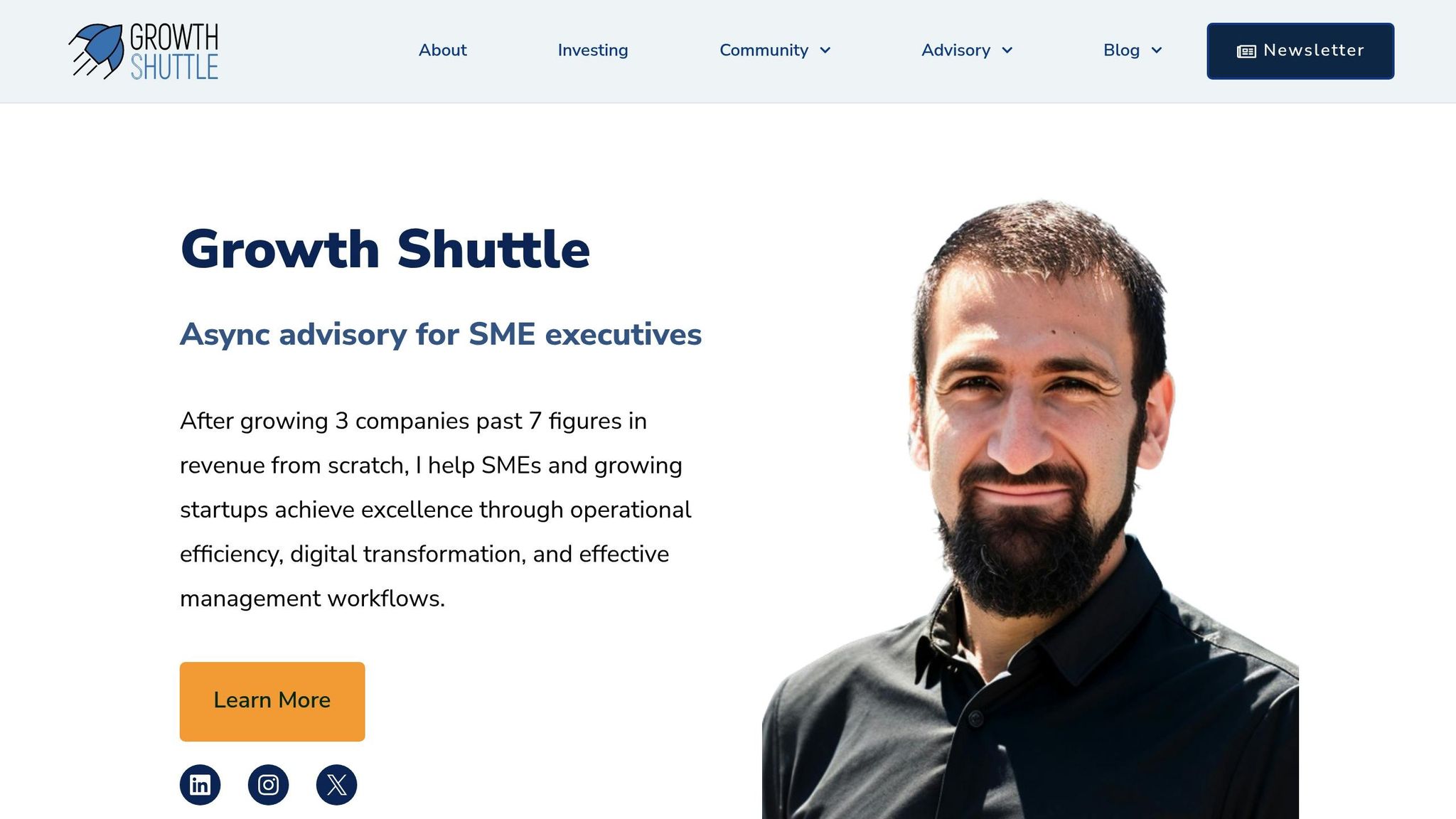
For many SMEs, implementing feedback loops while juggling daily operations can feel overwhelming. This is where expert guidance comes in. Growth Shuttle specializes in helping SMEs streamline feedback processes and enhance operational efficiency as part of their digital transformation journey.
Strategic Planning and Implementation
Growth Shuttle offers two tailored plans:
- The Direction plan ($600/month) provides monthly strategy sessions to identify challenges and create actionable plans.
- The Strategy plan ($1,800/month) goes further by helping businesses implement these plans using proven tools and methodologies, with ongoing support through email and Slack.
Comprehensive Digital Transformation Support
For SMEs ready to fully integrate feedback loops across their operations, Growth Shuttle’s Growth plan ($7,500/month) includes weekly calls, meetings, and monthly training sessions. This hands-on approach is ideal for businesses managing feedback across multiple departments.
Building a Feedback-Driven Culture
Creating a culture of continuous improvement can be tough. Growth Shuttle’s founder, Mario Peshev, uses his expertise as a business advisor and author of MBA Disrupted to help leaders foster this mindset. The focus is on leadership setting the tone, modeling desired behaviors, and celebrating small wins.
Technology Selection and Integration
Choosing the right tools is key to success. Growth Shuttle helps SMEs select technologies that integrate smoothly with existing systems and allow for future growth. They evaluate factors like ease of use, survey customization, AI-driven insights, and reporting features.
Measuring Success and ROI
Growth Shuttle also helps businesses focus on metrics that truly matter - like customer retention, operational efficiency, and revenue growth - rather than vanity metrics. Companies that invest in automation technologies, including feedback systems, can see an ROI of up to 300% within three years. Achieving this requires strategic implementation and ongoing optimization, which Growth Shuttle provides.
With their combination of strategic planning, tech expertise, and cultural transformation support, Growth Shuttle is a valuable partner for SMEs looking to use feedback loops to drive digital success.
Conclusion: Why Feedback Loops Matter for Digital Transformation
Digital transformation thrives on systems that continuously adapt and improve. Feedback loops are the driving force behind this evolution, enabling businesses to remain flexible, forward-thinking, and customer-centric in an ever-shifting digital world. They work hand-in-hand with real-time data and agile practices to create a foundation for growth and innovation.
The impact of structured feedback integration is undeniable. Take Domino's Pizza, for example - their feedback-driven approach led to a staggering 2,000% stock increase between 2010 and 2020. Similarly, Tom Tailor saw a +10-point boost in their Net Promoter Score by prioritizing customer feedback. These real-world examples reinforce the earlier case studies, underscoring the importance of feedback loops in driving meaningful digital transformation.
For small and medium-sized enterprises (SMEs), the stakes are even higher. With fewer than 30% of digital transformation efforts successfully improving business processes, structured feedback becomes a critical tool for staying competitive. Companies that treat feedback as a strategic priority rather than an afterthought are the ones that achieve impactful results.
Industry leaders have demonstrated that acting on customer feedback leads to faster growth and improved operational efficiency. This aligns with earlier research, showing that businesses that continuously refine their strategies based on feedback are better positioned for long-term success.
For SMEs ready to take the leap, the blueprint is clear: set well-defined goals, choose effective feedback collection methods, and - most importantly - turn insights into action. The tools and methodologies are already at your disposal. The question is, are you ready to make feedback loops the backbone of your digital transformation strategy? The answer could define your success.
FAQs
How can small and medium-sized businesses (SMBs) implement effective feedback loops with limited resources?
Small and medium-sized businesses (SMBs) don’t need massive budgets to create effective feedback loops. By sticking to straightforward and budget-friendly methods, they can gather and act on feedback with ease. Start by regularly collecting input from customers or employees through simple tools like surveys, direct conversations, or even existing communication channels.
Once you’ve gathered feedback, the key is to analyze it quickly and focus on actionable takeaways. Affordable tools, such as task management software or even basic spreadsheets, can help you stay organized by tracking feedback and monitoring progress.
The real trick is consistency - make feedback a continuous cycle: collect, analyze, and take action. This steady approach ensures improvement over time without breaking the bank, making it a smart choice for businesses with tighter budgets.
What challenges do businesses often face when using feedback loops in digital transformation?
Integrating feedback loops into digital transformation isn't always straightforward. Several challenges can get in the way. For starters, data quality issues and biases can skew the insights you rely on, leading to flawed decision-making. On top of that, the complexity of systems and delays in feedback often slow down the process, making it harder to act quickly.
Then there's the human factor - resistance to change among employees can throw a wrench in even the best-laid plans. Add to this the difficulties of consolidating data from multiple sources, and it becomes clear why this process can feel overwhelming.
Other roadblocks include integrating feedback mechanisms with legacy systems, which are often outdated and inflexible, and ensuring data security remains airtight throughout the transformation. Tackling these challenges takes more than just technical fixes. It demands clear strategies, open communication, and systems designed to evolve alongside your business.
How do feedback loops help improve customer retention and operational efficiency?
Feedback loops are essential for boosting customer retention and improving operational efficiency. They give businesses a way to consistently collect and respond to customer input, helping to pinpoint problem areas and address concerns before they escalate. This proactive approach not only strengthens customer loyalty but also helps minimize churn.
When it comes to digital transformation, feedback loops become even more powerful. They allow companies to make real-time adjustments and smarter decisions based on up-to-date information. This flexibility ensures smoother operations, faster problem-solving, and strategies that stay in sync with what customers want - ultimately fueling growth and long-term success.


