Feedback loops are structured processes designed to gather, analyze, and act on insights to improve partnerships. They help businesses identify what works and address challenges, strengthening collaboration and trust. Effective feedback loops include three steps: collecting input, analyzing data, and implementing changes. This approach is particularly useful for small and medium enterprises (SMEs) to maximize partnership value and adapt strategies based on real performance data.
Key takeaways:
- Collect feedback: Use surveys, interviews, and digital tools to gather honest input.
- Analyze feedback: Identify patterns, prioritize issues, and validate insights with measurable goals.
- Act on feedback: Develop clear action plans, collaborate with partners, and follow up regularly.
Tools like Google Forms, SurveyMonkey, and Zonka Feedback simplify data collection, while metrics like Net Promoter Score (NPS) and Customer Satisfaction Score (CSAT) measure progress. For SMEs, external advisors like Growth Shuttle can provide expert guidance to structure feedback systems and drive actionable results.
Start small with regular check-ins or surveys, and build a culture of improvement by listening to your partners and acting on their input.
Feedback Loops and Trust Falls: A Designer's Approach to Building a Team
Key Components of Effective Feedback Loops
Creating effective feedback loops means gathering, analyzing, and acting on partner input to drive ongoing improvements.
Collecting Feedback
Start by gathering honest input through various channels that align with how stakeholders prefer to communicate.
Surveys are one of the most efficient ways to collect feedback - if they’re well-designed. By keeping questions clear and concise, you’re more likely to get higher response rates and useful data. Timing also matters; asking for feedback when stakeholders are most engaged can significantly boost participation. Tailoring the approach with strategic targeting and thoughtful content helps uncover meaningful insights instead of generic responses.
For deeper insights, interviews can reveal issues that surveys might miss. These one-on-one conversations often highlight underlying concerns or opportunities.
Digital tools like feedback boxes and contact forms provide ongoing, real-time input. To make these tools effective, ensure they’re easy to access, simple to use, and encourage open-ended responses.
The best feedback collection strategies involve brainstorming triggers and aligning them with specific goals. This approach integrates feedback as a natural part of the company’s operations.
Once feedback is collected, the next step is to dive into the data to identify key issues.
Analyzing and Validating Feedback
Analyzing feedback requires a mix of qualitative and quantitative methods to separate valuable insights from the noise.
Recognizing patterns is key. Recurring themes across feedback channels can highlight systemic problems or opportunities. For example, frequent mentions of delays in communication might point to inefficiencies in internal processes.
Using prioritization frameworks helps focus on feedback that offers the greatest potential for impact and is feasible to address. This ensures that efforts are directed where they’ll make the most difference.
Automated sentiment analysis can speed up the process, providing a quick overview of stakeholder sentiment and identifying critical issues. When paired with CRM systems, these tools can align feedback analysis with broader business goals.
Setting measurable goals is crucial for validating improvements. For instance, one company restructured its client onboarding process based on feedback and saw a 20% increase in satisfaction scores within a single quarter. Predictive analysis can take this a step further by anticipating partner needs before issues arise.
These insights lay the groundwork for impactful, collaborative actions in the final stage.
Acting on Feedback
The last step is turning insights into real changes. As Valin Tsur Falckovitch, Business Development & Strategic Partnerships, explains:
"Feedback is only as good as the action it inspires."
Focus on creating actionable solutions that address the feedback provided. By offering specific steps or adjustments, you give partners a clear way to tackle challenges.
Collaborate with partners to develop action plans, set timelines, and define success metrics.
To maintain momentum and build trust, schedule regular updates and follow-ups. Keeping everyone informed ensures that feedback becomes a consistent driver of improvement rather than a one-time effort. When feedback is consistently sought and acted upon, it fosters a culture of continuous progress.
Best Practices for Building Feedback Loops in Partnerships
Creating effective feedback loops takes more than just gathering input - it demands a thoughtful approach that involves everyone and drives meaningful change.
Engaging Stakeholders
Feedback starts with people. Engaging stakeholders directly brings a personal touch to the process and ensures that feedback is both relevant and actionable. Begin by identifying the key players - not just the obvious contacts but also influential voices who can encourage broader participation.
Tailor your engagement strategy to each stakeholder. Some might prefer formal surveys, while others may feel more comfortable sharing thoughts through casual conversations or anonymous forms. The key is to prioritize transparency, inclusivity, and responsiveness.
Listening is just as important as asking. Acknowledge stakeholders’ concerns, even when disagreements arise, and be willing to adapt plans based on their input. This not only builds trust but also demonstrates that their feedback can drive real change and spark creative solutions. Keeping stakeholders in the loop with regular updates - especially on developments that affect them - reinforces that their voices matter.
As Sarah MacLean, a New York Times bestselling author, wisely notes:
"The best partnerships aren't dependent on a more common goal but on a shared path of equality, desire, and no small amount of passion."
Establishing Consistency
Consistency is the backbone of a reliable feedback system. Regular feedback loops help track progress and make timely adjustments. Start by setting up a structured system, such as scheduled check-ins or surveys, that focuses on partners' experiences. Questions should target satisfaction levels, challenges, and suggestions for improvement.
Mohammad Alshare highlights the importance of this approach:
"Should start with establishing a structured feedback system. This system should include regular check-ins or surveys tailored to partners' experiences, asking specific questions about their satisfaction, challenges faced, and suggestions for improvement."
Define clear goals and evaluation criteria so everyone knows what success looks like. Quick responses to urgent issues are equally crucial. For instance, when Greyhound analyzed customer feedback and discovered frustrations over delayed buses in New York, they swiftly adjusted their schedules and communication to retain customers.
Accountability is key - assign clear roles for managing feedback and use shared dashboards to track trends across teams. This ensures feedback doesn’t get stuck in silos but instead informs decisions across departments. As Atanu Das, a Marketing & Web Consultant, explains:
"Consistent & reliable partner feedback is vital for strong collaboration. Start with clear communication, ensuring both parties understand expectations. Set regular check-ins to review performance, address concerns, and share constructive feedback. Create a safe and open environment where partners can express their thoughts freely."
Creating a Culture of Improvement
While consistency keeps the process running, fostering a mindset of improvement ensures long-term success. A culture of continuous improvement starts with leadership. When leaders actively seek feedback, it sets the tone for the entire organization and creates an environment where people feel safe sharing their thoughts.
To embed this mindset, leaders should set measurable improvement goals, offer training on better practices, and celebrate achievements along the way. Open communication and diverse feedback channels are essential, as is recognizing contributions that lead to progress. Technology can also play a big role - tools like instant messaging, digital surveys, or anonymous platforms make it easier to gather and act on feedback efficiently.
Tools and Metrics for Feedback Loop Implementation
Once you’ve laid the groundwork for engaging stakeholders, the next step is to use tools and metrics that turn feedback into tangible improvements. Digital tools help organize scattered input into actionable insights, while metrics let you measure what’s working and what isn’t.
Digital Tools for Feedback Management
Digital feedback tools simplify workflows, improve communication, and shorten project timelines. The key is to pick tools that align with your partnership goals and integrate smoothly with your existing systems.
Here are four features to look for when evaluating platforms: the ability to comment directly on digital assets, integration with project management tools, a centralized dashboard, and automated workflows.
- Atarim: Ideal for web designers and agencies, Atarim provides visual feedback on websites. It offers a free plan for limited use and scalable paid options.
- SurveyMonkey: Known for structured surveys and data-driven insights, this tool has a strong reputation, earning a 4.6/5 rating.
- Google Forms: A free, straightforward option for small teams or quick surveys.
- Zonka Feedback: Features AI-powered analytics to gather insights across multiple touchpoints, with a 4.8/5 rating. It includes tools like sentiment analysis, automation, and real-time insights, making feedback easier to act on.
When selecting a platform, prioritize ease of use, integration capabilities, data privacy, and scalability. The best tools connect seamlessly with CRMs, helpdesks, and analytics platforms, ensuring that feedback actively informs your business strategies rather than sitting unused.
Key Metrics to Measure Progress
Using the right metrics transforms feedback into measurable outcomes. Companies that consistently act on customer feedback see an average of 15% higher Net Promoter Scores (NPS). This highlights the real value of feedback systems when implemented effectively.
- Net Promoter Score (NPS): A reliable measure of partnership health, showing how likely partners are to recommend your organization.
- Customer Satisfaction Score (CSAT): Offers detailed insights into specific interactions or processes.
- Revenue Metrics: These often serve as the ultimate indicator of success. Greg Portnoy, CEO & Co-Founder of EULER, emphasizes this point:
"Ultimately, revenue is almost always the North Star."
Take AvePoint as an example. Sam Valme, Senior Director of Channel Experience, shared their success story:
"When we first started with Impartner, we were at 20% channel revenue. After two years, we're at 50% of our revenue touching the channel."
Similarly, Palo Alto Networks focused on engagement metrics to drive results. Stephanie Zembal, Senior Manager of Channel Marketing, explained:
"It's really been pivotal in changing the way that our partners are able to co-market with us. We're seeing about a 40% quarter over quarter growth when I'm measuring partner engagement, which is fantastic."
Beyond financial metrics, consider tracking engagement levels, response times to feedback, and issue resolution rates. A majority of consumers - 73% - say they appreciate businesses that actively seek and act on feedback. Responsiveness can be a key competitive advantage.
Monitor key performance indicators (KPIs) monthly and quarterly to get a clear picture of progress by year-end. This consistent tracking helps identify growth trends and areas for improvement, supporting long-term success.
Comparing Feedback Collection Methods
Different methods work best in different scenarios. Understanding their strengths helps you choose the right approach for each situation.
| Method | Pros | Cons | Best Use Case |
|---|---|---|---|
| Digital Surveys | Scalable, automated analysis, cost-effective | Lower response rates, limited depth | Routine health checks, NPS tracking, large networks |
| One-on-One Interviews | Deep insights, relationship building | Time-consuming, harder to scale | Strategic partnerships, complex issues |
| Digital Dashboards | Real-time data, visual insights, automated tracking | Setup complexity, may miss context | Performance monitoring, trend analysis |
To avoid survey fatigue and boost response rates, keep questions concise and focused. Digital surveys are great for routine feedback, while interviews are better for exploring complex issues or strengthening relationships. Many organizations combine these methods - using dashboards for ongoing monitoring, surveys for regular updates, and interviews for strategic discussions. Automation can also help by flagging negative feedback for immediate attention. This way, urgent issues are addressed quickly, while positive feedback helps shape long-term strategies.
sbb-itb-c53a83b
Using Advisory Support for Feedback Loop Success
Selecting the right tools and metrics is only part of the equation. To truly make feedback loops effective, advisory support plays a crucial role in turning raw input into actionable strategies. For many small and medium-sized enterprises (SMEs), building feedback systems that lead to real improvements can be challenging. External advisors can help transform scattered feedback into a structured advantage.
Role of Expert Guidance
External advisors bring a fresh perspective that internal teams often lack. They can spot blind spots in existing feedback processes and help SMEs tackle common obstacles. By setting clear objectives from the outset, advisors ensure that every piece of feedback serves a specific purpose and involves the right stakeholders.
With expert input, feedback mechanisms become more focused and efficient. Advisors align the collection and analysis of feedback with both short-term needs and long-term goals. They also validate findings across multiple sources, ensuring decisions are based on reliable data rather than isolated viewpoints.
Growth Shuttle's Expertise
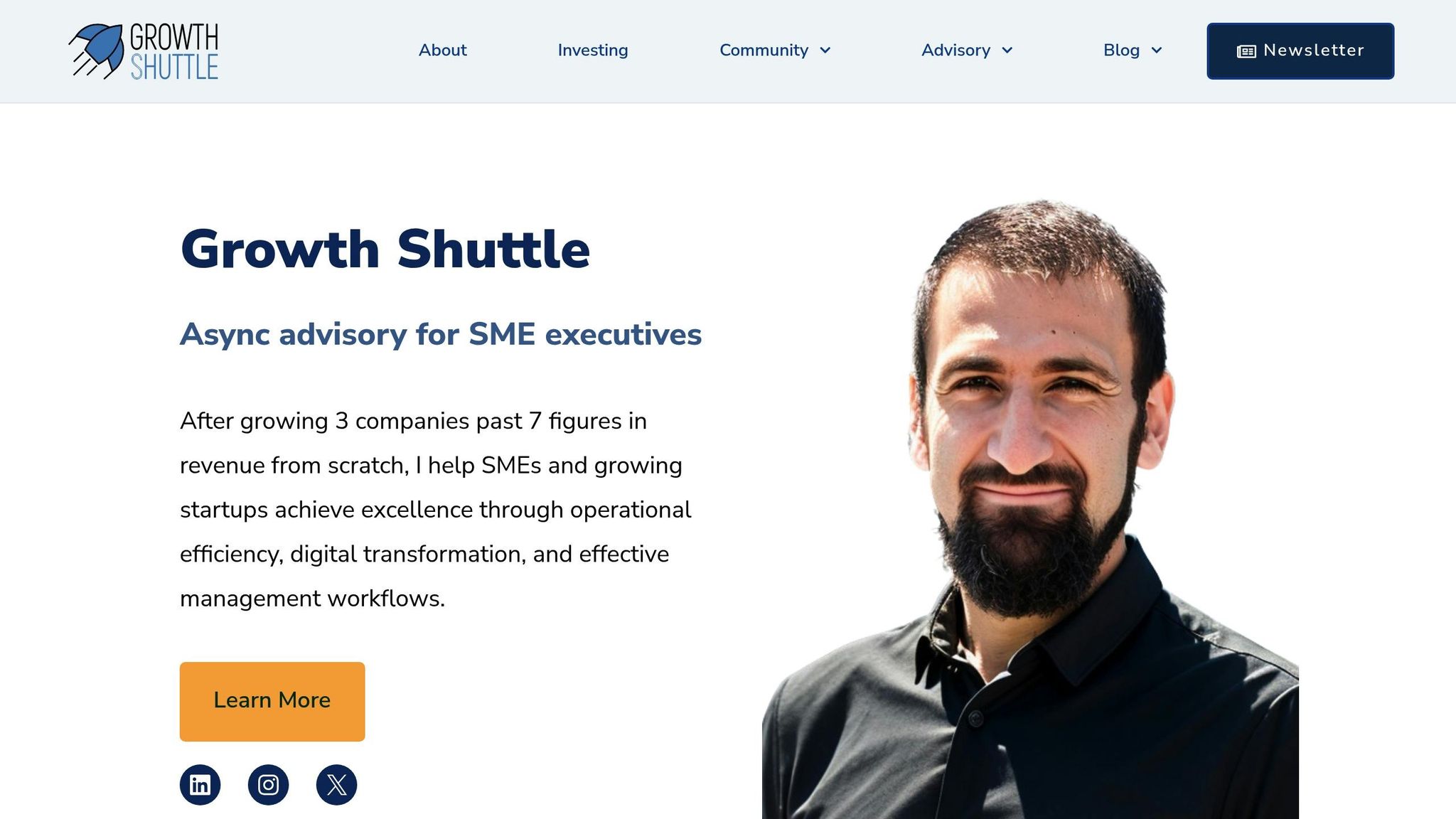
Growth Shuttle specializes in helping SMEs develop feedback systems tailored to their needs. Their services focus on SMEs with teams of 15–40 people, where partnerships are vital, and resources are often stretched thin. The company emphasizes digital transformation and operational efficiency - two areas where feedback loops can have the greatest impact.
Mario Peshev, Growth Shuttle’s CEO and author of MBA Disrupted, brings his experience as a serial entrepreneur to the table. His insights come from scaling multiple organizations, making him well-versed in practical strategies. Growth Shuttle offers advisory plans designed for varying levels of feedback loop complexity:
- Direction Plan ($600/month): Monthly strategy sessions to pinpoint feedback challenges and create actionable improvement plans.
- Strategy Plan ($1,800/month): Support for implementing feedback systems, including ongoing email and Slack guidance to refine processes.
- Growth Plan ($7,500/month): Comprehensive support with weekly calls, departmental training, and even participation in partnership negotiations where feedback insights play a key role.
Growth Shuttle’s approach is flexible, offering asynchronous support throughout the month to address feedback issues as they arise. They also provide a free Business Accelerator Course, covering essential topics like communication systems and partnership management - key foundations for building effective feedback loops.
Maximizing Partnership Success
Advisors help turn feedback into meaningful change, particularly when it comes to partnerships. As Luis de Abreu Branco, CEO at Business Insight, explains:
"Feedback cycles are crucial for strengthening and enhancing partnerships. They foster transparency, open communication, and trust among partners. By providing a framework for discussing issues and aligning expectations, feedback cycles help prevent misunderstandings and conflicts, while promoting effective collaboration."
Advisory support ensures that feedback cycles promote transparency and trust. Advisors help set clear expectations with partners on how feedback will be collected, analyzed, and acted upon. This avoids the common pitfall of feedback fatigue, where input is ignored or fails to translate into results. Creating a safe space for open dialogue is critical, and external advisors can facilitate tough conversations while keeping partnerships intact.
Additionally, advisors implement monitoring systems to track the impact of feedback-driven changes. This accountability not only demonstrates the value of feedback but also strengthens trust among stakeholders. By combining advisory support with well-designed feedback loops, SMEs can build stronger, more resilient partnerships over time.
Conclusion
Creating effective feedback loops in partnerships isn't just a task - it's a strategy that fuels growth, fosters trust, and drives collaboration. Companies that excel in this area often gain a strong edge, enjoying higher satisfaction levels, faster problem-solving, and more dynamic partnerships.
Key Insights Recap
The foundation of a successful feedback loop lies in three essential steps: gathering input, analyzing it, and acting on it. If any of these steps falter, even the most advanced feedback systems will fall short of delivering meaningful outcomes.
This approach leads to what experts describe as "a state of shared benefit". As Paul Graham, the founder of Y Combinator, puts it:
"Over-engaging with early users is not just a permissible technique for getting growth rolling. For most successful startups it's a necessary part of the feedback loop that makes the product good".
Modern tools and metrics make it easier to pinpoint areas for improvement. Companies like Atlassian have shown how integrated feedback solutions can quickly identify the root causes of challenges and offer precise, actionable insights. The trick is selecting tools that align with the complexity of your partnerships and the size of your team.
External advisory support can also play a pivotal role in translating insights into measurable outcomes. For small to mid-sized teams, especially those with 15-40 members, expert guidance helps avoid common pitfalls like feedback fatigue and ensures that feedback leads to real, strategic improvements.
These principles pave the way for timely, impactful actions.
Call to Action
Ready to take the next step? Start building your feedback loops today by setting clear goals and metrics for your key partnerships. Keep it simple at first - try monthly check-ins or quarterly surveys - and focus on asking direct, actionable questions that encourage honest feedback.
If you're looking for tailored support, Growth Shuttle offers advisory services designed to scale your feedback systems effectively. With expertise in operational efficiency and digital transformation, along with Mario Peshev's experience in scaling businesses, they provide SMEs with practical strategies for partnership success.
Whether you need regular strategy sessions to tackle feedback challenges or a comprehensive plan for implementing advanced feedback systems, Growth Shuttle’s flexible approach ensures you get the guidance that fits your business. Remember, the strongest partnerships thrive on continuous improvement - and that starts with truly listening to your partners.
FAQs
What challenges do small and medium-sized businesses face when creating feedback loops in partnerships, and how can they address them?
Small and medium-sized enterprises (SMEs) often face hurdles such as unclear feedback processes, limited technical know-how, and poor communication in partnerships. These challenges can make it tough to collect and act on valuable insights.
To address these issues, businesses should prioritize setting up clear communication channels, creating standardized feedback systems, and building a culture centered on trust and teamwork. Investing in team training and using tools to simplify feedback collection can also help create smoother and more productive feedback cycles.
How can businesses turn partner feedback into meaningful actions?
Turning Partner Feedback Into Results
To turn partner feedback into meaningful action, begin by collecting their input through structured approaches like surveys, one-on-one interviews, or routine check-ins. Once you've gathered this information, analyze the data to uncover patterns, spot trends, and pinpoint areas that need attention. These insights can then be shared with your teams across departments to align everyone on priorities and set clear, measurable goals.
Keep the feedback loop alive by staying connected with your partners. Work together to refine processes, adjust strategies, and monitor progress based on established KPIs. This ongoing collaboration not only drives improvement but also builds a stronger, more productive partnership over time.
How can external advisors improve feedback loops for SMEs and contribute to their success?
External advisors are essential for improving feedback loops in small and medium-sized enterprises (SMEs). They bring an outside perspective, helping to spot overlooked opportunities and offering practical suggestions that businesses can act on. Their input often highlights areas that may have been missed internally, paving the way for better processes and ongoing growth.
With their specialized knowledge and strategic insights, advisors enable SMEs to make smarter decisions, streamline operations, and strengthen teamwork within business partnerships. This not only improves communication and collaboration but also builds stronger relationships and supports long-term success.


