
When a crisis strikes, how you engage stakeholders can make or break your recovery. This guide simplifies the process, helping you build trust, manage communication, and prioritize effectively. Here’s what you’ll learn:
- Why Stakeholder Coordination Matters: Trust is your safety net during chaos. Clear communication and collaboration reduce fallout and maintain stability.
- Common Challenges: Miscommunication, unclear roles, and poor preparation can cause significant financial and reputational damage.
- How to Identify and Prioritize Stakeholders: Use tools like stakeholder maps to focus on those with the most influence and urgency.
- Building a Crisis Team: Assemble a dedicated team with clear roles for smooth execution.
- Crisis Communication Best Practices: Act fast, be transparent, and leverage technology for real-time updates.
- Post-Crisis Review: Evaluate your response, gather feedback, and refine your plans for future resilience.
Effective crisis management isn’t just about reacting – it’s about planning, communicating, and continuously improving. By following the steps outlined here, you can safeguard trust and strengthen your organization when it matters most.
Crisis Management: Strategies When Communicating with Multiple Stakeholders
How to Identify and Analyze Stakeholders
Understanding who your stakeholders are and what they need is a critical starting point in crisis management. This knowledge helps you categorize stakeholders into distinct groups and address their specific concerns effectively.
Stakeholder Types and Their Roles
Stakeholders generally fall into two main groups: internal and external. Each group has its own expectations and priorities during a crisis.
Internal stakeholders include employees, shareholders, and senior leadership – those directly tied to your organization’s daily operations. Employees often look for reassurance about job security, clear guidance on their roles, and updates on how the crisis might impact them. Shareholders and investors, on the other hand, focus on financial outcomes and expect transparent communication about how the situation may affect their investments.
External stakeholders cover customers, communities, regulatory bodies, media, and suppliers. Customers want honesty and assurance that the quality of products or services won’t be compromised. Regulatory agencies and government bodies require compliance and timely updates on issues that could affect public safety or market stability. Meanwhile, the media and the broader public demand accurate and clear information about the crisis and the steps being taken to resolve it.
For instance, when P&O Ferries abruptly replaced 800 staff with agency workers, the backlash was swift, leading to public outrage and lasting reputational harm. On the flip side, a nonprofit food service provider that faced an unexpected shutdown successfully maintained trust by implementing a well-thought-out crisis communication plan tailored to its stakeholders.
Stakeholder Mapping Methods
Stakeholder mapping is the process of identifying and analyzing the relationships, interests, and influence of various groups. Tools like power-interest matrices and network diagrams make it easier to visualize these dynamics. Stakeholders with high power and high interest need focused engagement, while those with less influence may only require periodic updates.
For example, a large energy company used detailed stakeholder maps to customize its communication for groups such as regulatory agencies, local businesses, environmental advocates, and residents. This approach not only helped them meet consultation requirements but also allowed them to build strategic relationships and tailor messages effectively.
Creating a crisis management team that includes representatives from across your organization ensures diverse perspectives are considered. Stakeholder maps are not static – they should be updated regularly as the situation evolves. This ensures your team can prioritize effectively and respond to changing dynamics during the crisis.
How to Prioritize Stakeholders During Crisis Response
In a crisis, prioritizing stakeholders is essential to make the best use of limited resources. Consider the following factors when setting priorities:
- Influence: How much power does the stakeholder have over operations or recovery?
- Interest: How concerned are they with the crisis?
- Impact: How significantly are they affected by the situation?
- Urgency: How quickly do they need a response?
Stakeholders with high influence, interest, and urgency – such as key customers, regulatory agencies, or employee unions – should take precedence. However, even smaller stakeholders can become critical if they control essential resources.
For example, a state education system planning major literacy reforms used stakeholder maps and a Stakeholder Knowledge Base Chart to engage with parents, students, teachers, and policymakers. By tailoring messages to each group, they achieved informed policy changes and strong support from stakeholders.
It’s also important to recognize potential conflicts of interest among stakeholders. For example, reassuring employees might raise concerns for investors, or satisfying regulatory requirements could frustrate customers. Addressing these nuances early allows for balanced messaging that considers all perspectives. Regularly revisiting and updating stakeholder priorities ensures your response stays effective as the situation develops.
With stakeholders clearly prioritized, the next step is to focus on planning and managing resources to execute your crisis response effectively.
Crisis Planning and Resource Management
Handling a crisis effectively starts with preparation. This includes assembling a dedicated crisis team, understanding potential risks, and ensuring resources are ready to go. Organizations that invest time in planning ahead are better equipped to coordinate efforts and reduce the impact when a crisis strikes.
How to Build a Crisis Management Team
Creating a strong Crisis Management Team (CMT) is the backbone of any successful response. A well-organized team can tackle complex challenges head-on while safeguarding the organization’s reputation.
Selecting the Right Team Members
A capable CMT should bring together individuals from key departments. Essential roles typically include:
- Crisis Manager: Leads the team and oversees the response.
- Communication Coordinator: Manages internal and external messaging.
- Operations Lead: Ensures business continuity during disruptions.
- Risk Management and IT Specialist: Handles technical vulnerabilities and risk assessments.
- Legal Advisor: Guides compliance and legal considerations.
- HR Representative: Addresses employee-related concerns.
The right team members are those who can stay calm under pressure, have decision-making authority, and work well across departments.
Defining Roles and Responsibilities
Once the team is in place, assign roles clearly. Senior managers should oversee efforts, delegate tasks, and ensure the crisis leader keeps everything on track.
Establish detailed protocols, including communication procedures, decision-making frameworks, key stakeholder contacts, and ready-to-use messaging templates. Having these elements in place reduces confusion when time is critical.
Training and Preparation
Regular training keeps the team ready to act. Schedule sessions that cover media relations, social media handling, and internal communication. Start with basic drills and progress to more complex scenarios as the team gains experience.
Consider the 2022 P&O Ferries crisis as a cautionary tale. Poor planning and rushed decisions led to significant reputational damage.
Risk Assessment and Scenario Planning
Understanding potential risks is a cornerstone of crisis preparation. Risk assessment and scenario planning help organizations anticipate possible challenges, evaluate their impact, and prepare for them effectively.
Start by defining the objectives and scope of your crisis plan. Identify the goals, boundaries, and stakeholders involved. A situational analysis can help pinpoint trends, strengths, weaknesses, opportunities, and threats.
From there, brainstorm scenarios that combine different uncertainties and drivers. For example, a software company might evaluate risks tied to technological changes and evolving data regulations. Use a risk matrix to prioritize threats based on their likelihood and impact.
For each risk, outline specific actions to prevent, mitigate, or recover from potential issues. Test these strategies to ensure they work under different conditions. Keep in mind that risk assessment isn’t a one-and-done task – regularly review and update your plan as circumstances evolve, and share updates with stakeholders to keep everyone aligned.
Resource Allocation During Crises
When a crisis hits, how you allocate resources can determine whether recovery is quick or drawn out. Strategic planning ensures resources are used effectively when they’re needed most.
Immediate Resource Mobilization
Act fast. Assign leadership, assess the situation, and monitor progress closely. Address urgent threats, like infrastructure damage, first, while also maintaining ongoing operations to keep the organization stable.
Human Resource Management
Your employees are your greatest asset during a crisis. Support them with measures like shift rotations and ensuring they get adequate rest. A clear communication strategy is also essential – designate a spokesperson, set up feedback channels, and provide guidelines for internal and external messaging. Transparent communication builds trust and reduces anxiety.
Learning from Real-World Examples
Take lessons from past incidents. Southwest Airlines, for example, responded quickly and transparently during the Flight 1380 crisis, earning public trust. On the other hand, United Airlines faced backlash after mishandling a passenger removal incident, which caused lasting reputational harm.
Adaptability and Continuous Improvement
Crisis situations can change rapidly, so your resource allocation plan needs to be flexible. Adjust strategies as new information becomes available, and document lessons learned to improve future responses.
Data and analytics play a key role here. By monitoring resource use, evaluating response effectiveness, and identifying areas for improvement, organizations can make smarter decisions under pressure.
With resources managed effectively, the next step is refining communication strategies to maintain trust during challenging times.
Crisis Communication Best Practices
In times of crisis, clear and organized communication is critical to maintaining trust with stakeholders. Studies reveal that companies responding to a crisis within the first hour are 85% more likely to retain public confidence compared to those that delay their response. The cornerstone of effective crisis communication lies in a structured approach that emphasizes transparency, speed, and consistency across all channels.
Creating a Communication Framework
A well-defined communication framework is the foundation of any successful crisis response. This framework should be a readily accessible document for everyone involved in managing the crisis. Start by assembling a crisis communication team that includes representatives from key departments. While this team collaborates with the Crisis Management Team, its focus is solely on crafting messages and engaging stakeholders. Each member needs to understand their responsibilities and follow clear escalation protocols.
Messages should strike a balance between urgency and empathy, using pre-approved talking points to ensure consistency.
"During a crisis, the individual who is leading the response efforts must get key stakeholders together to discuss the situation and ensure alignment on all actions." – Laurie Schalow, Chipotle Mexican Grill
Your framework should include critical elements such as detailed contact lists, response protocols, and pre-approved messaging templates. These tools help minimize confusion when swift decisions are required. Additionally, the plan should outline clear channels for communication and a defined chain of command. Being transparent and honest, even in tough situations, fosters trust. Acknowledge mistakes openly and outline actionable steps to address them – stakeholders appreciate accountability and vulnerability.
Finally, use technology to keep everyone informed in real time.
Using Technology for Real-Time Updates
Technology is indispensable for delivering timely updates during a crisis. The right tools can disseminate information to thousands of stakeholders in minutes. For example, one organization successfully reached a large audience quickly through integrated communication platforms. This highlights the importance of leveraging technology in crisis scenarios.
Social media platforms are invaluable for both sharing updates and gauging public sentiment. They allow for immediate communication while providing insights into concerns. Similarly, SMS alerts and mobile notifications can bypass the clutter of email inboxes and social media feeds, ensuring critical messages are seen. Tools like live dashboards and status pages offer stakeholders self-service access to real-time updates, easing the pressure on your communication team. When selecting technology solutions, prioritize those that integrate seamlessly with your existing communication channels, ensuring stakeholders receive updates through their preferred platforms.
Managing Media and Public Relations
In addition to real-time updates, effective media management is essential for maintaining stakeholder confidence. Handling media relations during a crisis requires balancing openness with control. Assign a trained spokesperson to deliver key messages clearly and consistently. This individual should have media training and the authority to represent the organization, as mixed messages can create confusion. Address difficult questions with honesty, acknowledging when more information is needed and committing to follow up with accurate details.
Monitoring media coverage and public sentiment allows you to fine-tune your messaging as the situation evolves. For example, when Regis University experienced a cyberattack, they used technology platforms to promptly inform students and staff about the breach. This proactive approach helped preserve trust despite the challenging circumstances. It’s another example of how integrated crisis communication can make a difference.
sbb-itb-c53a83b
Post-Crisis Review and Improvement
After a crisis, taking the time to review what happened can turn challenges into opportunities for growth. According to PwC, 96% of organizations have faced disruptions in the last two years. This makes evaluating your response not just helpful but essential.
The goal here isn’t just damage control – it’s about preparing for the future. Organizations that carry out thorough post-crisis reviews are better equipped to manage future disruptions and maintain the trust of stakeholders over time.
How to Measure Crisis Management Performance
Evaluating how well your organization handled a crisis means looking at specific metrics that highlight your strengths and areas for improvement. Key performance indicators (KPIs) can provide valuable insights into how effectively your team responded and engaged with stakeholders.
- Response Times and Communication Efficiency: Measure how quickly your team activated, sent initial communications, and implemented response strategies. Faster response times often lead to greater stakeholder confidence.
- Stakeholder Satisfaction: Use tools like feedback forms, email open rates, and social media engagement to assess how well your communication reached and resonated with your audience. Did stakeholders feel your organization acted transparently and effectively?.
- Resource Allocation: Track how personnel, funds, and equipment were used during the crisis. Analyzing costs, staff hours, and resource usage can highlight inefficiencies to address in the future.
- Crisis Simulations: Test your team’s readiness by running simulations and observing individual responses. These exercises can reveal gaps in training or coordination that might not be obvious during an actual crisis.
Once you’ve gathered these metrics, use them alongside stakeholder feedback to pinpoint areas for improvement.
Collecting Stakeholder Feedback
Stakeholder feedback is crucial for refining your crisis management strategy. This feedback can come in many forms, from formal surveys to indirect signals like social media activity and website traffic.
- Surveys and Questionnaires: These are great for reaching large groups and gathering both numbers and narratives. Use a mix of closed and open-ended questions, such as asking stakeholders to rate communication effectiveness on a scale of 1–10 and then share what information they felt was missing.
- Interviews and Focus Groups: For more detailed insights, speak directly with key stakeholders. These conversations can uncover specific concerns and provide nuanced feedback that broader surveys might miss.
- Digital Tools: Platforms like social media and website analytics offer real-time data on stakeholder engagement and sentiment. For example, monitor how people talked about your response online or which crisis-related pages on your website saw the most traffic.
"Stakeholder feedback is critical to effective crisis response and recovery, as it enables emergency managers to understand the needs and concerns of stakeholders and develop response strategies that meet those needs." – Federal Emergency Management Agency (FEMA)
When analyzing feedback, look for patterns in comments, suggestions, and praise. This helps you identify what worked well and what needs improvement. Make sure to communicate with stakeholders about how you’re using their feedback – it builds trust and encourages honest input in the future.
Updating Your Crisis Management Plan
A crisis should always leave your organization better prepared for the next one. Regularly updating your crisis management plan ensures it stays aligned with your evolving needs and environment.
Start by documenting lessons learned – what actions were taken, how they played out, and what the outcomes were. Use these insights to make your plan stronger.
- Training Programs and Procedures: If feedback reveals gaps in communication, revise your messaging templates and protocols. If resources were mismanaged, adjust deployment strategies.
- Policies and Contact Lists: Update these to reflect current realities, ensuring your team has accurate information when a crisis strikes.
- Clear Follow-Up Tasks: Assign specific tasks with deadlines and accountability to ensure changes are implemented, not forgotten.
- Share Insights Across Locations: If your organization operates in multiple locations, share what you learned to prevent similar issues elsewhere.
"Regular review keeps your plan effective." – Hamed Rezk, MBA, CIA®, ASMEC®, CCRO, CRMP, GRCP, CCP, CLBB
Finally, conduct regular training and drills to test your updated procedures. Simulating real crisis conditions can help you identify any remaining gaps and build confidence in your team’s ability to respond effectively.
How Growth Shuttle Supports Crisis Preparedness
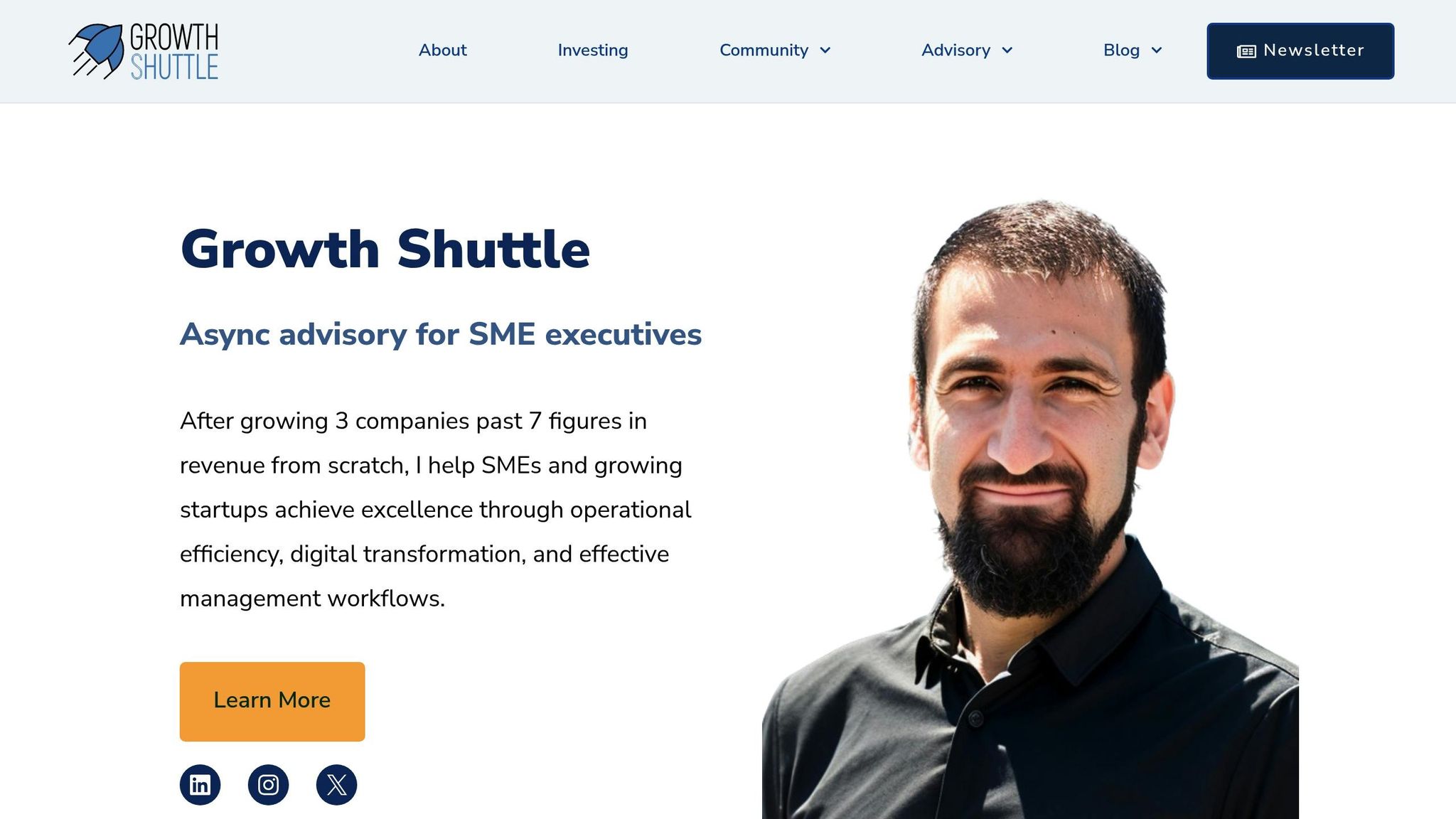
The right guidance can turn chaos into a well-coordinated response. Growth Shuttle, founded in 2018 by Mario Peshev, the author of MBA Disrupted, focuses on helping small and medium-sized enterprises (SMEs) build the operational and digital tools needed to improve stakeholder coordination during emergencies. This section highlights how Growth Shuttle enhances crisis management through customized advisory services.
Business Advisory for SMEs
Growth Shuttle’s services are tailored for CEOs managing teams of 15–40 people who need effective crisis management systems without the complexities of large-scale enterprise solutions. By focusing on digital transformation, process optimization, and stakeholder engagement, Growth Shuttle helps businesses overcome the challenges of managing crises. Many organizations struggle with unstructured processes, making it difficult to coordinate with stakeholders effectively. Growth Shuttle addresses these gaps by integrating systems that improve both daily operations and emergency responses.
Digital transformation is a cornerstone of modern crisis management, enabling real-time data collection, automation, collaboration, predictive analytics, and scalability. Unlike traditional manual processes and disconnected systems, Growth Shuttle adopts an agile, data-driven approach. Their process includes evaluating current crisis management capabilities, setting transformation goals, creating a roadmap, selecting appropriate technologies, training teams, implementing changes incrementally, and monitoring progress.
Beyond digital solutions, Growth Shuttle also offers services that tackle operational challenges through business strategy, digital consulting, technology deployment, recruitment, team management, and executive branding. These services ensure businesses are better equipped to handle disruptions efficiently.
Custom Crisis Management Solutions
Growth Shuttle offers three customizable advisory plans to enhance crisis preparedness:
| Plan | Monthly Investment | Key Features | Crisis Management Benefits |
|---|---|---|---|
| Direction | $600 | 1-hour monthly call with actionable planning | Ongoing crisis planning and monthly issue resolution |
| Strategy | $1,800 | Proprietary tools, brand representation, email and Slack support | Strategic communication frameworks and stakeholder protocols |
| Growth | $7,500 | Weekly calls, cross-department collaboration, PR and partnerships | Comprehensive coordination across departments |
The Strategy Plan is particularly effective for crisis preparedness, offering access to proprietary tools and continuous support through email and Slack. For businesses needing deeper engagement, the Growth Plan provides weekly collaboration across departments, ensuring the cross-functional alignment critical during emergencies.
Benefits of Expert Advisory Support
Growth Shuttle’s approach emphasizes pre-crisis planning and stakeholder coordination, offering SMEs expert guidance without adding internal overhead. By focusing on operational efficiency and digital transformation, Growth Shuttle strengthens businesses’ crisis management capabilities. One standout feature is their asynchronous support model, which provides ongoing guidance throughout the month, fostering a continuous partnership beyond scheduled sessions.
The results speak for themselves: improved operational efficiency, increased revenue, and reduced costs through digital transformation initiatives. These outcomes help businesses build the resilience needed to navigate both routine operations and unexpected disruptions. Mario Peshev’s experience as a serial entrepreneur and business advisor adds a practical edge, providing proven strategies for managing stakeholder relationships, implementing technology, and maintaining continuity during crises.
To further support business leaders, Growth Shuttle offers a free Business Accelerator Course. This course provides foundational knowledge to strengthen crisis management skills, helping teams understand not just how to act during a crisis, but also why certain approaches work effectively for stakeholder coordination.
Conclusion
Managing stakeholder coordination during a crisis goes beyond just effective communication – it’s about fostering resilience that can determine whether an organization weathers the storm or succumbs to failure. Timothy Coombs, the author of Situational Crisis Communication Theory, defines a crisis as "the perception of an unpredictable event that threatens important stakeholder expectations, significantly impacts the organization’s performance, and/or creates negative outcomes". This definition highlights why preparation and coordination are critical components of any modern business strategy.
A poorly handled crisis can shatter reputations and erode trust. We’ve seen this in high-profile cases like BP‘s mishandling of the 2010 Deepwater Horizon disaster, where a lack of transparency and an ineffective response amplified the damage. These examples serve as a stark reminder: failing to communicate effectively during a crisis can sometimes cause as much harm as the crisis itself.
Key Takeaways
Successful crisis management relies on proactive planning and open communication. Organizations need to identify potential risks, establish crisis response teams, and create detailed communication plans that outline key messages and channels. In today’s fast-paced environment, businesses have less time to react, making preparation even more essential.
Engaging stakeholders is central to any effective response. Understanding their needs, concerns, and expectations allows organizations to make smarter decisions, earn credibility, and build lasting trust. Stakeholders are often most concerned with how a crisis impacts them personally, so empathy and targeted communication are indispensable.
Effective crisis communication also requires speed, honesty, and compassion. As David Sturges, author of Communicating through Crisis, explains, "More important than how we communicate is what we communicate throughout the lifecycle of a crisis". This means acknowledging issues quickly, sharing accurate information through trusted channels, and controlling the narrative to prevent misinformation from spreading.
Equally important is post-crisis evaluation. Conducting a thorough review of each crisis helps organizations refine their response plans and learn valuable lessons. Every team member has a role to play in safeguarding the organization’s reputation.
These insights are not just ideas – they are actionable steps that can guide organizations toward informed and effective crisis responses.
Next Steps for Business Leaders
The strategies outlined here offer a solid framework for managing stakeholder coordination during crises, but turning these plans into reality requires consistent effort and refinement. Start by assessing your organization’s crisis readiness. Identify weak points in your coordination efforts, create comprehensive contact lists, map out organizational hierarchies, and determine which stakeholders are most critical and what issues matter to them.
Take advantage of digital tools like real-time data, automation, and predictive analytics to streamline crisis coordination and improve decision-making.
For leaders managing smaller teams of 15–40 employees, seeking expert advisory support – such as services from Growth Shuttle – can be a game-changer. Their focus on cross-functional alignment and asynchronous support can enhance your crisis management strategy without overwhelming your team with additional workload.
Crisis management is not a one-and-done process – it evolves with new risks and shifting stakeholder expectations. By applying the frameworks, communication techniques, and evaluation processes discussed in this guide, you can transform potential chaos into a coordinated response that safeguards trust and strengthens your organization’s resilience.
FAQs
How does stakeholder mapping enhance communication during a crisis?
Stakeholder mapping plays a crucial role in crisis communication by pinpointing key stakeholders and evaluating their roles, concerns, and priorities. This process enables organizations to create tailored messages that directly address specific needs, ensuring communication is clear and relevant when it matters most.
By promoting understanding and building trust, stakeholder mapping strengthens relationships, reduces potential disruptions, and supports quicker recovery efforts. It also ensures that messaging stays consistent and aligned with the organization’s objectives, even in the face of challenging situations.
What are the essential roles in a Crisis Management Team, and how do they ensure an effective response?
A Crisis Management Team brings together crucial roles to ensure a coordinated and effective response during challenging situations. Here’s a breakdown of the key players:
- Team Leader: This person steers the ship, making crucial decisions and ensuring everyone stays on the same page.
- Communications Lead: Responsible for crafting and delivering messages both inside and outside the organization, keeping transparency and managing public perception.
- Operations Coordinator: Focuses on logistics, resource allocation, and handling the operational side of the crisis.
- Incident Commander: Leads the charge during emergencies, aligning actions with the response plan and keeping efforts organized.
Each role is essential for providing clear direction, maintaining open communication, and ensuring smooth operations. Together, this team works to reduce the crisis’s impact and guide the organization toward recovery.
Why is a post-crisis review important, and how can you effectively gather feedback from stakeholders?
The Importance of a Post-Crisis Review
Taking the time to review your actions after a crisis is essential. It allows you to pinpoint what went well, identify areas that need work, and fine-tune your strategies for handling future challenges. This reflection not only improves your response plans but also strengthens communication efforts and helps rebuild trust with stakeholders. By looking back on the crisis, organizations can better prepare themselves for whatever lies ahead.
When it comes to gathering feedback from stakeholders, a variety of methods can be effective. Consider using tools like surveys, interviews, or group discussions to encourage honest and diverse input. Be transparent about how you plan to use the feedback, and make sure to follow up to show stakeholders that their voices have been heard and valued. Open communication and a commitment to learning go a long way in building stronger relationships and driving better results for your organization.