Non-verbal communication is a critical skill for executive teams, influencing confidence, credibility, and leadership effectiveness. Studies show that 93% of communication impact comes from non-verbal cues, such as body language, tone, and facial expressions. For leaders, aligning these signals with verbal messages builds trust and strengthens team dynamics.
Key takeaways from the article:
- Importance: Non-verbal communication shapes executive presence, which contributes to 26% of senior promotions and is ranked as the top leadership trait by 89% of CEOs.
- Training Options: Programs range from short online courses to immersive workshops, each tailored to different leadership needs.
- Moxie Institute: Neuroscience-based workshops ($697–$3,295).
- Coursera: Flexible, self-paced courses via subscription.
- Berkeley Executive Education: Intensive 3-day boot camp ($5,900).
- myTectra: Custom corporate training with practical focus.
- Growth Shuttle: Offers tailored advisory services ($600–$7,500/month) and a free 8-week email course with actionable leadership missions.
Whether you're preparing for high-stakes meetings or virtual interactions, mastering non-verbal skills is essential for effective leadership. Choose a training program that fits your schedule, budget, and professional goals.
Silent Signals: The Power of Nonverbal Communication (That Most People Miss)
sbb-itb-c53a83b
Best Non-Verbal Training Programs for Executive Teams
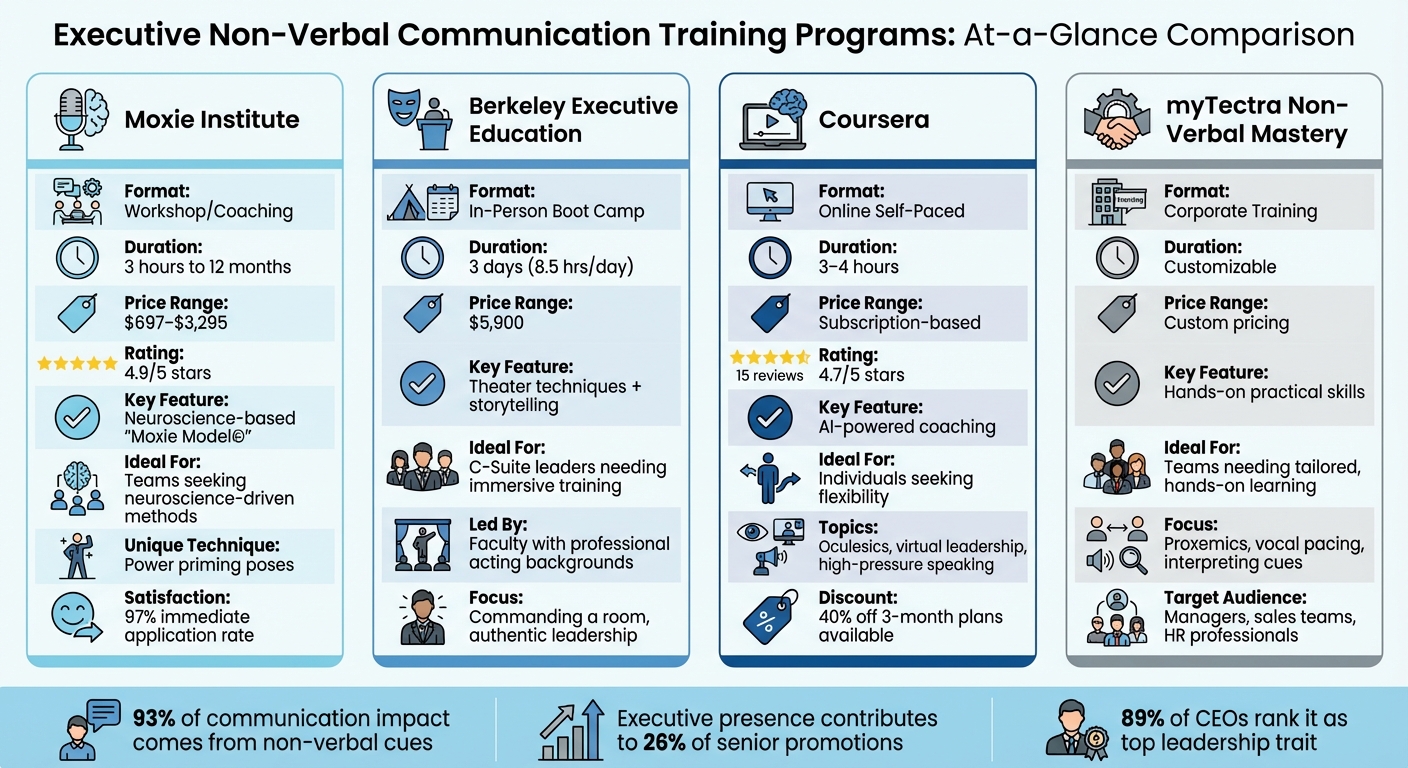
Executive Non-Verbal Communication Training Programs Comparison
Finding the right training program depends on your team’s priorities, schedule, and budget. Some programs focus on immersive, in-person experiences, while others offer flexible online modules. Each program takes a unique approach to teaching non-verbal communication, ensuring there’s an option that fits your team’s needs.
Moxie Institute Non-Verbal Communication Sessions
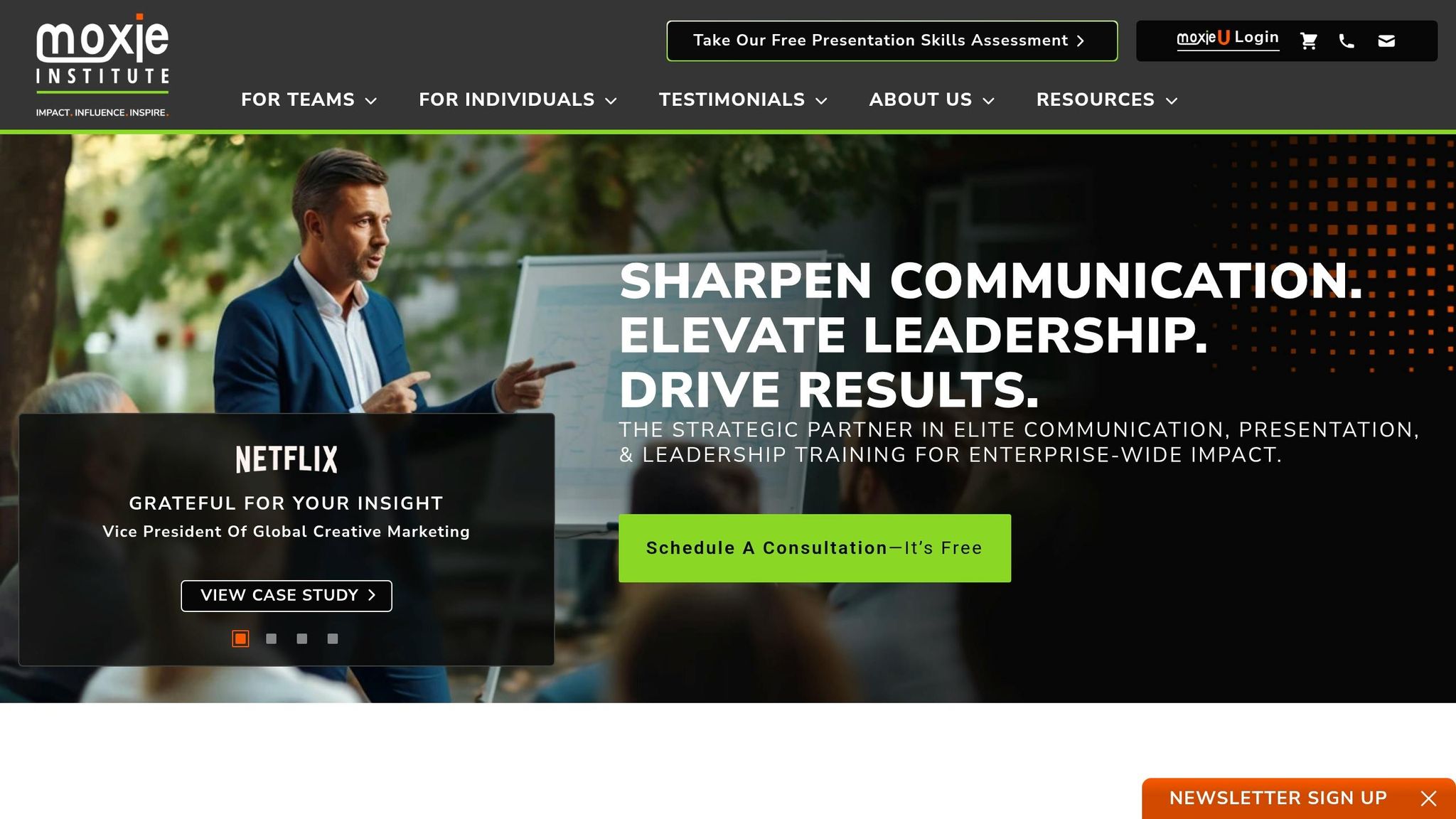
Moxie Institute uses its proprietary "Moxie Model©", which combines neuroscience, adult learning principles, and performing arts techniques. This program focuses on building key communication habits, including eye contact, posture, purposeful gestures, facial expressions, and vocal modulation.
The program offers options ranging from a 3-hour live workshop priced at $697 to premium coaching bundles that range from $1,995 to $3,295. One standout feature is their "power priming" technique, which involves adopting expansive poses before meetings to enhance confidence. Participants have rated the program 4.9 out of 5, with 97% reporting they could immediately apply what they learned.
Coursera Body Language for Leaders Course
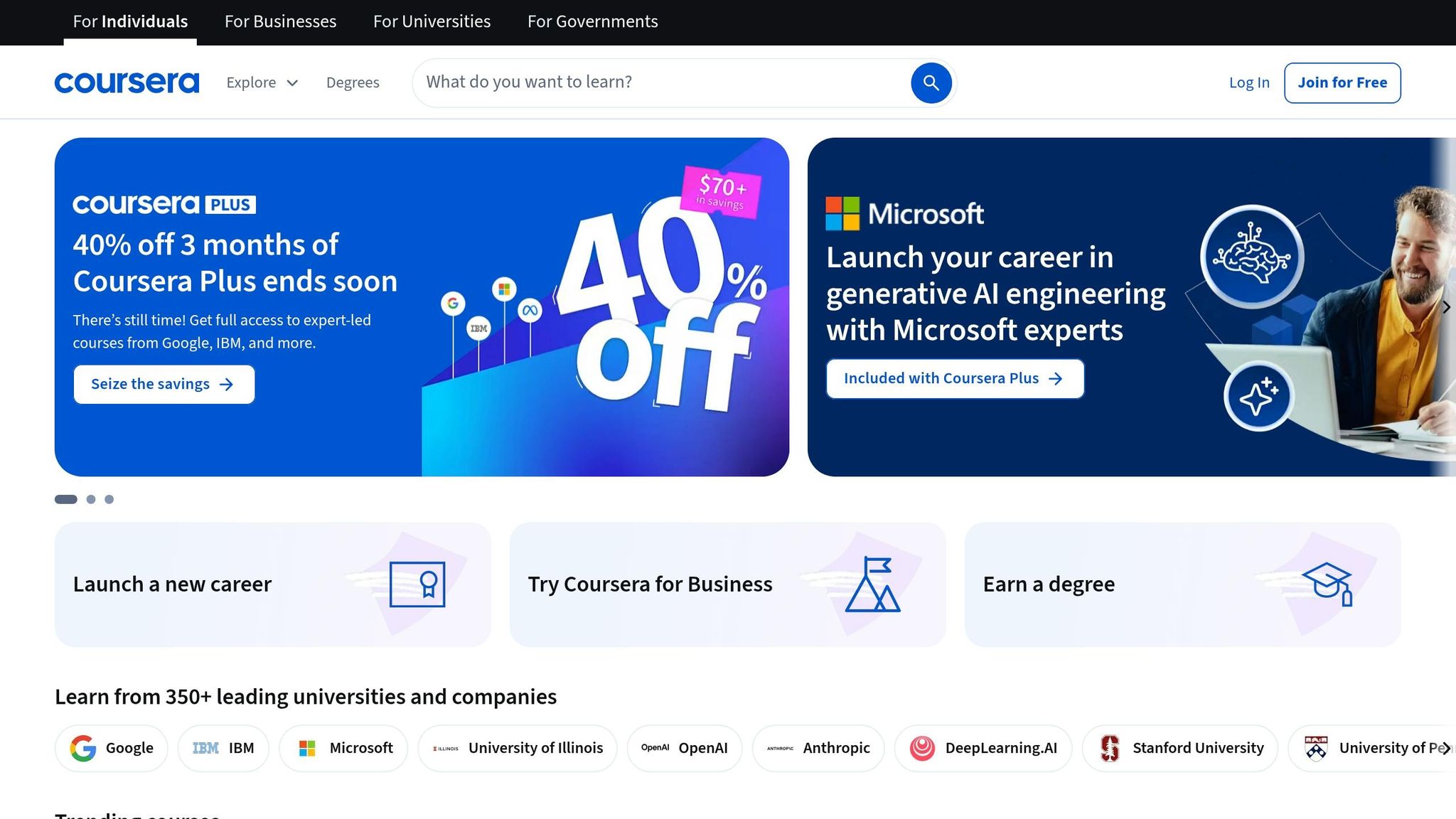
Coursera provides self-paced online courses in partnership with platforms like EDUCBA and Packt. These courses, which take just 3–4 hours to complete, cover essential body language principles like eye communication (oculesics) and strategies for virtual leadership and high-pressure speaking. The curriculum includes video lessons, scenario-based quizzes, and AI-powered coaching through Coursera Coach for deeper learning.
With a 4.7 out of 5 rating based on 15 reviews, these courses are perfect for busy executives looking for flexible learning options. The courses are available through a Coursera Plus subscription, which often includes a 40% discount on 3-month plans.
Berkeley Executive Education Nonverbal Toolkit
Berkeley’s Advanced Executive Presence program is an immersive 3-day boot camp priced at $5,900. The program runs 8.5 hours a day and is led by faculty with professional acting backgrounds. It focuses on storytelling, authentic leadership, and mastering the art of commanding a room using theater techniques.
"The ability to command a room can be taught." – Berkeley Executive Education
Participants practice delivering speeches and receive immediate feedback from peers in a highly interactive setting. A VP of Business Operations from TD SYNNEX shared:
"The Advanced Executive Presence program re-established my confidence and belief in myself... to be authentic, seen, visible, appreciated, and influential."
This program is designed for senior leaders handling complex, high-pressure situations.
myTectra Non-Verbal Mastery
myTectra offers a hands-on corporate training program called Non-Verbal Mastery. It focuses on practical skills like proxemics (awareness of space), vocal pacing, and interpreting non-verbal cues during meetings and interviews. The program is customizable for managers, sales teams, and HR professionals looking to sharpen workplace communication skills.
| Program | Format | Duration | Price Range | Ideal For |
|---|---|---|---|---|
| Moxie Institute | Workshop/Coaching | 3 hours to 12 months | $697–$3,295 | Teams seeking neuroscience-driven methods |
| Berkeley Exec Ed | In-Person Boot Camp | 3 days (8.5 hrs/day) | $5,900 | C-Suite leaders needing immersive training |
| Coursera | Online Self-Paced | 3–4 hours | Subscription-based | Individuals seeking flexibility |
| myTectra Non-Verbal Mastery | Corporate Training | Customizable | Custom pricing | Teams needing tailored, hands-on learning |
How Growth Shuttle Supports Executive Communication Training

Tailored Advisory for Executive Teams
Growth Shuttle takes an "evolution over revolution" approach to help executive teams incorporate non-verbal communication skills into their daily routines. Their advisory services are customized to meet the specific needs of different leadership roles. For example, tech leaders receive tips on improving virtual non-verbal communication - like maintaining eye contact through webcams and optimizing lighting and framing for video calls [22,4]. HR executives, on the other hand, get strategies to align their non-verbal cues with company culture and talent management goals.
To make these improvements stick, Growth Shuttle integrates CRM systems to track communication patterns and refine strategies over time. This ensures that training isn't just a one-off event but becomes part of broader operational enhancements tied to digital transformation.
Their advisory plans are flexible, starting at $600 per month for strategic guidance and going up to $7,500 per month for a more hands-on approach. The higher-tier plans include weekly calls and collaboration with various departments, bridging executive development with real-time operational gains.
Business Accelerator Course for Leadership Development
Growth Shuttle also offers a free 8-week email course that has already been completed by more than 6,600 business leaders. The course includes 16 actionable missions designed to build essential leadership skills. Key modules on executive presence, such as "Communication Tips From My Playbook" (Week 5) and "Strengthen Your Brand as a Speaker" (Week 7), provide practical tools for improving communication [24,26].
Kathy Berardi, a B2B Strategy Consultant, shared her experience:
"While I consider myself a specialist in my field of business, what I learned from this course was the actual universal core skills of being in business... It was helpful in that it challenged me to manage myself in a new way as a business owner."
Marcel Bootsman, founder of nostromo.nl, added:
"You made me focus on things that I just forget to do. And these things result in revenue."
This course serves as a strong foundation for leadership growth, complementing non-verbal communication training by equipping participants with the broader skills they need to confidently navigate professional interactions.
Training Program Comparison
When comparing training programs, it's essential to consider differences in format, duration, pricing, and target audience. These factors play a critical role in finding the right fit for leadership development.
Self-paced digital courses like Coursera's Body Language for Leaders provide flexibility, requiring about 4 hours to complete. These courses are accessible through a Coursera Plus subscription, making them ideal for aspiring and intermediate leaders looking for convenience and affordability. On the other hand, instructor-led workshops offer a more immersive experience. For instance, The Knowledge Academy's 1-day program, priced at £1,295 (roughly $1,640), delves into power dynamics and business-related body language, catering to those who prefer a focused, hands-on approach.
For those seeking a more extensive commitment, OSAM Training provides hybrid programs spanning 1–3 months. These programs focus on building influence, negotiation, and strategic skills, making them a choice for management professionals and crisis experts who operate in high-pressure environments. The target audience also varies significantly across these options. Coursera tends to attract aspiring leaders, while The Knowledge Academy is designed for managers, HR professionals, and sales teams. OSAM Training, however, caters to those requiring specialized expertise in leadership during critical situations.
Some providers stand out with unique methodologies. Moxie Institute combines neuroscience with performing arts techniques for a creative approach to leadership training. Meanwhile, Executive Presence Inc employs a proprietary "Nine Dimensions" 360-style assessment to evaluate and develop executive presence. These distinctive features help organizations align their choice of training programs with specific leadership goals, ensuring a tailored development experience.
Conclusion
Non-verbal communication plays a pivotal role in shaping a leader's professional influence. Elements like body language and vocal tone significantly affect how messages are received and interpreted. For executive teams dealing with restructuring, high-stakes negotiations, or virtual interactions, non-verbal cues often carry more weight than spoken words. When these cues contradict verbal communication, trust can quickly erode - a costly misstep in any professional environment.
The training programs discussed here offer varied methods for honing executive presence. Moxie Institute blends neuroscience with performing arts techniques to enhance boardroom effectiveness, while Coursera provides flexible, self-paced courses tailored to aspiring leaders. Berkeley Executive Education offers an academic framework, and niche providers address workplace-specific scenarios. These options highlight the value of targeted, professional training in developing leadership communication skills. The variety of approaches emphasizes the importance of continuous, personalized support in mastering executive presence.
Building on these diverse training methods, Growth Shuttle offers customized advisory services for CEOs leading teams of 15-40 people. Their plans range from $600/month for monthly strategy calls to $7,500/month for comprehensive growth support, which includes collaboration across departments and involvement in partnerships. Additionally, their free Business Accelerator Course helps leaders integrate communication skills into broader operational strategies and digital transformation efforts.
Ultimately, consistent application is the key to success. Mastering non-verbal communication requires regular practice, constructive feedback, and integration into daily leadership activities. These training programs provide an essential starting point, but long-term growth comes from using these skills in real-world scenarios where your presence, tone, and body language directly influence outcomes.
FAQs
How can executives measure improvements in non-verbal communication?
Executives can track progress in non-verbal communication by paying attention to shifts in body language, posture, facial expressions, and eye contact during conversations. Feedback from peers or team members, especially through structured reviews or 360-degree assessments, provides additional insight into areas of improvement. Another helpful method is recording and reviewing interactions, as this highlights changes in tone, presence, and non-verbal cues, making it easier to monitor growth over time.
What non-verbal mistakes hurt credibility most in virtual meetings?
Non-verbal cues play a huge role in how you're perceived during virtual meetings, and certain mistakes can chip away at your credibility. For instance, poor eye contact - like constantly looking away or at another screen - can make you seem distracted or disinterested. Inconsistent facial expressions can confuse your audience or make you appear insincere. Then there’s distracting body language, such as crossing your arms (which can come off as defensive) or fidgeting, which pulls attention away from your message. Lastly, failing to show engagement - like not nodding or using appropriate gestures - can make you seem disconnected, even if you're paying attention. These subtle missteps can erode trust, diminish authority, and weaken your connection with others in a professional setting.
How do you choose the right training format for an executive team?
Choosing the right training format hinges on your team’s specific needs, learning styles, and objectives. In-person training allows for immediate feedback and face-to-face interaction, fostering deeper engagement. On the other hand, virtual training offers flexibility and can accommodate larger groups, making it easier to scale.
When deciding, think about your operational environment and whether hands-on activities like role-playing or coaching are crucial. The ideal format should match your team’s preferences while supporting clear communication and leadership growth.


