Revenue operations looks straightforward on paper: align sales, marketing, and customer success around shared data and common goals. In practice, mid-market companies attempting this transformation face a particular challenge. You lack the enterprise budgets to hire dedicated RevOps teams of ten or more specialists. Yet you've outgrown the startup approach where the founder can personally reconcile disconnected spreadsheets and CRM entries every quarter.
This gap creates real costs. According to Gartner research, organizations with aligned revenue operations functions achieve 15-20% increases in customer satisfaction and internal productivity. Meanwhile, Forrester notes that companies implementing RevOps see an average 19% faster revenue growth compared to those operating with traditional siloed structures.
I've watched mid-market companies attempt this transition in two ways. Some throw technology at the problem, implementing expensive platforms without changing underlying processes. Others reorganize reporting lines without addressing the data fragmentation that created misalignment in the first place. Both approaches tend to disappoint.
What follows is a practical guide for building RevOps capability that matches mid-market realities: constrained headcount, existing tech debt, and the need to show results within quarters rather than years.
1. Understanding What RevOps Actually Means for Mid-Market Companies
Revenue Operations consolidates the operational functions of sales, marketing, and customer success under a unified strategy and, often, leadership structure. The goal is eliminating the handoff friction, data silos, and conflicting metrics that emerge when these teams operate independently.
For enterprise organizations, this typically means dedicated teams handling systems administration, data analysis, process design, and enablement for each function, all reporting to a Chief Revenue Officer or VP of Revenue Operations. Mid-market companies rarely have this luxury.
The Mid-Market RevOps Reality
In companies between $10M and $100M in revenue, RevOps often starts as a part-time responsibility for an existing operations leader, or a single hire expected to cover ground that larger organizations staff with entire teams. This constraint demands different thinking:
- Process standardization matters more than process optimization. You need consistent execution before you can improve it.
- Technology consolidation often delivers more value than technology expansion. Fewer, better-integrated tools beat a sprawling stack.
- Cross-functional visibility takes priority over departmental depth. Knowing how leads convert through the entire customer lifecycle matters more than perfecting any single stage.
The companies that succeed with RevOps at this scale focus ruthlessly on eliminating the specific friction points costing them revenue, rather than attempting comprehensive transformation.

2. Diagnosing Your Current State: Where Revenue Leaks Occur
Before building anything, you need an honest assessment of where alignment failures currently cost you money. This diagnostic phase prevents the common mistake of investing in solutions for problems you don't actually have.
Common Revenue Friction Points
Start by examining these typical problem areas:
Lead handoff breakdown. Marketing generates leads, but sales claims they're unqualified. Sales closes deals, but customer success inherits customers with mismatched expectations. These handoff failures often stem from undefined or unenforced qualification criteria.
Data fragmentation. Customer information lives in multiple systems that don't sync reliably. Sales uses one CRM, marketing operates in a separate automation platform, customer success tracks accounts in spreadsheets. According to Harvard Business Review, this fragmentation drives acquisition costs higher and reduces customer lifetime value.
Metric conflicts. Marketing optimizes for lead volume while sales optimizes for deal size, creating tension rather than collaboration. Understanding the key metrics that matter for your business becomes critical for establishing shared accountability.
Forecast unreliability. Pipeline projections consistently miss reality because different teams use different definitions for stages, probabilities, or even what constitutes an "opportunity."
Conducting the Assessment
Interview stakeholders from each revenue function with consistent questions: Where do you lose deals? What information do you lack when you need it? Which handoffs feel broken? Document specific examples rather than general complaints.
Review your data. Pull conversion rates at each funnel stage. Look for dramatic drop-offs that suggest process failures. Examine how long deals spend in each stage, and whether that duration predicts outcomes.
Before implementing changes, consider the examples of risk assessment in process changes that apply to your situation. RevOps transformation touches multiple teams simultaneously, and understanding potential disruption helps you sequence implementations intelligently.
3. Defining Your RevOps Charter and Scope
With diagnosis complete, you need to establish what your RevOps function will actually own and accomplish. Scope creep kills mid-market RevOps initiatives. The function becomes responsible for everything tangentially related to revenue, then delivers nothing well.
Core RevOps Responsibilities
Most successful mid-market RevOps functions focus on four areas:
Systems management. Owning the configuration, integration, and data quality of revenue-related technology. This typically means CRM, marketing automation, and customer success platforms at minimum.
Process design. Defining and documenting how leads move through the funnel, how handoffs occur, and how exceptions get handled.
Analytics and reporting. Creating unified dashboards and reports that give leadership visibility into the full revenue cycle, not just departmental metrics.
Enablement support. Ensuring teams have the training, content, and tools to execute processes consistently.
What RevOps Should Not Own
Equally important is clarity about boundaries. RevOps typically should not own:
- Individual contributor performance management (that stays with functional leaders)
- Strategic decisions about target markets or product positioning (those belong to executive leadership)
- Day-to-day campaign execution or deal negotiation
Document this charter explicitly. Share it with functional leaders. Get their acknowledgment that these boundaries make sense. This alignment work prevents the political conflicts that derail RevOps implementations.
4. Structuring the Team: Roles and Reporting Lines
The organizational design of your RevOps function depends heavily on company size, existing leadership structure, and how severe your current alignment problems are.
Model A: The RevOps Specialist
For companies under $30M revenue, the most common starting point is a single RevOps hire reporting to the CEO, COO, or CRO. This person needs an unusual combination of skills: technical enough to configure systems, analytical enough to build reporting, and diplomatic enough to navigate cross-functional politics.
The advantage of this model is simplicity. The disadvantage is bandwidth. One person cannot simultaneously manage systems, improve processes, and build analytics. Prioritization becomes critical.
Model B: The Distributed Model
Some mid-market companies distribute RevOps responsibilities across existing operations roles rather than creating a dedicated position. The sales operations analyst, marketing operations manager, and customer success operations lead form a "RevOps council" that meets regularly to coordinate.
This model preserves existing expertise and relationships. However, it requires strong facilitation to prevent the council from becoming a talking shop. Someone needs authority to make binding decisions when the council cannot reach consensus.
Model C: The Small Team
Companies above $50M often need a small dedicated team: typically a RevOps leader plus one or two specialists focusing on systems and analytics respectively. This structure provides enough coverage to make meaningful progress while remaining affordable.
Regardless of model, ensure RevOps has sufficient organizational authority. A RevOps function that can only make recommendations but cannot enforce standards will struggle to create lasting change. This aligns with sound corporate governance practices that emphasize clear accountability and decision rights.
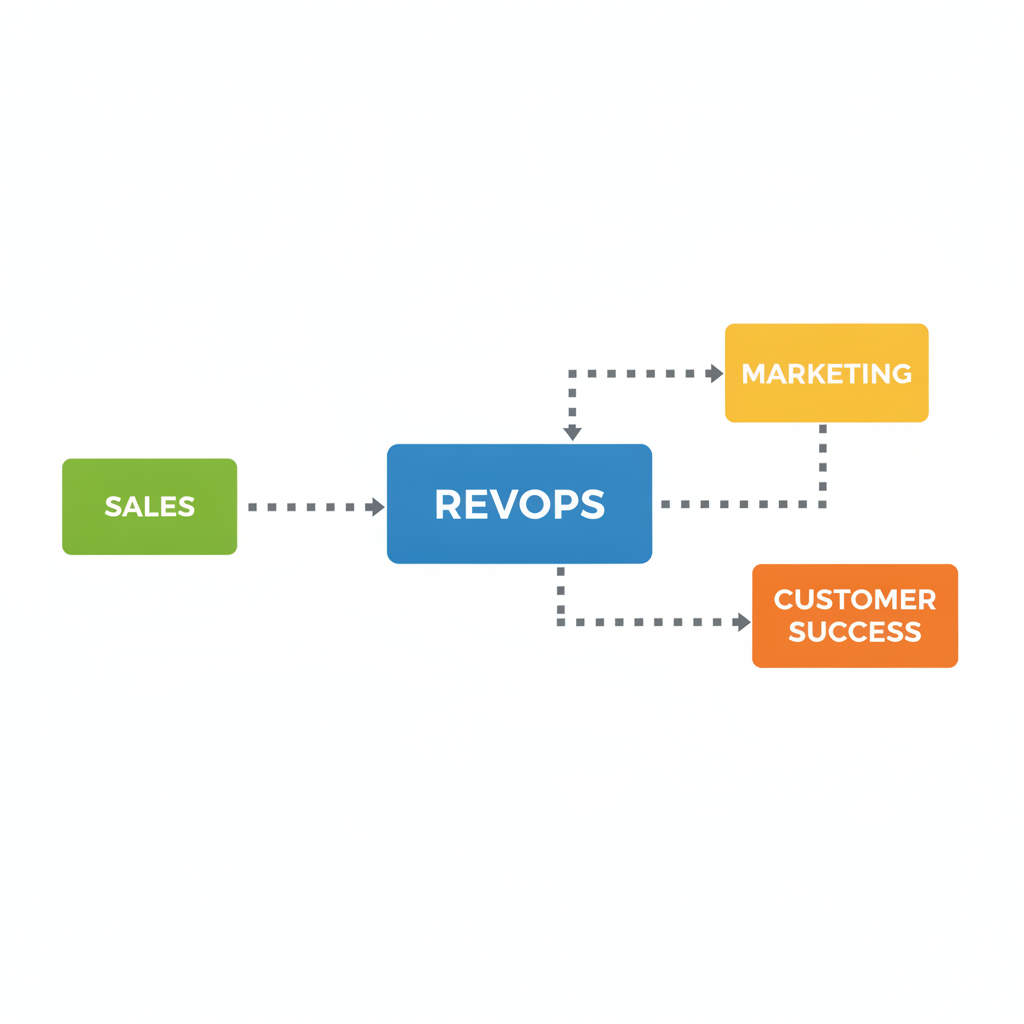
5. Building Your Technology Foundation
Technology enables RevOps, but technology alone doesn't create it. I've seen companies implement sophisticated platforms while their fundamental data quality and process problems remain untouched. The tools worked beautifully with bad data, producing misleading reports at impressive scale.
The Core Stack
Mid-market RevOps typically requires three foundational systems:
CRM as the system of record. All customer and prospect data should flow through and reconcile in your CRM. This doesn't mean the CRM handles every function, but it means the CRM contains the canonical version of account and contact information. Platforms like HubSpot serve this purpose well for mid-market companies, offering CRM, marketing automation, and service capabilities in an integrated environment.
Marketing automation integrated with CRM. Lead scoring, nurture campaigns, and behavioral tracking need to sync reliably with sales-facing systems. Gaps here create the "where did this lead come from?" conversations that waste everyone's time.
Analytics layer with cross-functional visibility. Whether this is native CRM reporting, a BI tool, or a purpose-built revenue intelligence platform, you need somewhere to see the complete picture. Understanding your distribution metrics and how they connect becomes much easier with proper tooling.
Integration Priorities
According to McKinsey, technology integration ranks among the top factors separating high-performing sales organizations from the rest. Prioritize integrations that:
- Eliminate duplicate data entry
- Enable automated lead routing and assignment
- Sync activity data (emails, meetings, calls) without manual logging
- Connect financial systems for revenue recognition and forecasting
Start with the integrations that address your diagnosed friction points. Avoid the temptation to build a perfect tech stack before proving RevOps value.
6. Establishing Shared Definitions and Metrics
This step sounds bureaucratic but determines whether RevOps succeeds. When sales and marketing define "qualified lead" differently, no amount of technology or process improvement can create alignment.
Critical Definitions to Standardize
Lead stages and criteria. What makes someone a Marketing Qualified Lead? A Sales Qualified Lead? What behaviors, firmographic characteristics, or engagement levels trigger progression? Document these precisely.
Opportunity stages and exit criteria. When does a deal move from "Discovery" to "Proposal"? What evidence must exist? Ambiguous stages create forecasting chaos and hide pipeline problems.
Win/loss definitions. When is a deal truly lost versus stalled? How long before an inactive opportunity gets closed out? Consistent enforcement matters as much as the definition.
Customer health indicators. What signals suggest renewal risk? What indicates expansion opportunity? Customer success needs shared language with sales about account potential.
Shared Metrics That Create Accountability
Beyond definitions, identify metrics that multiple teams share responsibility for:
- Lead-to-customer conversion rate (marketing and sales jointly own this)
- Time-to-revenue from first touch (reflects full-funnel efficiency)
- Net revenue retention (sales and customer success share this)
- Customer acquisition cost relative to lifetime value (everyone's problem)
When teams share metrics, they develop shared interests in each other's success. The finger-pointing that characterizes siloed organizations becomes harder to sustain.
7. Designing Processes and Workflows
With definitions established, you can design processes that actually work. Process design in RevOps focuses on three areas: lead management, opportunity progression, and customer lifecycle management.
Lead Management Process
Map the complete journey from anonymous website visitor to assigned sales opportunity. Define:
- How leads enter your system (forms, events, purchases, referrals)
- How leads get scored and routed
- What triggers sales involvement
- What happens to leads that don't progress (nurture sequences, recycling criteria)
- How marketing gets feedback on lead quality
Document this process visually and ensure both marketing and sales agree it reflects reality and serves their needs.
Opportunity Management Process
Define how opportunities progress through your pipeline:
- What information must be captured at each stage
- What activities typically occur at each stage
- What triggers advancement to the next stage
- How deals get reviewed and coached
- How wins and losses get analyzed for learning
Customer Lifecycle Process
Extend process thinking beyond the initial sale:
- How do closed deals hand off to implementation or customer success
- What ongoing engagement cadence ensures customer health
- How do expansion opportunities get identified and routed
- How do renewal processes initiate and progress
Bain & Company research consistently shows that customer retention economics outperform acquisition economics, making this lifecycle management essential for sustainable growth.
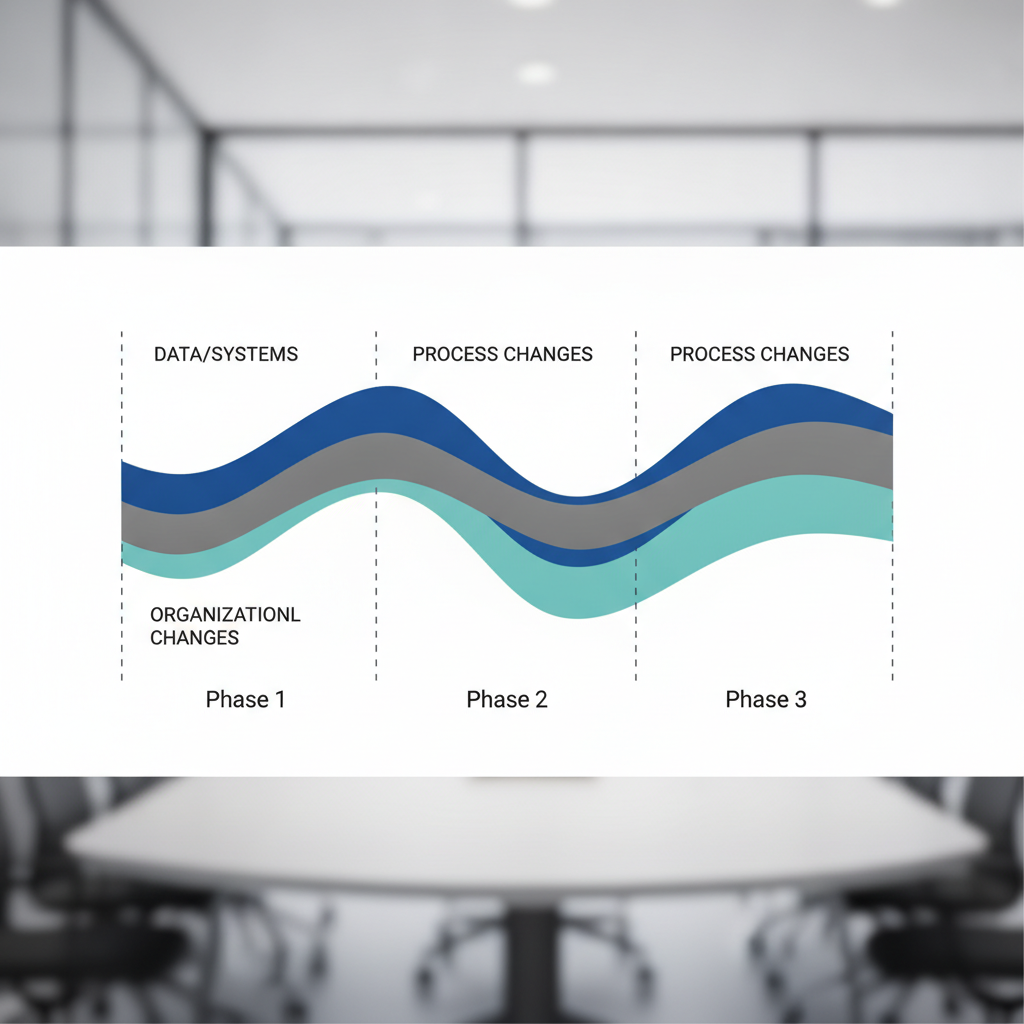
8. Implementing Change Without Breaking Operations
RevOps transformation happens while the business continues operating. You cannot pause sales to rebuild processes. This constraint demands thoughtful change management.
Sequencing for Safety
Start with changes that improve existing workflows without requiring teams to work differently. Data cleanup, system integrations, and reporting improvements often fall into this category. These early wins build credibility for larger changes.
Next, implement changes that require behavioral shifts but don't fundamentally alter roles. New lead routing rules, updated stage definitions, or modified meeting cadences fit here.
Finally, tackle structural changes like new handoff processes, revised compensation triggers, or reorganized reporting lines. These carry the most risk and require the most organizational readiness.
Pilot Before Scaling
Test significant changes with a subset of the organization before rolling out broadly. One sales team. One product line. One region. This approach limits blast radius when things go wrong and provides evidence that builds buy-in for broader implementation.
Consider how incremental budgeting approaches apply to your RevOps investment. Rather than committing large sums upfront, fund initiatives in stages tied to demonstrated results.
Communication Throughout
Effective messaging during organizational change makes the difference between adoption and resistance. Explain why changes happen, what benefits teams should expect, and how concerns will be addressed. Repeat these messages more often than feels necessary.
9. Building Analytics and Reporting That Drive Action
RevOps reporting differs from departmental reporting in a crucial way: it must show the complete picture across functions while remaining actionable for individual teams.
The Dashboard Hierarchy
Effective RevOps analytics typically operate at three levels:
Executive dashboards show the health of the full revenue engine. Pipeline coverage, conversion rates across major stages, revenue against forecast, customer health trends. These views support strategic decisions about resource allocation and market focus.
Operational dashboards give functional leaders visibility into their team's contribution to revenue outcomes. Marketing sees campaign performance through to pipeline and revenue. Sales sees rep productivity and forecast accuracy. Customer success sees health scores and expansion progress.
Individual dashboards help contributors track their own performance against goals and identify areas for improvement. These views should connect individual activity to business outcomes, reinforcing how daily work matters.
Leading Versus Lagging Indicators
Effective RevOps reporting balances outcome metrics (revenue, retention) with activity and leading indicators (pipeline creation, engagement scores, meeting completion). According to Harvard Business Review, organizations with mature RevOps functions develop predictive capabilities that allow them to identify and address problems before they impact results.
The goal is creating visibility early enough to intervene, not just documenting what already happened.
10. Governing RevOps: Cadences and Decision Rights
Ongoing governance determines whether RevOps delivers sustained value or becomes another abandoned initiative. This governance involves regular meetings, clear escalation paths, and defined decision rights.
Meeting Cadences
Most mid-market RevOps functions benefit from:
Weekly pipeline reviews that examine opportunity progression, forecast updates, and immediate blockers. These meetings should include sales leadership and RevOps at minimum.
Bi-weekly cross-functional syncs that bring marketing, sales, and customer success leaders together to discuss funnel health, handoff quality, and emerging issues.
Monthly strategic reviews that examine longer-term trends, process effectiveness, and resource allocation decisions.
Quarterly business reviews that assess RevOps function performance, update priorities, and align on coming quarter's initiatives.
Escalation and Decision Rights
Document how disagreements get resolved. When marketing and sales dispute lead quality, who decides? When process changes require trade-offs between teams, who has authority? Clear decision rights prevent issues from languishing unresolved.
This governance structure should align with your broader approach to organizational change management and ensure that RevOps has the authority needed to fulfill its mandate.
11. Measuring RevOps Success and Iterating
RevOps itself needs metrics. How do you know if the function delivers value? Track these indicators:
Efficiency Metrics
- Sales cycle length (time from opportunity creation to close)
- Lead response time (speed from inquiry to first sales contact)
- Forecast accuracy (deviation between predicted and actual results)
- Data quality scores (completeness, accuracy of CRM records)
Effectiveness Metrics
- Conversion rates at each funnel stage
- Win rate trends
- Customer acquisition cost trends
- Net revenue retention
Adoption Metrics
- CRM utilization rates
- Process compliance rates
- Tool usage patterns
Set baselines before major changes, measure impact after, and use this data to justify continued investment and guide priorities. BCG research indicates that data-driven RevOps functions outperform those operating on intuition alone.
12. Summary: Your RevOps Implementation Checklist
Building RevOps capability in a mid-market company requires systematic effort across multiple dimensions. Use this checklist to track progress:
Assessment Phase
- Diagnosed current revenue leaks and friction points
- Interviewed stakeholders across marketing, sales, and customer success
- Documented specific examples of alignment failures
- Analyzed conversion data across the full funnel
Foundation Phase
- Defined RevOps charter and scope boundaries
- Established organizational structure and reporting lines
- Secured necessary authority and executive sponsorship
- Identified and hired or assigned RevOps personnel
Technology Phase
- Audited existing tech stack for gaps and redundancies
- Established CRM as system of record
- Built critical integrations between systems
- Cleaned and standardized existing data
Process Phase
- Standardized definitions for leads, opportunities, and stages
- Documented lead management process
- Documented opportunity management process
- Documented customer lifecycle process
- Established shared metrics with cross-functional accountability
Implementation Phase
- Sequenced changes from low-risk to high-impact
- Piloted major changes before broad rollout
- Communicated changes effectively across organization
- Trained teams on new processes and tools
Governance Phase
- Established regular meeting cadences
- Defined decision rights and escalation paths
- Built reporting dashboards at executive, operational, and individual levels
- Set success metrics and baseline measurements
RevOps transformation takes time. Most mid-market companies require 12-18 months to build mature capabilities. The companies that succeed approach this as ongoing capability building rather than a one-time project.
If you're facing these challenges and want guidance on building RevOps capability matched to your specific situation, reach out to discuss your needs. We've helped mid-market companies design and implement revenue operations functions that deliver measurable results without enterprise-scale budgets.