Simon-Kucher's 2025 study tracked 100 private equity executives and found that the share of firms reviewing their value creation plan annually dropped from 53% to 42%. The number looks like progress until you realize what it means: 42% of sponsors are still treating the VCP as a board artifact they dust off once a year. Meanwhile, the EBITDA bridge they underwrote is moving every 90 days—pricing shifts, churn spikes, integration timelines slip, and the operating partner is left reconciling last quarter's forecast against this quarter's actuals with a plan that hasn't been touched since close.
A value creation plan that sits static for twelve months is not a plan. It is a deck. The operators who consistently hit their EBITDA targets refresh the VCP quarterly, re-baseline the levers that moved, kill the initiatives that stalled, and force two decisions every cycle: what gets funded next, and what gets cut. This is the difference between a sponsor who can tell a deal partner whether the thesis is on track and one who waits until exit prep to discover the revenue synergy never materialized.
Why Annual Reviews Break the EBITDA Bridge
The annual review cadence was designed for a different hold period. When the median exit was five to seven years, checking the plan once a year made sense. The sponsor had time to course-correct. Today, the median hold is three to four years, and the first twelve months determine whether the thesis will clear the hurdle. If the VCP says revenue growth will come from pricing and you discover six months in that pricing elasticity is lower than modeled, waiting another six months to admit it and re-sequence the levers means you have burned half the hold on a lever that will not deliver.
The problem is not the plan itself. The problem is treating the plan as a contract with the future rather than a forecast that gets smarter as you learn. Every portfolio company generates new information every quarter: actual revenue versus forecast, realized margin expansion versus modeled, adoption rates on new products, customer acquisition cost trends, churn by cohort. That information should flow back into the VCP and change what gets prioritized next. When it does not, the operating partner is managing to a baseline that no longer reflects the business, and the deal partner cannot tell whether the gap between forecast and actual is noise or a broken thesis.
What Changes at 30, 60, and 90 Days
The quarterly refresh is not a full rewrite. It is a disciplined re-baselining of the levers that moved and a re-sequencing of the initiatives that depend on them. The cadence looks like this:
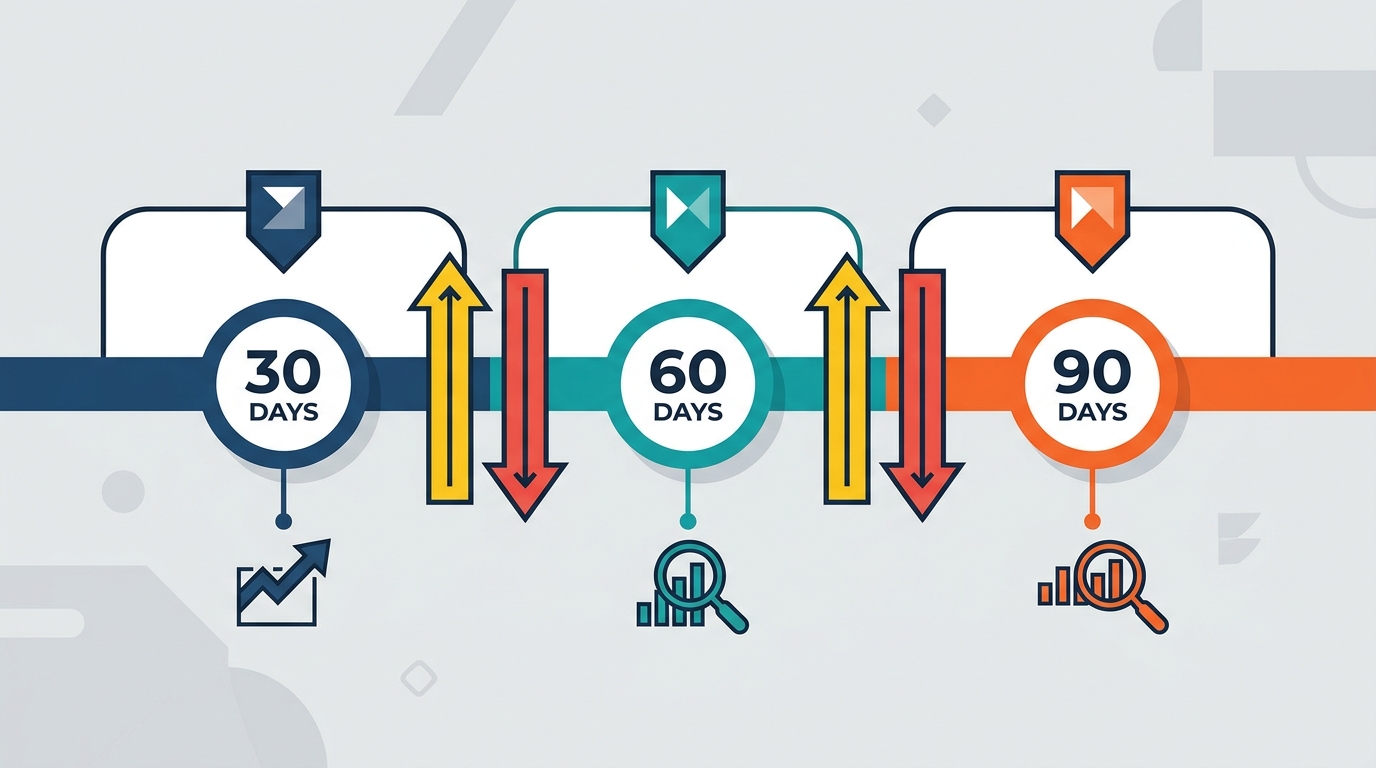
30 days: The first checkpoint is data reconciliation, not strategy. Did the revenue forecast tie to actuals? Did the EBITDA margin land where the model said it would? Did the pricing increase roll out on schedule, and if it did, what was the elasticity response? This is the checkpoint where you catch the gaps between what the model assumed and what the business delivered. If pricing was supposed to add 200 basis points to margin and it added 80, the 30-day checkpoint is where you decide whether to adjust the pricing lever down or re-sequence the cost initiatives up to compensate.
60 days: The second checkpoint is initiative velocity. Which value-creation workstreams are on track, and which have stalled? If the VCP called for consolidating vendors to reduce procurement spend and the consolidation is stuck in legal review, the 60-day checkpoint is where you decide whether to fund the legal capacity to unstick it or redirect that EBITDA expectation to a different lever. This is also the checkpoint where you re-baseline resource allocation. If two initiatives are competing for the same engineering capacity and one is delivering faster ROI, the 60-day review is where you starve the slower one and double down on the faster.
90 days: The third checkpoint is forecast update and next-quarter sequencing. You take the actuals from the first 90 days, update the EBITDA bridge for the next twelve months, and decide which initiatives get funded in Q2. This is the checkpoint where you compare the current trajectory against the exit thesis and decide whether the plan is still on pace to deliver the multiple you underwrote. If it is not, this is where you escalate the gap to the deal team and decide whether to adjust the exit timeline, inject more capital, or change the thesis.
Which EBITDA Levers Get Re-Baselined Each Quarter
Not every lever in the VCP needs quarterly attention. Some levers, consolidating back-office functions, automating procurement, moving to shared services, run on longer cycles and do not change materially quarter to quarter. The levers that do need re-baselining every 90 days are the ones where actuals diverge from forecast fastest: revenue growth, margin expansion, and customer economics.
Revenue growth levers: Pricing, conversion rates, sales capacity, product expansion, and cross-sell attach rates all move faster than annual planning cycles capture. If the VCP assumed a 10% price increase and actual customer pushback forced it down to 6%, the revenue forecast for the next three quarters is wrong unless you re-baseline it. Same for conversion rates. If the VCP modeled a 3% lift from better digital demand generation and the first quarter delivered 1.2%, you re-baseline the revenue expectation and decide whether to fund more capacity in demand gen or shift that revenue target to a different lever.
Margin expansion levers: Gross margin improvements from procurement savings, labor utilization, automation, and product mix all depend on adoption rates and implementation timelines that shift quarter to quarter. If the VCP called for 150 basis points of margin expansion from procurement consolidation and the first quarter delivered 40 basis points because vendor negotiations took longer than expected, you re-baseline the margin bridge and decide whether to accelerate the rollout or accept a lower total contribution from that lever.
Customer economics levers: Churn reduction, lifetime value expansion, and customer acquisition cost improvements are the levers where small changes compound fastest. A one-point increase in monthly churn does not sound material until you model it forward over 24 months and realize it erodes 8% of the revenue base you were counting on at exit. The quarterly refresh is where you catch those shifts early, re-baseline the cohort forecasts, and decide whether to fund retention initiatives or adjust the revenue exit multiple down.
The Two Decisions a Partner Should Force Every Quarter
The quarterly VCP refresh is not a reporting exercise. It is a forcing function for two decisions that sponsors who hit their EBITDA targets make every 90 days and sponsors who miss them defer until it is too late:
Decision one: What gets funded next? Every quarter surfaces new information about which levers are delivering faster ROI and which are stalled. The quarterly refresh is where you look at the velocity of every active initiative, compare actual ROI against modeled, and decide which workstreams get incremental capital and capacity in the next 90 days. This is the decision that separates operators who allocate capital against real performance from operators who stick to the original sequencing because it was in the deck at close. If pricing is delivering 2x the margin lift you modeled and procurement consolidation is stuck, the right decision is to fund another pricing analyst and starve the procurement workstream, even if the original VCP sequenced them the other way around.
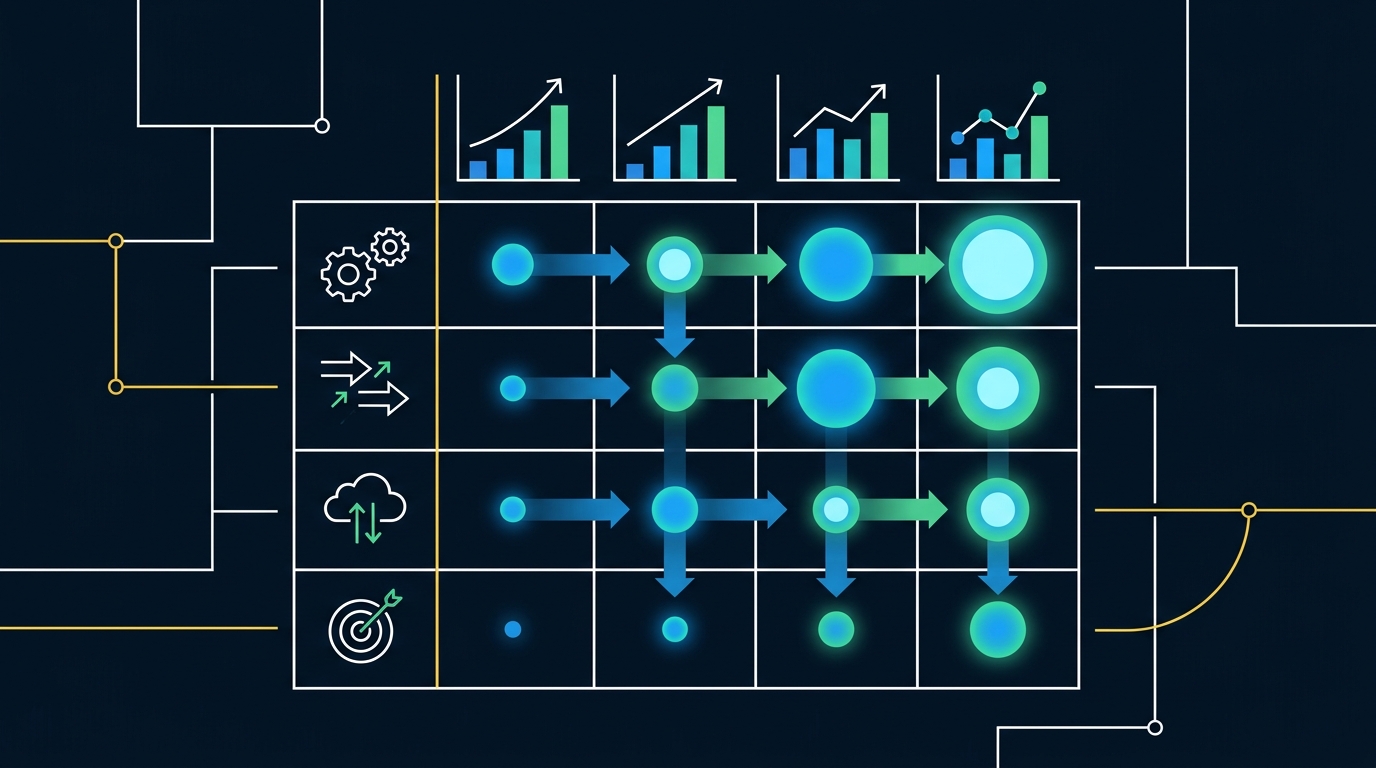
Decision two: What gets cut? The harder decision, and the one most sponsors avoid, is killing the initiatives that are not working. Every VCP has workstreams that looked promising at close and turn out to be slower, more expensive, or lower-ROI than modeled. The quarterly refresh is where you admit that and reallocate the resources. If a product expansion initiative was supposed to add $2M in ARR by month six and it has added $400K, continuing to fund it for another two quarters because it was in the original plan is how you end up with a value-creation budget that delivered 60% of the EBITDA you underwrote. The right call is to cut it at the 90-day mark, reallocate the product and engineering capacity to the levers that are working, and adjust the EBITDA bridge down by the contribution you are no longer expecting from that initiative.
How to Structure the Quarterly Refresh Without Rebuilding the Deck
The objection most operating partners raise to quarterly VCP reviews is time. Rebuilding the entire value-creation deck every 90 days is not realistic when you are managing six portfolio companies. The answer is not to rebuild the deck. The answer is to structure the VCP so that the quarterly refresh is a one-page update, not a rewrite.
The structure that works is a two-layer plan: the base VCP, which is the full strategic deck you build at close and update annually, and the quarterly initiative tracker, which is the one-page operating view you refresh every 90 days. The base VCP owns the thesis, the exit multiple, the total EBITDA target, and the full sequencing of levers over the hold period. The quarterly tracker owns actuals versus forecast, initiative velocity, resource allocation, and the two decisions (what gets funded, what gets cut). The quarterly refresh updates the tracker and flags the variances that require changes to the base VCP. Most quarters, the base VCP does not change. The tracker absorbs the learning and keeps the operating team aligned without requiring the deal partner to re-read 40 slides.
The tracker itself is simple: one row per active initiative, five columns (initiative name, EBITDA contribution forecast, EBITDA contribution actual, variance, status), and a decisions section at the bottom that lists what gets funded next quarter and what gets cut. The operating partner updates it in the first week of the new quarter, the deal partner reviews it in week two, and the decisions get implemented in week three. Total cycle time: two weeks, not two months.
When the Annual Review Still Matters
The quarterly refresh does not eliminate the annual review. It changes what the annual review is for. The quarterly tracker keeps the operating plan current and keeps the team aligned on what is working and what is not. The annual review is where you step back from the quarter-to-quarter execution and ask the bigger questions: Is the thesis still valid? Is the exit multiple we underwrote still achievable? Are there new levers we should add to the plan that we did not see at close? Should we adjust the exit timeline based on what we learned in the first twelve months?
The annual review is also the checkpoint where you reconcile the VCP against the broader portfolio strategy. If the sponsor has two other companies in the same sector and one of them just exited at a higher multiple because it had better data infrastructure, the annual review is where you decide whether to fund a similar data initiative in this portfolio company, even if it was not in the original VCP. The quarterly refresh keeps you aligned on execution. The annual review keeps you aligned on strategy. Both matter, and neither replaces the other.
The Real Cost of Waiting Twelve Months
EY's exit-readiness guidance recommends securing data infrastructure at least twelve months and ideally 24 months before sale. The reason is not technical. The reason is that buyers in diligence will model forward cash flow based on the trailing twelve months of actuals, and if those actuals show margin erosion, revenue churn, or cost overruns that the sponsor did not catch and correct in real time, the buyer will price in that risk and the exit multiple will compress. The quarterly VCP refresh is how you catch those variances while there is still time to fix them. The annual review catches them when it is too late to recover the lost EBITDA and too expensive to course-correct without extending the hold.
Operators who consistently hit their EBITDA targets do not have better forecasts at close. They have better feedback loops during the hold. The quarterly refresh is that feedback loop. It is the difference between managing to a plan that reflects the business as it is today and managing to a plan that reflects the business as you hoped it would be eighteen months ago.
Where to Start
If your firm is still reviewing the value creation plan annually, the first step is not to rebuild the entire VCP on a quarterly cadence. The first step is to build the one-page initiative tracker and start using it internally. Track actuals versus forecast for the top five EBITDA levers. Update it every 90 days. Force the two decisions: what gets funded, what gets cut. Run that process for two quarters. Once the operating team is comfortable with the cadence and the deal team sees the value in real-time variance tracking, layer in the quarterly review with the broader partnership.
The value creation plan is not a document you write at close and revisit at exit. It is the operating system that turns the investment thesis into executed EBITDA. Quarterly refreshes keep that system current. Annual reviews keep it strategic. Together, they are how sponsors who hit their targets stay ahead of the ones who are still waiting for the next board meeting to find out the plan is off track.
Growth Shuttle's Value Creation Diagnostic starts with a $5K async assessment of your current VCP structure, variance-tracking discipline, and refresh cadence, followed by a $30-50K engagement to build the quarterly operating tracker, re-baseline the EBITDA bridge against actuals, and implement the two-decision forcing function across your active portfolio. The output is a lightweight, repeatable quarterly refresh process that keeps the operating team aligned and gives the deal team real-time visibility into whether the thesis is on track, without requiring a full deck rebuild every 90 days.
When the Annual Review Actually Works
The annual VCP review still has a place, and it is not obsolete. The quarterly refresh handles execution alignment and variance correction. The annual review handles strategic recalibration and capital reallocation across the broader thesis. If the original investment case assumed three bolt-on acquisitions and the market shifted so that organic growth now delivers better returns, the annual review is where you decide to fund product expansion instead of M&A integration. If the sponsor underwrote pricing power and regulatory changes made repricing impossible, the annual review is where you shift the EBITDA bridge toward cost consolidation and shared services. Those are not 90-day decisions. Those are fund-level decisions that require board approval, LP communication, and a revised thesis narrative.
The difference is that the annual review works when it builds on four quarters of actuals that were already reconciled, already explained, and already corrected at the operating level. If the quarterly refresh surfaced a margin compression issue in Q2, the operating team fixed it in Q3, and the CFO can now show the correction held through Q4, the annual review becomes a validation checkpoint rather than a discovery session. The worst annual reviews are the ones where the sponsor learns for the first time that three of the five EBITDA levers did not deliver, the operating partner has no explanation for the variance, and the deal team has to rebuild the bridge under time pressure because the exit window is eighteen months out.
Run the quarterly refresh to manage execution. Run the annual review to manage strategy. Do not ask the annual review to do both.
Why This Lands Now
The shift from annual to quarterly VCP discipline is not new thinking. It has been the operating standard at the best-performing sponsors for years. What changed is that the rest of the market can no longer absorb the cost of waiting twelve months to reconcile actuals against forecast. Exit multiples compressed, debt costs rose, and the margin for error in value creation shrank to the point where sponsors who manage on an annual cadence are systematically underperforming sponsors who manage on a quarterly one. Simon-Kucher's 2025 study found that the share of firms conducting annual VCP reviews dropped from 53% to 42%, and the firms that held the line on annual reviews were the ones struggling to exit at thesis. The operators who moved to quarterly discipline were the ones hitting their EBITDA targets and compressing their hold periods.
The economic environment made quarterly discipline non-optional. The operating maturity to execute it is what separates the sponsors who adapt from the ones who continue managing to stale plans and wondering why the bridge is off by 200 basis points at exit.
What to Do Monday
If you are running an annual VCP refresh and seeing variance accumulate between reviews, the first step is not to rebuild the entire process. The first step is to instrument the bridge. Pull the last quarterly actuals from the portco CFO. Compare them against the baseline EBITDA model the sponsor underwrote at close. Identify the three levers with the largest gap between forecast and delivered, in dollars, not percentages. Tag each gap as execution miss, market shift, or assumption error. That thirty-minute reconciliation will surface whether the problem is operating discipline, market conditions, or a flawed thesis. It will also tell you whether the annual review cadence is sufficient or whether quarterly correction is required.
If the gaps are small and explainable, the annual review may still work. If the gaps compound across quarters, if the operating team cannot explain the variance, or if the deal team is making capital allocation decisions on twelve-month-old assumptions, move to quarterly. The quarterly refresh does not require a consulting engagement or a new software platform. It requires a CFO who can reconcile actuals against plan every ninety days, an operating partner who can explain the variance in one page, and a deal partner who enforces the two-question discipline: what moved, and what are we doing about it.
The sponsors who win in this market are the ones who treat the VCP as an operating discipline rather than an annual artifact. Build the quarterly cadence now, before the next board meeting surfaces a variance you cannot explain.


